Some people will say in a disparaging way that this or that person is all THUMBS, suggesting an awkwardness in coordination, perhaps. And it seems that these digits can be a big, troublesome nemesis in navigating the keyboard smoothly if its SHORTcomings are FLESHED out. (falling down hard and interrupting scale passages and the like)
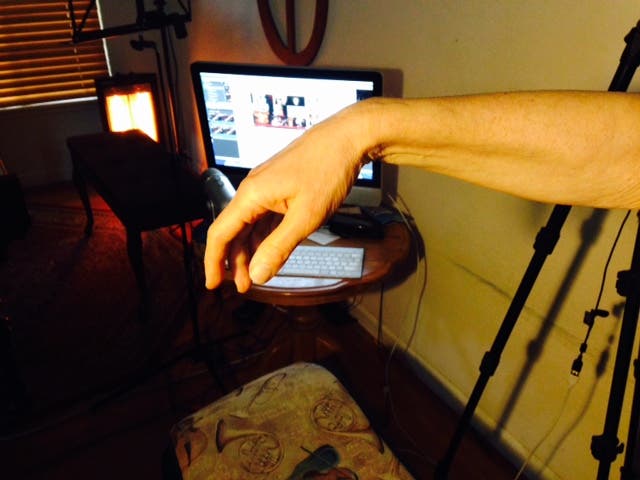
Here’s a thumbs ROLL into scale MOTION that avoids a CRASH....
Find out what's happening in El Cerritofor free with the latest updates from Patch.
By and large, I think of my thumbs in an Upbeat fashion. I love them for their capacity to lead and “measure” my family of fingers’ journey up and down the 88s. And I approach my thumb more LIGHT-heartedly than the rest of my God-given digits. (but it must give advanced notice of itself, an opinion challenged by some) There is a also a ROTATIONAL capacity of the thumb that is often overlooked. In slow motion when arpeggios are played, one can readily track this motion and avoid getting LOCKED in!
Find out what's happening in El Cerritofor free with the latest updates from Patch.
***
Rather than write a THUMB TREATISE in the early 20th Century tradition, attaching fancy diagrams of this and that position as if I were publishing a Krafft-Ebing sex manual, I will refer to a few videos that might better amplify my POSITION about the THUMB. (Politically correct, or not)
An adult student practices the F# minor arpeggio experimenting with a smoother THUMB passage:
You will notice how her thumb was initially getting in the way:
In the context of this thumb ingratiating universe, I was asked the following question by a reader:
“With the F# major arpeggio, what exactly is the thumb placement on the key?”
ME: Naturally each hand has variations in configuration, but I basically lay out my own thumb placement in this F# Major scale and Arpeggio video which obviously is not a stratified one as music in progress creates various angles and subtle angular thumb adjustments. But one’s own bio-feedback helps to clarify what is comfortable and allows fluidity from finger-to- finger, especially in the thumb shift cosmos.
In general, I regard, the thumb as my measuring rod, so to speak as it brings the five-fingers into a relaxed flowing form. Certainly jerky movements or TWISTS of the hand, wrists and elbows become thumb-traveling impediments, so I tend to avoid them.
In this video, that includes a blocking technique in playing the F# Major scale and arpeggio, I notice the relaxed comportment of my thumb and its position toward the edge of the F# KEY in the ARPEGGIO segment. (addressing the reader’s query)
Here’s a student with noticeably LARGE HANDS who navigates his thumbs quite well, though he has had to make some demonstrated adjustments.