Politics & Government
Rialto Owner Ponders Cerrito Theater Purchase: "Interesting Question"
The El Cerrito city manager posed the prospect that the city might have to sell the Cerrito Theater because of the state move to shut down redevelopment agencies. We asked the Rialto Cinemas owner: "Would You Buy It?"
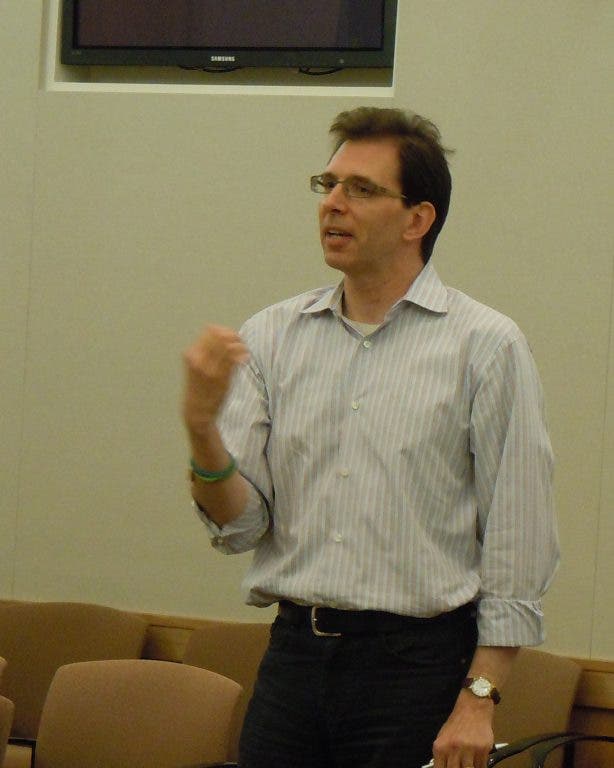

With speculation swirling that the state’s pending shutdown of local redevelopment agencies could result in El Cerrito selling the , the theater's operator, Ky Boyd of Rialto Cinemas, termed the prospect of buying it “an interesting question.”
City Manager Scott Hanin warned the City Council on July 18: “If redevelopment agencies go away, we would be required to dispose of our property,” including Cerrito Theater.
Boyd expressed confidence Cerrito Theater will not reclose its doors, as it did for decades before the city bought it in 2002 and worked with the volunteer citizens group, , to resurrect it.
Find out what's happening in El Cerritofor free with the latest updates from Patch.
“We certainly have no plans to go out of business,” Boyd told Patch. “This thing with RDAs (redevelopment agencies) is a whole legal thing between cites and the state. If the city is forced to sell the building, that doesn't impact our lease; the new owners would become our new landlord.”
After buying it, the city's redevelopment agency first leased the theater to Downey Street Productions, which ran it as SpeakEasy Theater and introduced the food-drink-tables-and-couch seating format that remains today.
Find out what's happening in El Cerritofor free with the latest updates from Patch.
Speakeasy's operation, however, ran aground financially, and the city contracted with Rialto Cinemas, doing business as Pleasantown Motion Picture Co., to operate the theater. Rialto began showing films on July 15, 2009.
The city reported in June 2009 that it had spent $5.7 million on the theater, including the $539,600 purchase price and about $4.5 million in renovation.
Hanin's warning to the City Council came on the heels of the California legislature adopting, and Gov. Jerry Brown signing, the 2011-12 deficit-fighting budget that included two laws setting the fate of the 400 redevelopment agencies used by cites to reduce blight.
One, AB 1x 26, requires redevelopment agencies to shut down October 1 and transfer their assets to other local institutions that get property tax revenues, including cities, counties, school districts and other districts.
The other, AB 1x 27, would allow agencies to exist in some limited capacity only if they agreed to pay large sums toward those recipients. Hanin estimated El Cerrito’s bill, if it chose to keep its redevelopment agency, would be about $1.7 million this year and $400,000 in subsequent years, although precise sums will be determined later.
“The [state] Legislature has set aggressive timelines,” Hanin said at the July 18 meeting. “We have to wrap up our decisions. To wrap them up by November, we have to be done by the end of September.”
The fate of the city’s redevelopment agency will be the overriding topic of the Aug. 15 council meeting.
However, a lawsuit to block the laws filed by the California Redevelopment Association and League of California Cities—which El Cerrito supports—makes the picture “very confusing” in Hanin’s words.
The suit argues that the statutes are unconstitutional, based on voter approval of Proposition 22 in November 2010, a constitutional amendment explicitly prohibiting the state from borrowing or taking funds from cities. It’s uncertain how long a final resolution will take, let alone how it will go.
Boyd, of Rialto Cinemas, expressed satisfaction with the current arrangement and redevelopment agencies in general.
“We believe (the theater) belongs to citizens of El Cerrito,” he said. “We are hoping it continues to be city-owned and that we are tenants for a long time. It’s a shining example of what an RDA can do; it was used as a warehouse, and then turned into a gathering place.
“We have a wonderful relationship to the city,” Boyd added. “It’s a percent-of-rent lease deal; we both have a vested interest, so when we succeed, our landlord succeeds. When we can weather the economic rollercoaster, which we have, it's a win-win."
“If the building became available,” Boyd speculated, “I don't know whether we would buy it or not; it’s an interesting question. But it’s owned by El Cerrito, and it should continue to be owned by the city.”
He added, “A whole legal thing going to happen before the city is going to be forced to sell any assets. Cities all over California will be kicking and screaming.”
Unlike SpeakEasy’s $10,000-per-month contract, Rialto’s lease includes a base rent of $4,000 per month plus an inflation-adjusted increase, and an additional performance rent of 5 percent on gross revenue above $960,000 annually. Rialto began paying rent in March 2010, according to Redevelopment Manager Lori Treviño.
“Through the end of July, Rialto has paid us $61,660 in base and $15,790 in percentage rent,” Treviño said. “That they were able to pay percentage rent so early in the lease period indicates to us that their sales are strong, particularly and not unexpectedly from the food and beverage sales."
“They are consistently getting first-run blockbusters,” she noted, “which indicates the studios are confident in the success of the theater, as well.”
The contract obligates El Cerrito to make $150,000 in tenant improvements—so far uncompleted—and maintain and repair the building, at costs Treviño described as “not a huge amount.” Downey Street Productions paid $120,000 in rent and loan payments before closing its operation.
As to whether the agency would get back its multi-million-dollar investment, Treviño noted, “we didn’t anticipate it would happen for at least 25 years when we originally structured the deal with Speakeasy, with the rent they committed to pay being more than double that of Rialto.”
The payoff the agency foresaw when buying and renovating the property, she explained, “was to provide a benefit to the community. … We are focused on the tremendous asset it has been to the community and in contributing to revitalization of the block, as well as having a successful and profitable tenant."
* * *