Health & Fitness
Textbook adoption process costs too much, cheats kids
School districts are choosing textbooks that are boring and poorly written.
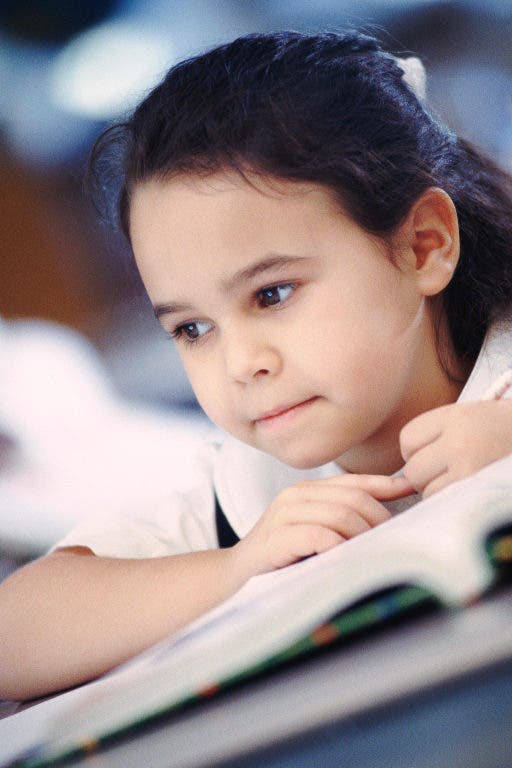
If a picture is worth a 1,000 words, what’s a textbook worth? More than you might think.
California is one of about 21 states that go through a cyclical process whereby school textbook publishers woo state departments of education to get their books onto an approved list. Once books are on “the list,” local school districts can “pilot” them, make a selection, and then receive state dollars to buy them.
The courtship involves the “Big Three” textbook publishers—Pearson Education, Houghton Mifflin Harcourt, and McGraw-Hill—and state adoption committees. The big three account for about 80 percent of textbook sales nation-wide.
Find out what's happening in Elk Grovefor free with the latest updates from Patch.
State adoption committee members evaluate texts using checklists to see that the criteria established by the state have been met. Have all the standards been covered? Is there a digital version of the text? Is the book within the weight limits set by the state? Are materials available for non-English speaking students? Are the books factually accurate?
If a book makes the cut, they earn a spot on “the approved list.” With shrinking budgets, school districts need state funds to buy new textbooks. They could opt for books not on “the list,” but this would require a school district to use money from their general fund which could otherwise have been used elsewhere.
Find out what's happening in Elk Grovefor free with the latest updates from Patch.
Want to know the silliest part of this evaluation process?
Books are not evaluated by the end users: kids. At no time in the adoption process are kids handed textbooks and asked to read them, to tell whether or not they find them engaging or boring or confusing or interesting. The adoption process is resulting in books being created, adopted, and used with kids that are boring, poorly written, and couldn’t be sold in a local or online bookstore if they had to compete with other titles. Why do we subject our students (and their teachers) to working with inferior books?
The process varies from state to state, but for the most part the steps are similar.
As a teacher in the Elk Grove Unified School District, I’ve piloted language arts, social science, and math texts. It’s an interesting process. Teachers receive materials and training and then are turned loose to explore the materials, probing for weaknesses and noting strengths.
Throughout the process, a teacher often meets with the publishers’ representatives who might seem to a casual observer like used-car salespeople. At these meetings I’ve received lightweight “swag” such as muffins, sandwiches, additional books for my classroom library, pens and note pads.
Did these little gifts influence my decisions?
No.
I thoroughly panned the social studies book I piloted. I was not the only teacher who felt that way, and the book wasn’t adopted by our district-level adoption committee. I loved the language arts text I piloted, but sadly EGUSD opted for the Open Court 2002 text for grades 4-6. Why? The decision was made to have a “uniform adoption,” which means grades K-6 would use the same book. The benefit? Kids know what to expect when they move to the next grade and the publisher would give the district a deal on buying books in bulk. The drawback: Open Court is not a good book to teach literature to older kids. It might work fine to teach younger kids how to decode and sound out words and read stories, but it’s torture for big kids.
So how does this process affect me as a teacher in the classroom?
For one, I don’t really get to choose the materials I think are best. I can choose “supplemental” materials, but my district expects me to use the materials they’ve purchased with my students. Who pays for the supplemental materials? Me, myself and I. The bank of Mr. Bentley. I spend about $1,400 of my own money each year on my students. (And I’ve been teaching for 16 years.) I wish my district would give me the money they spend on textbooks to use on my students. I know my students’ needs quite well, and I would gladly subject myself to stringent oversight.
Another drawback is the expense: an Open Court 2002 book costs about $60 to replace. For that price I could buy about 12 novels to use to teach literature. Real literature. Ready for another ironic twist? Our language arts textbook uses “excerpts” from high-quality literature. Why not give kids the whole book instead of a chapter or two?
During our last adoption process for social studies, I was able to persuade the EGUSD to pilot Joy Hakim’s award-winning “A History of US,” published by Oxford Press. The cost was about $16 per book. The three teachers who piloted the book loved it. But EGUSD opted for the much more expensive Harcourt book. Again, a “uniform adoption” was cited and bulk sales no doubt helped to play a part. The superior book was rejected. And fifth-grade students lost a great chance to learn American history from an incredibly talented author.
The books offered by the “Big Three” are committee written, which means they lack voice. Read David McCullough or James McPherson write about the Civil War. Then pick up an approved textbook and read the same topic. You’ll sense the difference immediately. Textbooks talk down to kids, failing to include the interesting anecdotes, surprising ironies, dramatic elements. Instead, they provide dates and facts devoid of the slightest hint of controversy that makes a subject like history so incredibly interesting.
So why do we adopt textbooks? According to Diane Ravitch, the adoption process began in the late 1800s to censor anti-Confederate messages in textbooks. Today, it’s a tool used to provide quality control for the materials being used with our nation’s young people. If states are going to give money to districts to buy books, they want to monitor and approve of how we spend the state’s money.
But the irony is this: the state’s money is OUR money. We the people, who have worked and paid taxes, are completely eliminated from the textbook selection process. Instead, we let government bureaucrats work in conjunction with a monopolistic industry to create a list of inferior products to use with kids.
I have an idea: let’s scrap the adoption process. Let’s take those funds back from the state and allow school districts to select the materials they think would work best with their students. Students in Merced have different needs from students in Elk Grove or Newport Beach or East Los Angeles.
I’m a classroom teacher, not a politician or a corporate suit. I love finding a great resource that works with my students, that provides them with the knowledge, skills, and dispositions to be informed, engaged, and responsible citizens and scholars.
The sad thing is, I often times find that the materials that have been selected by the state or provided by my district aren’t in my students’ best interest. And that’s where I come in, shelling money out of my own pocket to make up difference.