Community Corner
Building the Neighborhoods of the Future
Mixed-use communities in Elk Grove would be more friendly and more walkable.
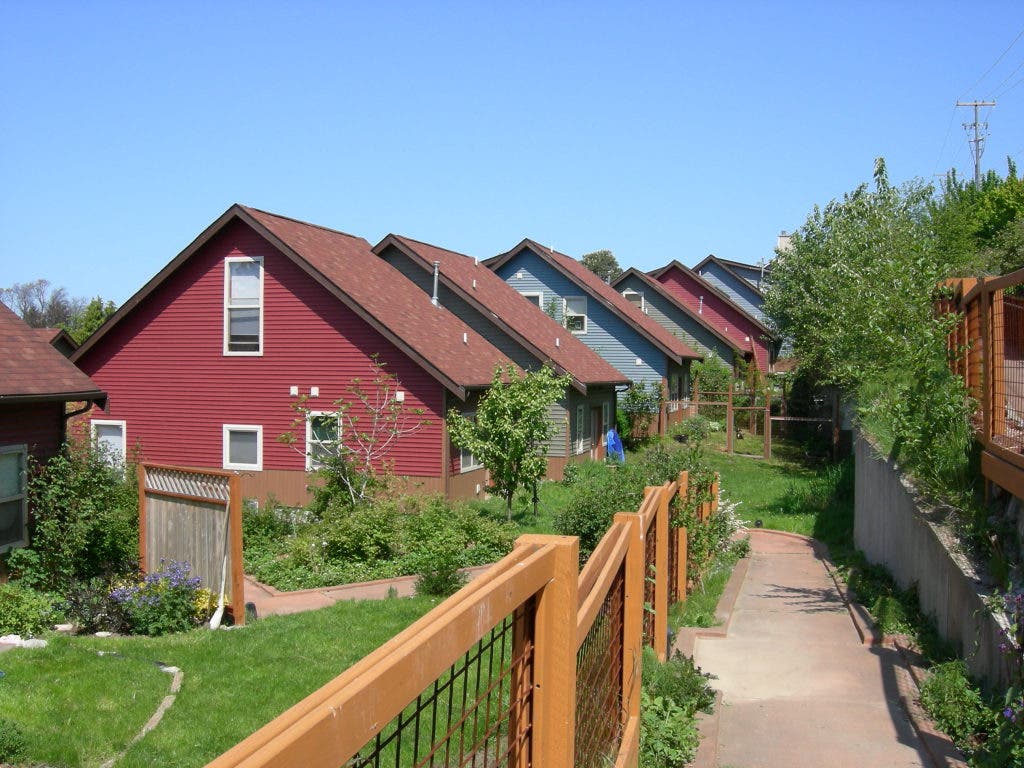

I didn’t need a survey with a fancy algorithm to tell me that Elk Grove ranks way down there as a walking neighborhood. Nor did I need that algorithm to tell me that West Hollywood is one of the best in the state. I talked about my experience of both those places in for Elk Grove Patch. When I saw links to their Walk Score the other day, it brought to mind something I learned in graduate school: that the woes of modern life—the focus on material goods and the individual to the detriment of the community and the common good—stem from the demise of the face-to-face society. When we stopped being able to walk down the street and be in close proximity to each other, to see and be seen, to interact, society—and all of us—suffered.
Seeing that reality in my life in Elk Grove is part of the reason I have railed against the new homebuilding taking place here. It’s more of the same: the same houses designed for maximum privacy, the same requirement that one drive to do one’s shopping, the same demand that one make a great effort to interact with others in the community. However, it need not be. In fact, if builders hope to succeed in this brave new post-housing-bubble world, they had better see that the model they’ve based their planning on is outdated.
According to Dennis E. Gilkey, CEO of real-estate investment company The Gilkey Organization, “As we emerge from the current economic slump. . .most builders, developers, land owners, and investors will be surprised to discover fundamental changes which have occurred while they have been preoccupied on survival, or focusing on other business areas. The world of development has changed. There is a new paradigm relative to financing, market segments, market preferences and entitlements. ..Those who recognize, adapt and take advantage of these changes will prosper, while those who expect the new normal to be the old normal, will not.”
Find out what's happening in Elk Grovefor free with the latest updates from Patch.
What Gilkey is talking about is mixed-use communities, a concept popular in the 1960s and ‘70s, but done away with by single-use developments such as the ones we have in Elk Grove. Here, we have planned communities that consist of single-family houses, and we have retail shopping and business centers at a distance from those houses. Mixed-use communities are those where the housing, the business and the retail are co-mingled within the plot of land being developed.
According to PrivateCommunities.com, “Mixed-use developments are extremely diverse, ranging broadly in composition, scope, and residential distribution. Homes tend to be organized in neighborhoods focused on a school, park or recreation center. Several neighborhoods form a village that includes ancillary elements such as retail outlets, civic buildings and churches. The types of housing developed greatly affect the spirit of the community and a variety of types and prices serves to solidify the diversity that is an inherent condition of the mixed-use environment.”
Find out what's happening in Elk Grovefor free with the latest updates from Patch.
If you Google mixed-use communities in the United States, you’ll turn up a number that are in the planning or building stages. Northern Lights Community in Rapid City, South Dakota is one that bills itself as a Front Porch community. All the houses in that development have old-fashioned front porches, which were once the hallmarks of close-knit communities. Closer to home, the Tim Lewis Communities has The Villages of Lakeview on the drawing board. Set near the San Jacinto Wildlife Area, this is planned as a “walkable community” consisting of “seven distinct villages, community shopping and office centers where residents can live, work and play.”
But maybe we don’t have to wait for some developer to give us the community we want. Maybe we can be pro-active in making multi-use communities where we live now. The non-profit Project for Public Spaces “works with developers and communities to create these kinds of neighborhoods, where a broad array of activities and destinations create the conditions that attract people, and where residents and visitors alike feel comfortable, welcome and safe.”
Perhaps we could model a multi-use community in Elk Grove after Oak Creek Commons, a co-housing community in Paso Robles that was built by the residents to their own specifications. It features, among other elements, a 4000 sq. ft. communal house where residents can (but don’t have to) share meals, a communal garden and a philosophy that says it all: “Creating an old-fashioned neighborhood in a new way.”
I realize that multi-use neighborhoods wouldn’t please everyone, but neither do single-use. Isn’t choice part of our American ethos? We don’t have to just accept what the developers want to give us; we can have a say.