Community Corner
Delta Sigma Theta In Sacramento Brings California Members to State Capitol for Action and Advocacy
Delta Sigma Theta Sorority, Members of Elk Grove and Sacramento Alumnae Chapters Among, Descend on Capitol

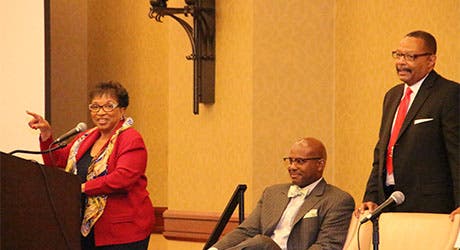


African-American elected officials offered insight on issues ranging from human trafficking to policy brutality to equity in admitting students and hiring faculty and staff at state universities on Sunday, April 26, the first day of the 29th Annual Delta Days in Sacramento.
Rep. Karen Bass (D-Los Angeles), 37th Congressional District, called for reforms in the foster care system that contribute to the human sex trafficking of African-American girls. She said their needs to be better care given to children in foster care, particularly providing special housing for black and Latino girls abused through human sex trafficking.
“The gangs are now selling our girls,” Bass said. “These girls have fallen through the cracks.”
Find out what's happening in Elk Grovefor free with the latest updates from Patch.
Sacramento is host to Delta Sigma Theta Sorority, Inc., one of the largest and most powerful African-American women’s organizations in the country, April 26-27. The international organization’s California chapters annually bring members to the state Capitol for action and advocacy.
This year’s event, “Breaking the Chain: The Power of Advocacy and Action,” included a discussion on human trafficking led by Rev. Deborah Manns of Project Destiny and Falilah “Aisha” Bilal, executive director of MISSSEY; and a Town Hall meeting with members of the California Legislative Black Caucus including senator Holly Mitchell; and assembly members Cheryl Brown, Mike Gipson, Reggie Jones-Sawyer, Kevin McCarty and Sebastian Ridley-Thomas.
Find out what's happening in Elk Grovefor free with the latest updates from Patch.
“I appreciate the members of Delta Sigma Theta Sorority coming here every year to focus on issues critical to California,” said McCarty (D-Sacramento), who encouraged the members to support AB 86, legislation that calls for an independent panel to investigate police shootings.
Mitchell applauded the Sorority for its advocacy. “Civic engagement and women organizing around issues important to California’s working women and families is important,” said Mitchell who asked attendees to support AB227, which would prohibit the use of criminal Grand Jury’s in cases involved in officer-involved shootings.
The conference also welcomed more than 200 youth participating in the region’s annual Youth State program, “Our Future is Not for Sale! Tools for Human Trafficking and Exploitation Prevention,” on Saturday, April 25. They learned preventive tools and develop advocacy agendas.
Delta Days chair, Jacquelyn Dupont-Walker and co-chair Fabian Wesson excited about the workshops to encourage public service, build a solid economic engine via foundations and advocate for our communities and residents. It will conclude today, Monday, April 27 when a sea of “crimson” (the Sorority’s colors are crimson and cream)—women representing dozens of chapters from San Diego to Sacramento—descend on the state Capitol to advocate for policies and action on important issues in their communities in meetings with legislators and statewide officers of the state.
“As Delta women, we continue to rise to the challenge of advocacy and action like we’ve done throughout the history of our sisterhood,” said Farwest Regional Director Sandra Phillips Johnson. “We will continue to be on the frontline doing the work.”
Mariah M. Kelly, the Farwest Regional Representative, said she is proud to be hosting this year’s Youth State. “We have work to do in California to protect and prevent any more youth from being trafficked,” Kelly said. “I am elated that the sorors of the fierce and focused Farwest Region are at the forefront in our efforts in raising the awareness of the challenges we face today.”
Delta Sigma Theta Sorority, Inc. is the largest African-American women’s organization in the country. The organization was founded in 1913 on the campus of Howard University to promote academic excellence; to provide scholarships; to provide support to the underserved; to educate and stimulate participation in the establishment of positive public policy; and to highlight issues and provide solutions for problems in communities. Delta Days in Sacramento is in alignment with the Sorority’s Five-Point Programmatic Thrust of economic development, educational development, international awareness and involvement, physical and mental health, and political awareness and involvement.
California led the Delta Days advocacy movement with the vision when past Farwest Regional Director Gwendolyn Sherard Bishop initiated the very first event in 1986 in Sacramento. At that inaugural event, 100 women planted the financial seed of sponsorship that has now grown in 2015 to embrace the youth and young adults in partnership with the elected leadership of the state of California—an intergenerational strategy to bring about change. California is a part of the Farwest Region and continues this legacy with pride and purpose looking toward the 30th anniversary in 2016.
For more information about the Farwest Region, visit http://dstfarwestregion.com/.