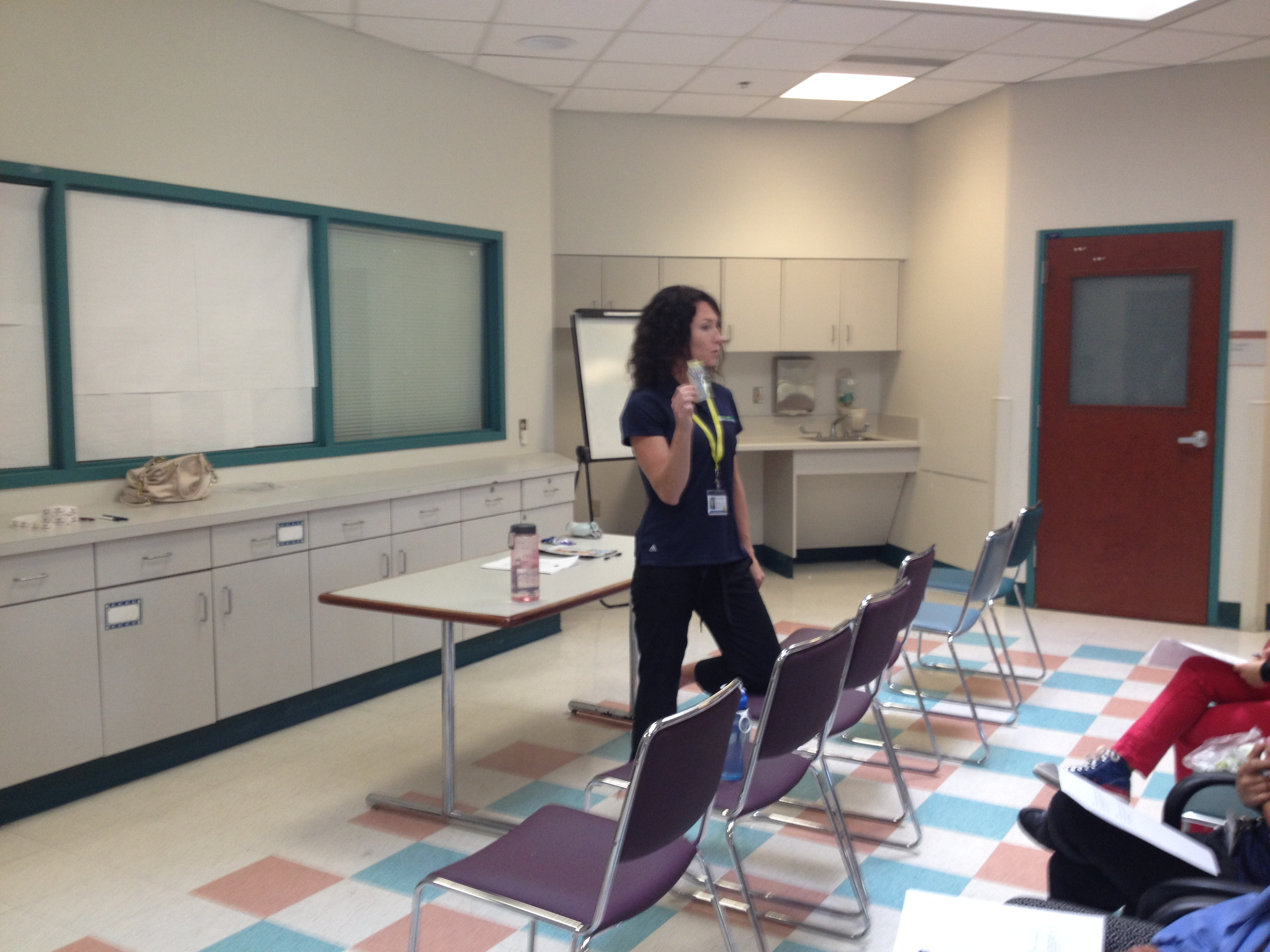
We all know we need to eat right and exercise to maintain good health. But there are some lesser-known guidelines that can help better prepare our bodies for fitness.
Certified personal trainer Jen LeDoux is a health education instructor at Kaiser Permanente. She works with the Employee Wellness department, coaching the running team and leading weekly cross-functional fitness classes for employees at the Elk Grove medical offices.
At a recent “Fueling Your Fitness” class, LeDoux shared tips on how to eat before, during and after exercise.
Find out what's happening in Elk Grovefor free with the latest updates from Patch.
“You need food to get through our workout. Your body needs carbohydrates at certain points; it needs more protein for recovery at the end,” said LeDoux.
She recommends that you drink 17-24 ounces of water 2-3 hours before you exercise, and keep water close by while you exercise, too.
Find out what's happening in Elk Grovefor free with the latest updates from Patch.
For runners, that is all that is needed for shorter runs.
“If you are not exercising for longer than an hour, you don’t need replacements. You just need to make sure you eat well before and after, and drink water,” said LeDoux.
“People show up for a short run with their belts and their GU, and they are just going to make their stomachs cramp up and add extra calories to a workout that didn’t really need them. “
She also recommends that during a long run, over 60 minutes, you use replacements for convenience. Replacements include gels, chews, and liquid electrolyte replacements. LeDoux said they will give your body the calories it needs for energy.
But don’t try something new right before a big race.
“There are a lot [of products] out there. You have to train with your replacements. Train for 8-10 weeks to see what works for your body,” recommended LeDoux.
After exercise, LeDoux says her favorite snack is a banana and chocolate milk. The protein will help your body recover.
Her biggest advice: eat real food before and after you exercise.
As for what not to eat: spicy foods, high fat or high fiber foods. Your body is busy digesting and some of those foods can cause cramps.
Among those attending the nutrition class were beginning runners, who also learned how to maintain their health.
But it wasn’t just beginners who learned something new from the class. Kaiser Permanente engineer Ray Sanchez has been an endurance athlete for seven years who has traveled around the world to participate in races of 100 miles or farther.
Right now, he is training for a 135 mile snow run in Minnesota.
“I learned today about how to balance my food and possibly look at drinking more water,” said Sanchez. “I also learned about [why I am having] cramping in my muscles.”