Community Corner
Echoes of the 1960s in Today's 'Occupy' Movement
Back then, it was young against old. But the goal was the same: to have our voices heard.
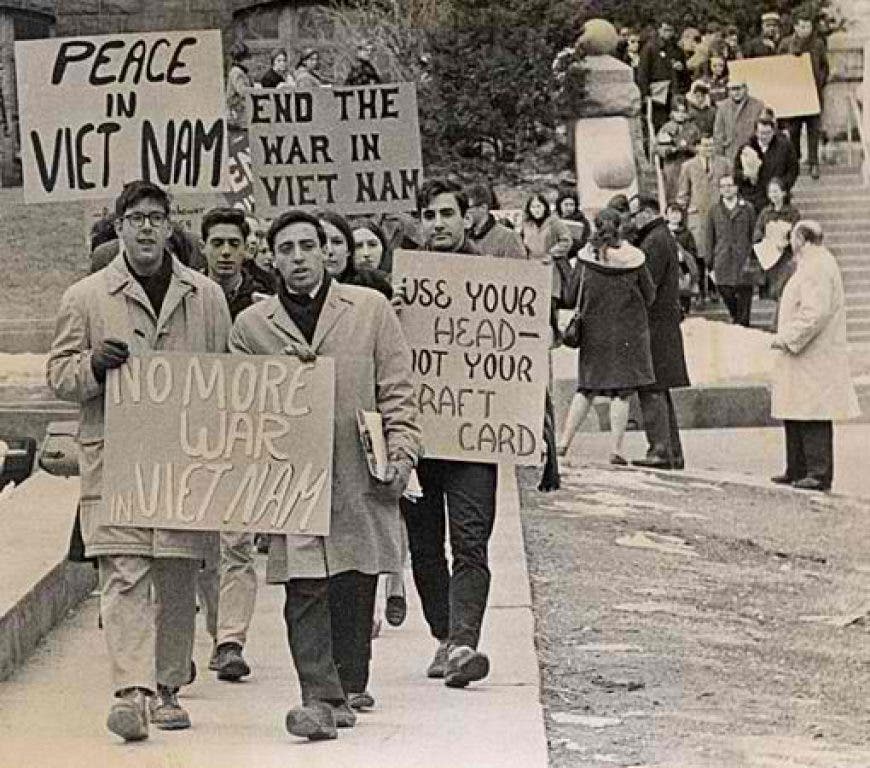
Last week I went to the first General Assembly of the Occupy Elk Grove group, and last night I went to their first demonstration. In part, I did it for old time’s sake. This whole Occupy movement has taken me back to my days marching and demonstrating and agitating in the '60s and '70s.
Yes, yes, of course you knew I was there. Then, I was young and energetic and pissed off at the inequities of the world. Specifically, I was pissed off at a country—my own—in which colored people (as we called them) were considered less than human. Later, I was young and energetic and pissed off at an unjust war being fought in Southeast Asia. And finally, I was young and energetic and pissed off at the fact that in the late 20th century, women were still second-class citizens, worth far less both in money and in respect than were men.
These days I’m not young but I’m still pissed off at the inequities that are squeezing the lifeblood from my country.
Find out what's happening in Elk Grovefor free with the latest updates from Patch.
I could repeat the slogans here, but the facts are already becoming part of our consciousness: that one percent of our citizens have more wealth than the other 99 percent of us. That one percent of our citizens are doing quite well, thank you very much, while 99 percent of us are being foreclosed and laid off and generally pushed out of the marketplace. That one percent of us ultimately controls the decision-making that keeps 99 percent of us in place.
So when I watch the Occupy Wall Street demonstrations and the ones that have spread across the country, I am moved that this intensity of protest actually exists again. For a long time, those of us who were activists years ago thought perhaps we were an anomaly, that young people today didn’t, for one reason or another, care enough to take a stand. Turns out, fortunately for the good of the country, that we were wrong.
Find out what's happening in Elk Grovefor free with the latest updates from Patch.
And they’re not alone. When we marched, it was young against old. Today, it’s all ages. The kids, the adults, the families, the seniors—everyone wants what is, after all, the basis of a democratic society: a voice.
Actually having a voice, being heard, is what these demonstrations are about. There’s no use in toting up who’s part of the 99 percent and who’s not, because that’s not the point. Nor is it, right now, the point that demands aren’t being made in a coherent manner. The point of the demonstrations, and the reason they have spread throughout the country, is quite simply to be heard.
As those who deal with mental and emotional health issues know, there are two stages on the road to recovery. The first is simply acceptance that there is a problem. This is often the most difficult to achieve. Getting the alcoholic to admit that she does in fact drink too much or the eternally sad man to agree that the source of sadness is a malfunctioning in his brain chemicals—these are real road blocks.
Once they’ve been crossed, however, the second stage of recovery is doing something about the problem. These demonstrations, the whole of the Occupy movement, is about getting us all, as a people and as individuals, to admit that there is a problem. Just as the Alcoholics Anonymous meetings draw from all walks of life, so too do the Occupy demonstrations.
At first glance, the Occupy Elk Grove demonstration last night reminded me of a scene from Chaucer’s Canterbury Tales: a raggle-taggle band of pilgrims waving signs and chanting slogans. After I walked with them and talked with them for a while, I saw that each person had a clear and cogent reason for taking their public stand as part of the 99 percent. ().
What struck me even more, however, was the response of passersby. People were actually honking and cheering as they went by. Not a lot, but enough to make me see that Elk Grove has, in fact, woken up. Even more encouraging was the fact that the event was being covered by so many reporters, because press coverage is a crucial factor in determining the power of a movement.
When the mainstream media was first running their news stories of the Occupy Wall Street against footage of people dressed as zombies, they were making a point: This is not to be taken seriously.
Today, however—on Wall Street and in Sacramento and here in Elk Grove—the media is paying serious attention. What the end result of this will be, I cannot say. I do know, however, that a sleeping giant—the people—has been awakened.