Health & Fitness
Integrative Medicine: What Can a Tongue Tell Us?
Want to know how your pet is feeling? Look in his mouth.

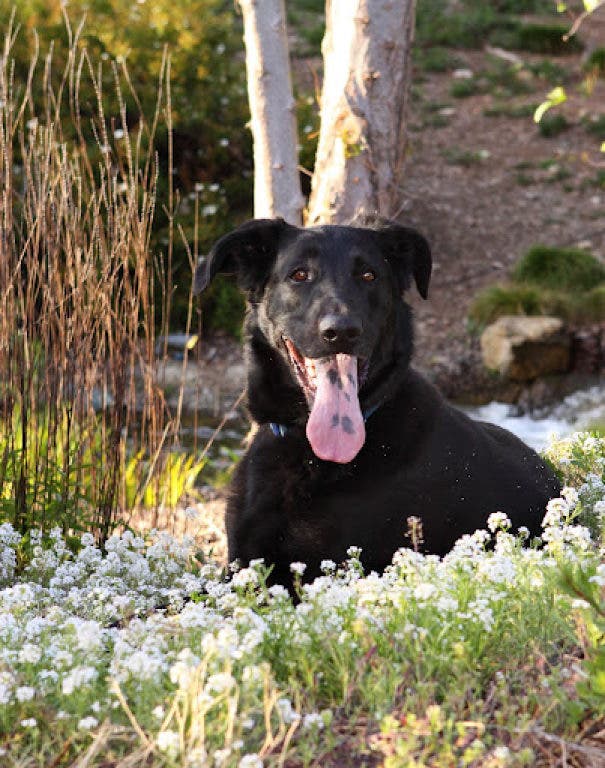
Did you know you can get clues about how your pet is feeling just by looking at his/her tongue or feeling his/her pulse?
There are many different means to the same end when it comes to veterinary medicine. Most veterinarians primarily use traditional Western medicine to treat patients. However, many hospitals also welcome the practices of other schools of thought, such as Eastern or Traditional Chinese Veterinary Medicine (TCVM), holistic and integrative medicine.
Western medicine is the most popular type of medical treatment in North America and Western Europe. This practice is often scientifically based and uses diet, medication and surgery to treat illness. TCVM covers a diverse body of medical theory that originated in China and has developed over two millennia. It is based on the concept of balance (Yin-Yang) using acupuncture, herbal medicine, massage, food therapy and Qigong. Chinese therapies can also be used in conjunction with Western techniques, such as medication or surgery. This practice is called integrative medicine.
Find out what's happening in Encinitasfor free with the latest updates from Patch.
In TCVM, diagnosis is made through recognition of “patterns” which are characteristic for areas of imbalance within the body. The goal of therapy is to restore the underlying balance. It is important to look for patterns in order to arrive at an accurate diagnosis. Patterns may include the behavior of the pet or the types of conditions the pet is repeatedly experiencing. Regular examinations are the best way to determine any patterns your pet may be exhibiting.
A vital part of any integrative exam is the palpation of the pet’s pulse and the careful observation of the tongue. These things can help determine a pattern.
Find out what's happening in Encinitasfor free with the latest updates from Patch.
The pulse is considered an underlying expression of the Yin/Yang, or circulatory, dynamic as it permeates the body. The force, depth, tension and rate all provide different information.
The tongue is an indicator of the circulatory effects over time on the body’s tissues. When evaluating the tongue, we are looking at the color, shape, moisture and any coating that may be present. A normal tongue is pink. A very red tongue might indicate excess heat or inflammation in the body, whereas a pale tongue may indicate a deficient state.
A pet’s gums are also a general barometer for wellness. You may notice that a sick pet’s gums are pale, tacky or even dry. Just like the tongue, a healthy pet’s gums should be pink and moist.