Politics & Government
UPDATE: City Moves To Phase Out Red-Light Camera Program
Councilman Mitchell Englander presents a motion to gradually terminate the program, an option seen as most cost beneficial to the city. The City Council will vote on the issue Wednesday.
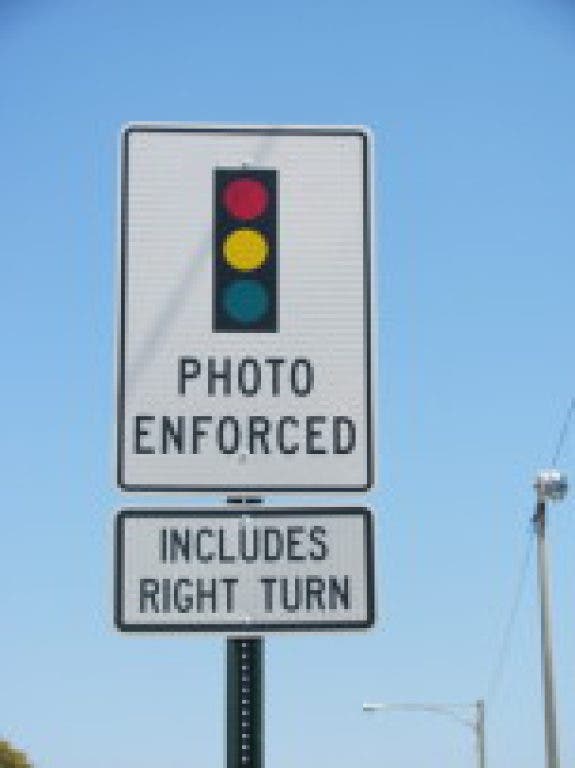

[Update: 4:19 p.m.] The Audits and Governmental Efficiency Committee Tuesday backed the Budget and Finance Committee's motion to end the photo red light program, as scheduled, on July 31, while negotiating a 'phase out' to remove equipment and collect citations. The issue will be heard in a special City Council meeting Wednesday.
---
Local council members recommended phasing out the controversial red-light traffic cameras at a committee meeting Monday, in part to ensure that the Los Angeles Police Department can collect the data on thousands of outstanding citations.
Find out what's happening in Encino-Tarzanafor free with the latest updates from Patch.
The cameras were installed around the city to catch drivers running red lights.
A report presented to the five-member Budgets and Finance Committee from the chief legislative analyst showed that the city would lose money if the program were to end, as scheduled, on July 31. However, if the city continued the program, it would essentially be cost-neutral. A gradual phase-out of the program would be beneficial to the city, bringing in $274,000, while a termination without a phase-out could potentially cost the city $200,000, according to the report.
Find out what's happening in Encino-Tarzanafor free with the latest updates from Patch.
Councilman Mitchell Englander, who was not yet in office when the City Council originally voted on the issue, said that he supported terminating the program until he read the report and saw how it would affect the city financially. He represents Council District 12 which includes Chatsworth and a part of Encino.
“I’m absolutely opposed to the current system, the way it works right now,” he said.
Englander supports terminating the program with the phase-out, so that the city doesn't lose money or access to the data of thousands of unpaid citations. He presented a motion to negotiate a deal with American Traffic Solutions, the Arizona-based company that runs the program, to phase-out the infrastructure “to protect the city and the residents.”
The committee, chaired by Councilman Bernard C. Parks, unanimously supported his motion.
“We have to figure out how to end this correctly,” said Englander.
If the program ended without a phase-out, the Police Department could risk losing access to the data from the 65,000 outstanding citations, the majority of them from the past two years.
Councilman Paul Koretz, who voted in favor of ending the program last month, noted that it doesn’t seem like the city anticipated ending the program if it didn’t include the funding in this year’s budget to do so.
The Department of Transportation has requested that work to remove the poles and equipment associated with the camera program be done on cash overtime, at an estimated $155,000, because it would pull employees away from more important projects.
Koretz, who presented a motion last month to study the timing at traffic signals to improve safety, cited how extending the timing of the yellow and red lights in another city worked.
"In Loma Linda, in the intersections that already had red-light cameras, they added to the timing, and they had a 90 percent drop in citations, because the timing solves the safety problem," he said. "Which is the whole point."
The Audits and Governmental Efficiency Committee will discuss extending the contract Tuesday afternoon. The City Council is expected to come to a decision on the program’s contract at a special meeting Wednesday.
Earlier this month, the City Council adopted a resolution to support a Senate Bill that would modify the current law with red-light camera programs. A main point of contention with the program is that judges do not actively enforce the $480 tickets that are generated when a camera catches a traffic violation. The council agreed to back the bill if it is amended to improve the enforcement of unpaid citations. Currently, there is an approximately 64 percent collection rate of tickets generated by the cameras.