Business & Tech
Fair Oaks Rafting Businesses Hope to Finish Season Strong
After a cold May, both rafting businesses near Fair Oaks are trying to regain ground.
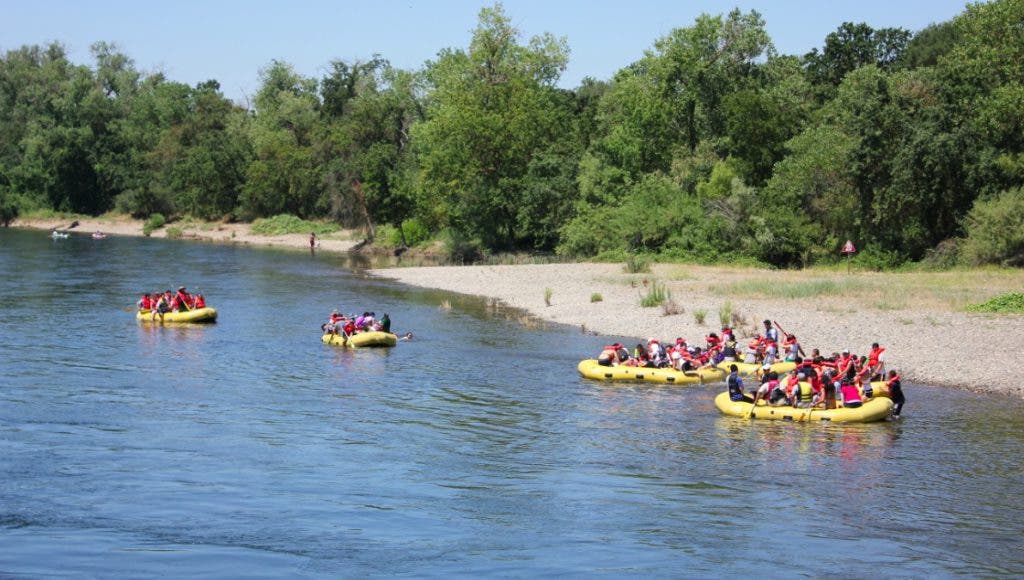


On average, as temperatures increase in Sacramento, the appearance of water-going vessels on the American River increase as well - but this summer raft rental companies in Fair Oaks have noticed a marked difference in business.
“(Raft rentals are) slower than normal right now and a lot of that is because the news is telling people we're closed when we're not,” said Gabrielle Marchive, employee at River Rat Rentals.
Marchive said River Rat Rentals was closed for the entire month of May, which is uncommon for the business, but other than that it has only been closed two other days.
Find out what's happening in Fair Oaks-Carmichaelfor free with the latest updates from Patch.
“We closed two Fridays before the Fourth (of July) because quite a bit of water was being let out of the dam,” she said. “I work with a guy who has been here for seven years and he said he doesn't remember ever being closed in May, but a lot of that was because of the late cold weather we were having.”
Dave Hill, owner of American River Raft Rentals, said this rafting season has been like a double-edged sword because first it was too cold to raft, and now that it has warmed up the record snow melt has the water running too fast.
Find out what's happening in Fair Oaks-Carmichaelfor free with the latest updates from Patch.
“It's just one of those things,” Hill said. “Things happen and we'll be fine. It's nothing that is totally a disaster – not like people experience back east with the floods and tornados.”
Hill has been a part of the rafting industry for 37 years and said he has never seen a summer quite like this.
“I've seen high water before, but usually May is warm enough to have water steadied by June,” he said. “I mean, it rained the first week in June. But it's just one of those things – it's mother nature. We're like farmers; we have to deal with it and we are dealing with it.”
Peter Lucero, public information officer for the Bureau of Reclamation, said the highest the water flow has been this year is 25,000 cubic feet per second (cfs) calculated in the middle of March.
“That is a lot of water to be dealing with,” Lucero said, “but it can be higher. When it gets out of hand is when we have floods. While we didn't flood this year, it is still a lot of water to manage.”
Currently, the American River is flowing at about 4,500 cfs. Last year at this time, the river was flowing at 3,900 cfs and the 15-year median for July 15 is 3,500 cfs.
“So, we're about 1,000 cfs higher than would be normal,” Lucero said. “Obviously, the less water we have the less dangerous it is, but water recreation is inherently not safe because it's water and people drown. Care and regard should always be given to conditions and one's ability to manage those conditions.”
Marchive said people need to follow protocol and just be smart about floating the river.
“It's safe if you are in an actual raft with life jackets,” she said. “But a lot of people are out there in inflatable pool tools, tied together. So, if one of those starts to sink – then all of them do.”
Hill said it is very important to be conscious of the water conditions he is sending novice boaters in to.
“We consider this river experience a new one for everyone and our business is designed for people who may have never boated. That's what we have to keep in mind when we have flows like this,” he said.
In order to cover ground, Hill said he has had to cut costs this summer and communicate with the Bureau of Reclamation.
“I mean what can you do,” Hill said. “Call the Bureau of Reclamation every week and bother them? That seems to be the case now. We just express our thoughts to them. That's all we can do.”
While Hill has put forth effort throughout the summer, he said his calls to the bureau rarely get anywhere because recreation is a bi-product of river releases according to the bureau.
Lucero said this summer has not been the most difficult time he has had with the bureau.
“The most difficult time for me was when we were in the middle of a drought,” he said. “An abundance of water is actually way less of a problem."
Hill recognizes how the industry works and remains hopeful for the rest of the rafting season.
“I think what we're going to see here is a much more concentrated short season,” he said.