Crime & Safety
San Bruno Explosion Highlights the Importance of Preparation
Foster City Police Department and Fire Department aim to be on top of emergency preparedness and training after the Sept. 9 explosion.
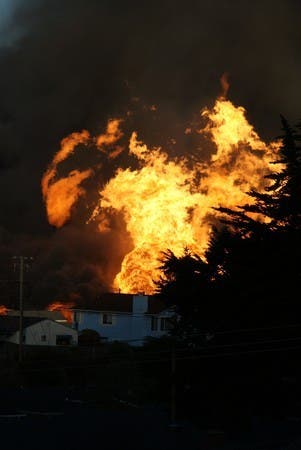
Foster City emergency responders see an opportunity for growth through tragedy in the weeks following the San Bruno gas line explosion, as Bay Area residents are reminded of the need for disaster preparedness.
While the Sept. 9 explosion tragically destroyed 37 homes and killed eight people, both the Foster City Fire Department and Foster City Police Department are grateful for ongoing emergency preparedness training and gained experience in response to the disaster.
"It's always sad when things like this happen, but it's a reminder that big things like this can happen anytime and anyplace and we have to be ready for it," said FCPD Captain Matthew Martell.
Find out what's happening in Foster Cityfor free with the latest updates from Patch.
FCPD officers have recently been undergoing ongoing emergency preparedness preparation. The most recent training session was Sept. 11, on the anniversary of the terrorist attack on the World Trade Center, and just two days after the explosion in San Bruno.
More than 75 percent of FCPD's staff helped San Bruno during the fire and up to two weeks following the incident. Martell said this gave officers a chance to gain hands-on experience in responding to a disaster.
Find out what's happening in Foster Cityfor free with the latest updates from Patch.
"Most of officers and dispatchers participated to help San Bruno after the disaster," said Martell. "At the same time, organizationally we benefited because those people now have first-hand training and knowledge of how that situation was dealt with and how we might want to deal with that situation should it ever occur in our jurisdiction."
In the two weeks following the incident, FCPD sent two to three officers to San Bruno daily for assistance in recovery after the fire. Specifically, Martell said officers benefited from applying procedures used in emergency response training to a real-life situation.
"During a major incident like (the San Bruno explosion), you use the incident command system to try and resolve the situation," said Martell. "We do it all the time in practice, but to see it operate during a real incident is useful."
FCPD Battalion Chief Nicholas Weber said many emergency response agencies reflect on disasters like the gas line explosion to learn how to handle an incident in the future.
"Being the department training officer, you always look at what you did, analyze how it went, and take the weaknesses and develop the situational drills to better those skills," Weber said.
During the San Bruno explosion, responding units faced challenges with proximity of water mains to the fire source. Weber said watching the success of multiple fire units working together to "shuttle" water to fire engines fighting the flames will motivate the department to work on this shuttling technique in upcoming training.
The FCFD has also developed extensive plans for responding to fires in areas or situations where access to water may be limited.
"We've always been pretty disaster conscious with water," said Weber. "We've bought 2,000 feet of extra fire hose for times when water mains may be broken and we've identified areas where we could pump water out of the lagoon if need be."
Looking forward:
After the gas line explosion, PG&E was forced to release a list of its top 100 riskiest pipelines. While Foster City does not have a pipeline on this list, the event highlights the need for preparation for all types of disasters.
"Sooner or later something of significance occurs everywhere whether it's an earthquake, or a fire, or a terrorist attack," said Martell. "The local government tries to do everything it can to address these things, but ultimately, every individual in the community has a responsibility to be prepared for themselves."
Foster City encourages its residents to have the plan and items necessary to survive for 72 hours in the event of a disaster. In planning for a disaster, Martell encouraged residents to have items to survive for up to a week and have a plan for how to communicate to family members.
More than 500 Foster City residents are educated regularly on disaster preparedness through the Community Emergency Response Team program, Weber said. This national training program teaches people skills ranging from fire safety to disaster medical operations for responding to large-scale incidents.
"(CERT) is getting so many people aware of the potential of emergencies," said Weber. "When it happens we're going to be so organized and people will find themselves much better off."
The fire department also provides downloadable emergency preparedness guides through its website.
The guide suggest families develop a written plan for responding to an emergency including a designated contact person outside of the immediate area.
For an emergency supply kith, the guide suggests homes be stocked with nonperishable, high calorie food and medical supplies to survive up to 72 hours. A family of four would need 14 to 28 gallons of purified water for a week's supply, according to the guide.
Fire department personnel will teach a two hour seminar on October 23 instructing residents on how to develop a plan for a disaster. Residents can register for the course through the Foster City Parks and Recreation Department.