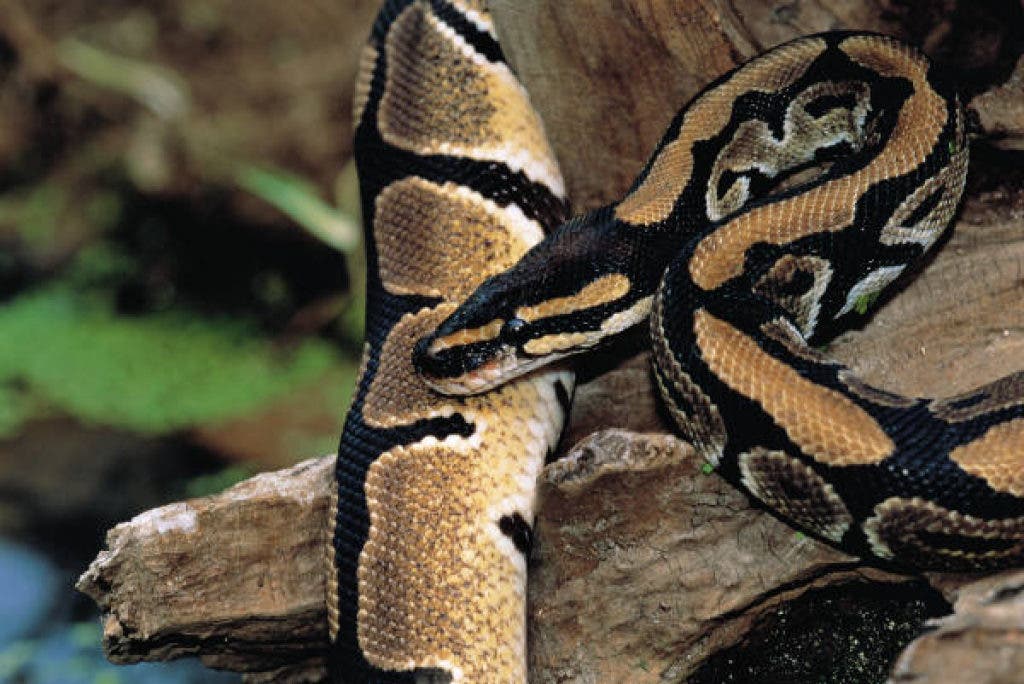
The ball python is a small, docile member of the constrictor family of snakes. Its compact size and even temperment makes it a great "first snake" for anyone. The ball's name refers to the snakes tendency to roll into a ball when threatened, scared or stressed.
Also called the royal python, this attractive snake is native to Africa and nonvenomous. The name royal python is derived from the fact that many african rulers wore live pythons as jewelry. A member of the constrictor family, the royal python subdue their prey by coiling around it and suffocating it.
The ball or royal python is a small snake, and at maturity it will not exceed four feet in length. The females are usually larger than the males. Their color pattern is a black or dark brown background with gold or light brown markings. The belly is a cream color.
Find out what's happening in Fountain Valleyfor free with the latest updates from Patch.
The ball python eats mice and rats. A live, freshly killed or frozen rat once or twice a month is its usual feeding schedule. The method you choose depends mostly on the snake's preference. Most pet stores suggest using frozen rats, but not all pythons will eat them. Some will only eat a live rat they kill on their own. The ball python is known as a picky eater, and may fast for as long as six months. Feed your snake in a box not directly in its cage. This feeding arrangement will help your snake associate eating with a different location and lessen the possibility he will mistake your hand for prey and bite you when you reach into the cage.
If your snake will not eat, then there are several things you can do to try to entice him. Dip the rat in chicken broth, try feeding at night and in a darkened room, give the snake a good soak in the tub with a few inches of lukewarm water to relax him, or buy a gerbil; its a tasty treat most ball pythons cannot resist.
Find out what's happening in Fountain Valleyfor free with the latest updates from Patch.
The supplies for your snake may cost as much as the snake itself. You will need a 20- to 40-gallon glass tank with a securely fitted lid. A water dish large enough for the snake to soak in and a hide box are necessary items. The tank should have a thermostat-controlled heating pad under it. The tank temperture needs to be in the 80 degree range with a temperture of 90 degrees in the basking area. Humidity should be 60 to 80 percent. The bottom of the tank can be lined with substrate or a couple sheets of newspaper. A clip light on a timer or a ceramic heat element can help add heat when necessary.
Shedding occurs when a snake begins to outgrow his skin. Seven to 10 days is the average time it takes for a snake to competely shed its skin. First the belly gets a pink cast to it, and then the shedding begins. The snake's eyes will become dull-looking as well. Once shedding begins, the snake will not want to eat or be held.
The ball python can live up to 40 years, with an average lifespan of 20 to 30 years. If you decide to purchase one of these snakes please, be ready for a long-term commitment. The ball python is a low-maintance pet that can give you many years of enjoyment.