Schools
Science Experiments Help Students Learn Beyond Curriculum
James Cox Elementary hosts Family Science Night to help spark interests in students.
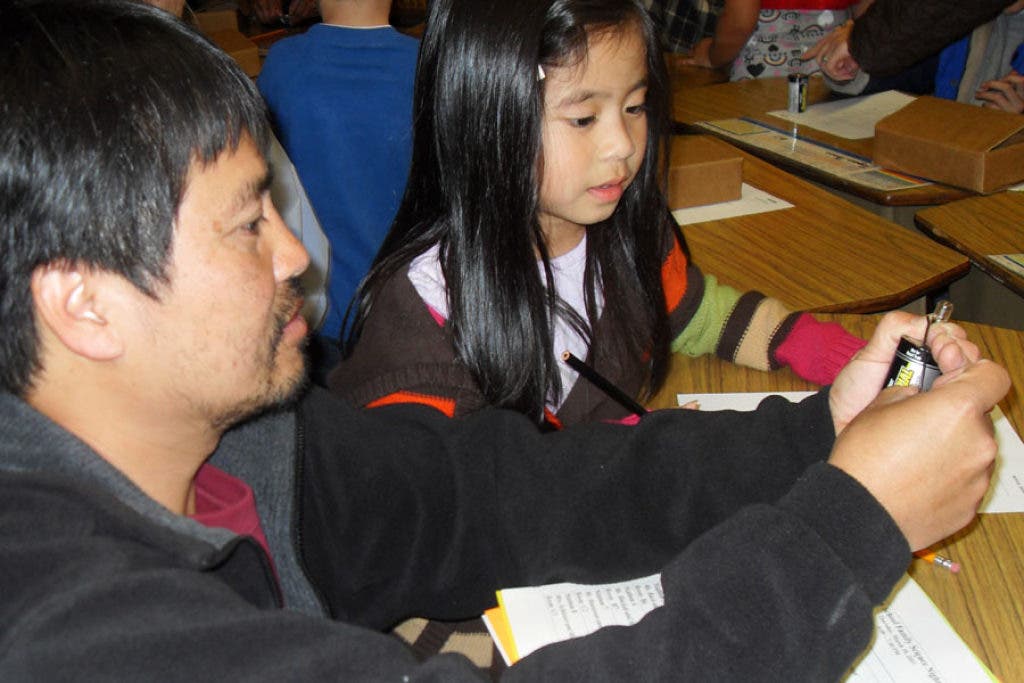
From categorizing rocks to analyzing fingerprints, students at James Cox Elementary School explored the world’s endless wonder Thursday evening at Family Science Night.
In partnership with local program ScienceWorks, Cox opened up classrooms throughout campus to set up different stations, for students to rotate around as they pleased.
Each station contained around 20 sets of experimental kits from ScienceWorks for students to explore different topics, from studying soil, to measuring buoyancy, to learning about human anatomy and more.
Find out what's happening in Fountain Valleyfor free with the latest updates from Patch.
Teacher volunteers helped students conduct the experiments, as well as offering explanation to illustrate the significance of each experiment while students practiced recording experimental data.
The topics chosen for the event mirrored a grade level’s science curriculum, in which students are required to reach a level of proficiency by the end of the school year for the California Standardized Testing and Reporting.
Find out what's happening in Fountain Valleyfor free with the latest updates from Patch.
Science was added to STAR five years ago, and test results from the first year showed a large amount of students falling under the passing rate, said ScienceWorks Coordinator Susie Crandall.
However, recent test scores showed significant improvements with 85-percent of fifth graders and 84-percent of eighth graders being proficient or had advanced knowledge of the required grade-level curriculum, she said.
Crandall credited the score improvement to the teachers’ ability to master their given materials and effectively using ScienceWorks kits to help students understand the basics of any scientific reasoning.
“We believe that science should be something that we do. If students just read about it, they aren’t going to acquire the wonderment of science,” she said.
Each teacher is given the opportunity to work with three science bins a year. Each bin contains material enough for 36 students, including kits, books and a scientific notebook for students to keep their work and to take home.
“We want to teach them that their notebooks are valuable and replicate the ones that real scientists keep when conducting research," Crandall said. “The notebooks are very specific to each child and when they look back on them, they are able to feel their accomplishments.”