
Going into MLB’s 2026 Opening Day, Japan will have three new multimillion dollar-players on its current rosters. MLB’s total Japanese representation will be 15 players, far behind the Dominican Republic’s 144, Venezuela’s 93, and Cuba’s 34. The recent Japanese additions have made a huge splash across the nation’s sports pages, mostly because of the astronomical salaries they’ll be paid. The Chicago White Sox signed third baseman Munetaka Murakami to a two-year, $34 million contract; the Houston Astros inked pitcher Tatsuya Imai to a $54 million deal spanning three seasons and the Toronto Blue Jays locked up another coveted Japanese hot corner player Kazuma Okamoto, four-years at $60 million.
The payouts may be a new wrinkle, but talented Japanese players have been showcasing their skills in the United States for more than a century, albeit as amateurs who played the game’s classic version.
In 1872 Horace Wilson, an American professor, taught his students at Tokyo's Kaisei Gakko to play baseball as a form of physical exercise. Within a generation, baseball had become embedded in Japanese schools and universities’ cultures. When significant numbers ofstudents began arriving in the U.S. to pursue academics, they were already accomplished players but also outsiders navigating a society that had no previous exposure to international competition. Racial hostility occasionally dogged the Japanese teams.
Find out what's happening in Fresnofor free with the latest updates from Patch.
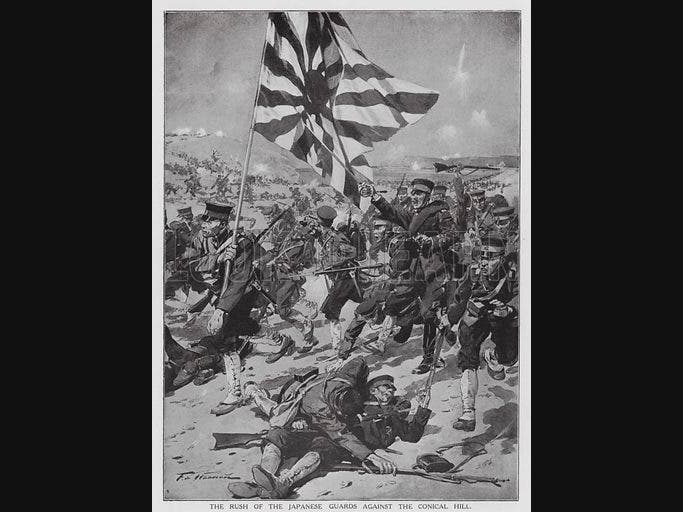
The pivotal moment that set the stage for Japanese student-athletes in America came in the spring of 1905, when Waseda University's baseball club became the first foreign team ever to tour the United States. The journey was the brainchild of Isoo Abe, the progressive academic who had founded Waseda's baseball program in 1901. Abe was determined that his players should not simply win games on Japanese soil but measure themselves against the world. He famously told an audience at Stanford University during the tour: "We are not here to win games, but to learn to play baseball as it is played in America." Abe’s statement was remarkable— an explicit acknowledgment that the tour was athletic as much as academic. The Waseda squad played 26 games, mostly against collegiate and semi-professional teams in California, Oregon, and Washington, drawing large crowds of curious spectators and considerable newspaper coverage. The team's presence in America was a sensation in part because of the buzz about Japan at the time: the country had just shocked the world by defeating Russia in the1904-1905 Russo-Japanese War. Fascination with Japan had reached a high point and was still rising.
Waseda's best pitcher, Atsushi Kono, became a symbol of what Japanese players could do on an American diamond. Kono pitched in 24 of the team's 26 games and earned the nickname "Iron Man" for his stamina. Though the Waseda team suffered many losses against seasoned American competition, the tour was universally regarded in Japan as a triumph of ambition and sporting spirit. When the players returned home, they brought back new techniques — including how to bunt for a base hit rather than merely to advance a runner — that reshaped Japanese baseball strategy for years.
Find out what's happening in Fresnofor free with the latest updates from Patch.
Waseda returned for another American tour in 1911, again coached in part by American collaborators, and played against college programs across the Midwest. Their 1911 opponents included the University of Minnesota, where a fifteen-inning contest became the stuff of local sports legend. More than two weeks before the games, the Minnesota Morning Tribune reported that some Japanese workers at downtown hotels had “already filed notice with the clerks and their employers that their grandmothers will die or be buried on Friday and Saturday when the two big games [a doubleheader was scheduled] come off.” A bellboy at the Nicollet Hotel added jokingly, “We go to the game any way possible. Not miss it for much—job, money, or life.” The Gophers eked out a 3-2 win over Waseda who, before the game, boasted an impressive 8-6 record. Minnesota won the double-dip’s second game, 8-2.
Waseda’s tour continued eastward to Wisconsin, Illinois, Ohio, Pennsylvania, New Jersey, New York, Connecticut, Maryland, and Washington, DC. Shortly after participating in a New York City Independence Day parade, the team journeyed home, via additional stops in Missouri, Nebraska, Montana, Washington, and Vancouver, British Columbia.
The Waseda baseball team covered 8,000 miles during its five-month tour. Waseda went 16–30 against college and semipro teams, a .348 winning average. Of those losses, a dozen were decided by one run.
The tour not only showcased Japan’s baseball talents but was also a diplomatic triumph. In the May 26, 1911, Daily Illini, the University of Illinois student newspaper published since 1871, Waseda team captain Sutekichi Matsuda wrote effusively:
“America! What a sweet name to us Japanese! Do you know what gratitude and affection we of Japan look upon the people of the opposite shores of the Pacific? We have come here to fight you in the peaceful war of baseball. If we are behind you in our art and knack in the game, we at least want to stand on the same level as you in character and behavior. We fight you as true fighters should, but after fighting we claim to enter into your warmest friendship.”
During his 15 inning, complete game classic, the bespectacled Matsuda puzzled Gophers’ batters with a mix of fastballs, changeups, and breaking balls. Before Ohtani and the multimillion dollar contracts, Japanese American players went on to make their mark in MLB. Mike Ken-Wai Lum debuted with the Atlanta Braves in 1967; Lenn Haruki Sakata started at second base for the 1983 World Series Baltimore Orioles, and Don Wakamatsu became the first Japanese American to manage in the MLB when he took over the Seattle Mariners.
The Nippon Professional Baseball has a pipeline of Japanese players ready for MLB, and MLB is eager to sign them.
Joe Guzzardi is a syndicated columnist and Society for American Baseball Research historian. Contact him at guzzjoe@yahoo.com