Politics & Government
Landmann-Johnsey: "I Represent All of Glendora."
Glendora city council candidate Erica Landmann-Johnsey discusses land preservation, traffic and a past lawsuit she filed against the city.


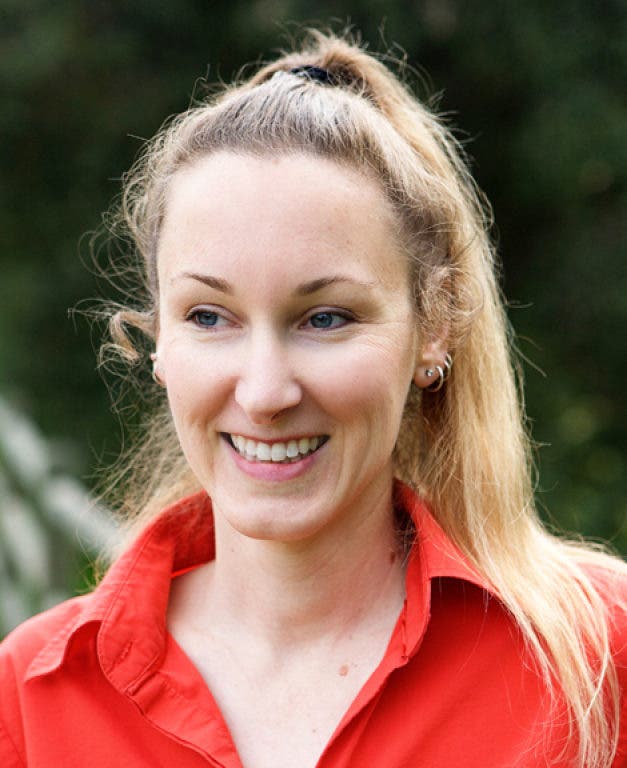
What separates Glendora city council candidate Erica Landmann-Johnsey from other aspiring politicians is that she simply doesn’t see herself as a politician. She’s a representative for the people, and there’s a distinct difference, she says.
Landmann-Johnsey moved to Glendora with her family in 1991, and the 37-year-old and her husband have stayed in Glendora to raise their 3-year-old twins.
The middle school teacher and University of La Verne adjunct professor said that she didn’t expect to pursue a career in local government until 2004, when she heard the council was considering a proposed assisted living facility in her neighborhood on Bonnie Cove and Gladstone avenues.
Find out what's happening in Glendorafor free with the latest updates from Patch.
With hundreds of residents opposed to the project, Landmann-Johnsey helped lead a successful campaign to effectively stall the proposed project (the original developer has since sold the property).
Since then, Landmann-Johnsey has been a constant presence at city council and planning commission meetings, speaking out on various issues especially on land and development issues.
Find out what's happening in Glendorafor free with the latest updates from Patch.
Her willingness to speak out against city council perspectives – Landmann-Johnsey and other Glendora residents sued the city following the assisted living facility dispute—has made her the target of criticism.
But Landmann-Johnsey refuses to be affiliated to any political clique, asserting her commitment will always be to citizens of Glendora. She says she firmly believes that her decisions as a city council member will always be made as an advocate for the public, rather than for monetary or political gain.
Landmann-Johnsey talks to Patch about issues she feels are important to Glendora, such as land preservation, development and traffic, the division between north and south Glendora and her past lawsuit with the city.
Land preservation, especially regarding the South Hills, has been an issue that’s very close to you. Why do you feel this is an issue Glendora should address?
I’m an avid hiker of South Hills Wilderness Park. I go hiking with my twins in a stroller. I love teaching them about different birds and they know what squirrels and rabbits are. They know the difference between a red hill hawk and golden eagle and an owl.
The South Hills are a very unique feature because usually you don’t find wilderness surrounded by an urban sprawl. But it faces challenges because the nursery has been leased out and we don’t know what they’ve been spraying there. They’re not posting what chemicals or fertilizers have been put there. This is an issue with the neighbors because we don’t know what’s been sprayed and we should be informed about that.
During the candidate meeting at the San Gabriel Valley Tribune, a candidate called the South Hills “wasted space” and said that he saw “dollar signs.” He said he thought we should develop there. It was a really sad thing to hear.
The South Hills is a vital key to the city. It’s a treasure and we need to get the word out. A lot of people don’t even realize that it’s a wilderness park. It was purchased with federal grant money to maintain permanent open space. A lot of property owners donated their parcels to maintain this as open space and as a wilderness area.
If elected, people will know that I am aware of all the issues of Glendora, ready to listen and be proactive and do my research before an important decision is made. I’ll make sure that neighbors and developers work together. But we really need to make an effort to protect our most important city treasures.
You talked about land preservation as one issue your believe is a critical for the city of Glendora. What other issues would you address as part of city council?
I’m really concerned about the speed of traffic on Glendora Avenue and the lack of traffic flow on Lone Hill Avenue. The other day I went driving on Lone Hill on a Tuesday at 3 p.m. and it took me 25 minutes to get from Gladstone to Foothill Avenue. That is simply unacceptable. The concept of the Glendora Marketplace is to get tax revenue and we are driving people away by making it inconvenient in order for people to purchase a product that they can purchase in any of the surrounding cities. These items are not unique and they’ll go to a place where it’s easier to get in and out of.
People are concerned with the vacant buildings around town. People are excited when I bring up a concept of a Whole Foods or a Sprouts to go in and make Glendora more of a destination point. We want to generate tax revenue and I think having a comparable store like Whole Food, Sprouts or Trader Joes would help that.
It would attract customers from Diamond Bar, Walnut, Covina hills, West Covina, Glendora, Azusa, La Verne and San Dimas, and you have quite a draw because that would be the only place they could go.
There has been talk about a division between north and south Glendora. Being from south Glendora, what do you think about this perspective, and how do you address it?
First of all, I just want to say that at the end of the day we all live in Glendora because we all write down Glendora down as our address. We don’t write south or north Glendora. Living in south Glendora, I know the general impression of the people is that we’re not being heard, we’re not being represented, and only one area of Glendora is being represented. We feel ignored and taken advantage of.
At the end of the day, our job is to represent every person in Glendora. Out job is to mingle with the people, and the day we forget that is the day we forget where we came from.
The council members are just citizens and we are just representing other citizens. I am continuously aware of what the issues and concerns are all over Glendora.
I am constantly in touch with the pulse of the people. I didn’t just pop up this election. I didn’t just pop up a year ago. I’ve been here and informed.
You have sued the city in the past, a move that has garnered some criticism. Why did you sue the city and do you think it was an appropriate thing to do?
When the Bonnie Cove and Gladstone facility was proposed in my neighborhood, I went and notified blocks of neighbors. We had about 150 people at that council meeting and every person spoke out against the project.
But the council told us, “Yes, there are 150 people here but there are 50,000 people in Glendora, so we are doing what’s best for the city.” To brush off 150 people who are taking time out of their day to attend a meeting in opposition to a project, you have a problem, and if you can’t even recognize that, you’ve forgotten your roots.
We gathered 4,029 signatures in opposition to the project, and the council changed their decision, but it took for us to go and do that. The council should have reached out to us, not us having to reach out to them.
This was a project that would have seriously impacted our quality of life to have this in our neighborhood. It was just complete dollar signs without any regard to the people who would have to look at that thing every day.
[Doug] Tessitor was saying it was an industrial area and it belonged there. I thought, with that statement, he’s unfamiliar with the area because I don’t have a smokestack coming out from my house. Is that the message we want to give to seniors, that we want to put them in an industrial area? I don’t think so. That whole thought process was really a concern.
The lawsuit stemmed from the Bonnie Cove and Gladstone project and we were doing everything possible to be heard. We were never really listened to. We had to pay $2000 to have it put back on the agenda and to have another public hearing. You needed two council people to put it on the agenda and no two council members would stand up and do it. So we had to pay $2000 to do so. It was all involving environmental issues and we were advised by our attorneys that we should not have had to pay a fee of $2000.
I mean, what was the harm for the city council to hear the issue one more time? They could have really had the chance to bridge the two divided sides and really come out with a positive outcome.
We felt the fee was too excessive. At the time, we felt the lawsuit was the right thing to do [the lawsuit was later dismissed by a judge].
Having us pay $2000 to put an item on an agenda was a clear message that the council didn’t want to deal with us anymore and it rubbed a lot of people the wrong way.
There has been some talk about your affiliation with recalled mayor John Harrold. Some have said that connection has been a disadvantage for you in this campaign. Do you think your association with Harrold is an issue?
First of all, I know a lot of people in Glendora and John Harrold is one of them. I know the people who live around me and he happens to live nearby me. During the Bonnie Cove and Gladstone project, he was the only person who was willing to help us. We went to all the council people to try to have them help us.
Harrold has supported a lot of different projects, including Measure A. He was willing to help Joe Santoro on that project, and yet, he’s not mentioned along with Joe Santoro.
I helped Joe Santoro as well. I walked so many streets to get the word out on Measure A. I had different blisters named after each street I walked on for that project. Ultimately, I’m my own person. I have never found another politician like me, because I’m not a politician. I’m just representing the people of Glendora, period.
There are three open seats available on a five-seat city council. With just one incumbent running among seven candidates, city voters could possibly put in a new majority on the council. The three new candidates will make a critical impact to the makeup of the city council. If you were elected, who, among the seven candidates, do you believe should join you?
I’m simply running by myself. I’m not running with any other candidate at all. I know some of the other candidates are running together, which is fine. But ultimately, it’s up to the voters to decide who best represents their feelings, thoughts and beliefs. As long as people understand I’m for the people, they can choose whoever they feel best matches their philosophies.
Editor's Note: This feature is the third in a seven-part candidate series. Each one-on-one interview will focus on an individual candidate for Glendora City Council in the March 8 election. Future articles in this series will run March 1, 2, 3, 4 and 5. The order of candidate profiles will run in the order of the final ballot.
Get more local news delivered straight to your inbox. Sign up for free Patch newsletters and alerts.