Politics & Government
County Works to Keep Strand Bathrooms Cleaner
Temporary workers are now helping to maintain the facilities but federal stimulus money to pay them runs out in September.
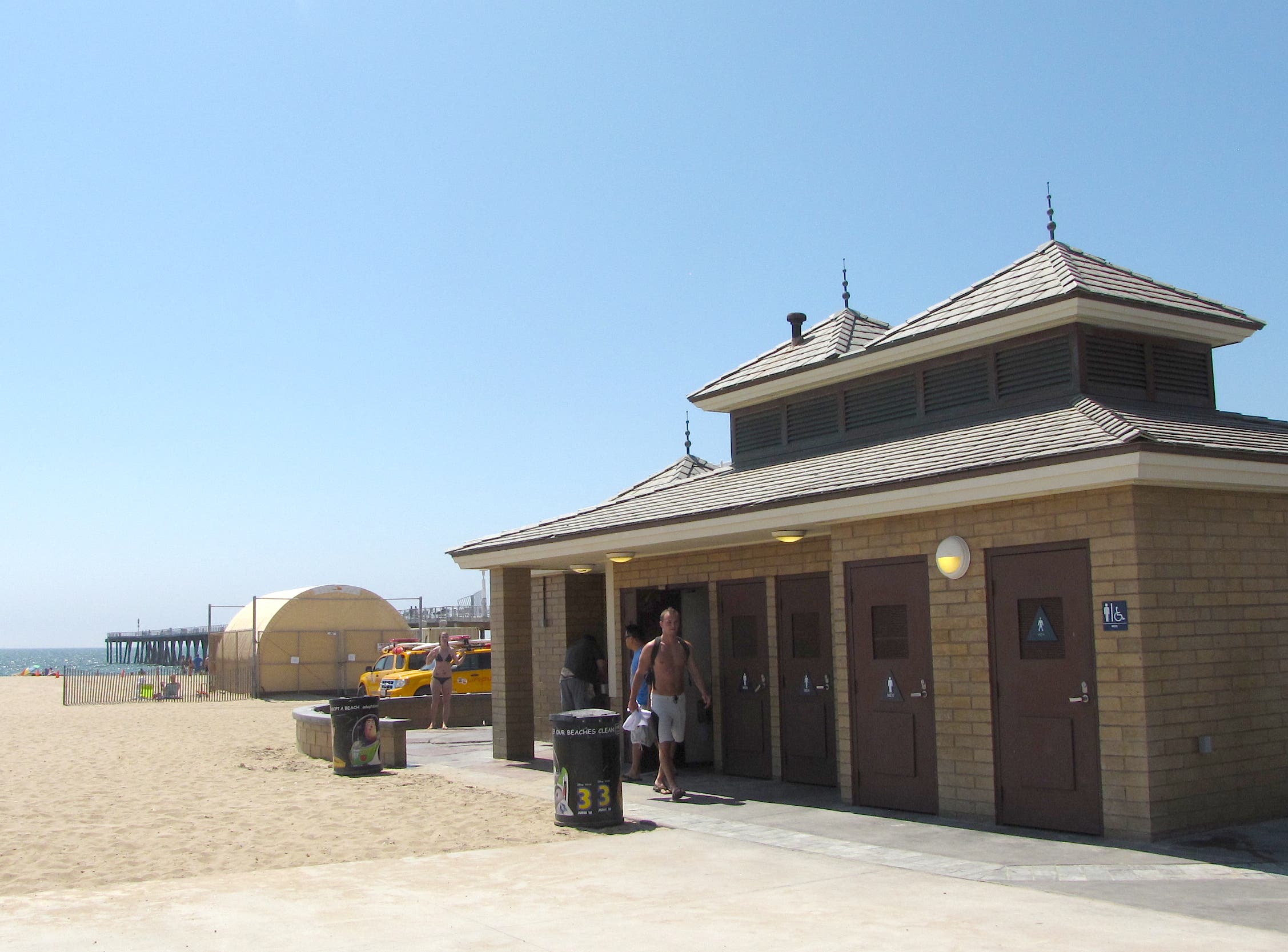


In response to a Patch story about dirty public bathrooms along the Beach Cities' shores, a Los Angeles County official in charge of overseeing the facilities acknowledged that his team must do a better job.
"We're trying to provide services to the community, but to an extent, we're missing the mark," said Kenneth Foreman, who oversees 52 bathrooms along the Southern California coastline. "As we're finding out problems, we're trying to get them corrected."
For neighboring areas, outside of Hermosa Beach (as the local beach is city-owned,) the county promises appropriate upkeep of beach restrooms. Manhattan Beach residents said that frustrations with public restrooms along the Strand have persisted for years.
Find out what's happening in Hermosa Beachfor free with the latest updates from Patch.
"There's almost nothing more important than that, when you talk about the disease and sickness and just for our good of the public," said Manhattan Beach resident Linda Bair.
Despite the county's recent budget cutbacks, the American Recovery and Reinvestment Act, a federal economic stimulus bill, provided the county with money for temporary employment for such tasks as facilities maintenance.
Find out what's happening in Hermosa Beachfor free with the latest updates from Patch.
In August 2009, the county began hiring people through the Transitional Subsidized Employment program, some to clean public restrooms along the Strand neighboring Hermosa. Recently, 33 temporary workers have been brought on, and the Department of Beaches and Harbors is looking to employ more people before funds run out by Sept. 17.
The temporary employees—along with at least one permanent staff member—work in crews of three to six people, cleaning at 5 a.m., noon, 1:30 p.m., 3 p.m. and 8 p.m., when the restrooms close. When the temporary workers' midday shifts are discontinued this fall, the county does not have a plan to replace them.
"It's going to be difficult," Foreman said. "Fortunately, summer season will be over, and there will be winter-type activity. We'll be revisiting the issue."
Restrooms along the Strand in Hermosa Beach technically became the city's responsibility as part of a contract with Los Angeles County lifeguards last year.
The city's Public Works Department organized a massive beach bathroom rehabilitation, writing in the 2009-2010 city budget that "the restrooms are [more than] 30 years old and in a state of disrepair."
The city has worked to reconstruct restrooms along the Strand at 2nd Street, 14th Street and 22nd Street. But locals and visitors are still seeing problems.
"My bathroom didn't have a lock and it definitely should since it's public," said beach-goer Arturo Nunez, who was enjoying the sun and surf near Pier Plaza Monday afternoon.
Maria Reyes, 19, who was visiting Hermosa from Las Vegas, said she became irritated after searching around a restroom for a sink to wash her hands. Soap dispensers and water fountains are located outside the public restrooms.
The idea of washing her hands in a water fountain where people put their mouths to drink was too unsanitary for Reyes.
"I wouldn't do that, that's actually gross," she said. "They really need a working sink."
The county's Foreman cited several reasons for the lack of certain amenities in public restrooms. Soap dispensaries complicate maintenance, he said, because residue falls on the already slippery floors and creates safety hazards. Wadded paper towels thrown into toilets can clog them.
"You shouldn't have to come out of a restroom feeling like you couldn't wash your hands off," Bair said. "Who knows what you're touching?"
Beach-goers unsanitary habits may not change, Bair added, but the government should still provide basic services.
"You can't make people wash their hands, but you at least have to have stuff in place for that to happen," she said.