Politics & Government
Huizar Talks Pot, #OLA, Taxes
The Council member talks about his efforts to control the proliferation of medical marijuana facilities, the standoff between City Hall and Occupy L.A., and how L.A.'s high taxation levels hurt business.


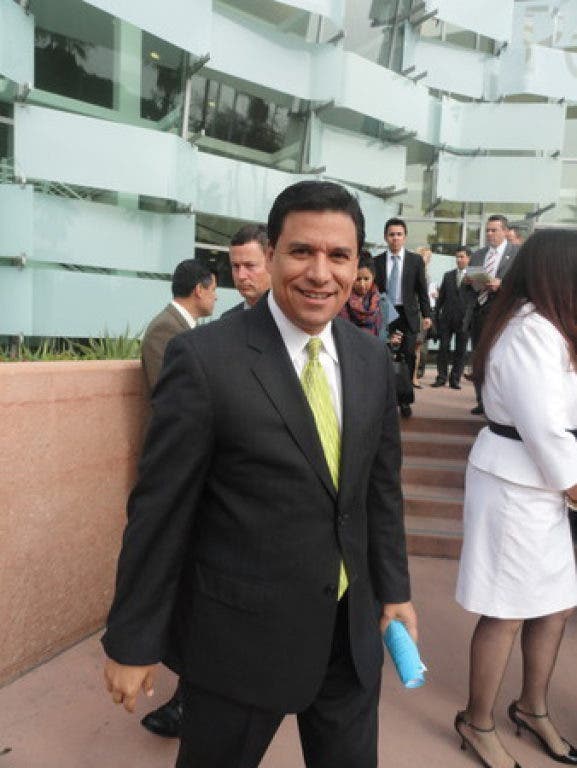
This is the transcript of the first installment of a wide-ranging interview that Eagle Rock Patch editor Ajay Singh conducted with CD 14 in his City Hall office downtown on December 6:
Patch: Is banning medical marijuana dispensaries the only way to deal with their proliferation in Los Angeles?
Find out what's happening in Highland Park-Mount Washingtonfor free with the latest updates from Patch.
Huizar: First of all, I support the access of patients to medical marijuana. I believe it has some value to assist those in need of medical marijuana. I actually helped craft the ordinance that the City has had—to strike a balance between patients having access to medical marijuana, with controlling for the ill effects that come with dispensaries, and making sure we keep them away from our young people, churches and schools, and that we prevent the over-concentration of dispensaries.
So we struck a nice balance. Unfortunately, because of the court decision and ordinance in the City of Long Beach, we have an ordinance that is no longer enforceable. We have no ordinance, no law in the City of Los Angeles that we can enforce. You have hundreds of thousands of dollars to be made through dispensaries—there are some unscrupulous people who want to put up these dispensaries, make a quick buck, and even if they get shut down, that’s fine with them.
Find out what's happening in Highland Park-Mount Washingtonfor free with the latest updates from Patch.
I predict that since we have no law, we’re in the same place were we were before our ordinance, where you saw over 800 dispensaries pop up throughout the City. I’m concerned that if we have no law, we’re going to see 800 dispensaries or more sprout up again. So I’m hoping that the California Supreme Court will give us some direction. But until then, I think the safest thing to do to prevent the proliferation of dispensaries is to ban them in the City of Los Angeles.
And there’s a reason for that. Why do you need 15 dispensaries in Eagle Rock? The City of Glendale has banned medical marijuana, the City of Pasadena has banned medical marijuana. You have this cradle there [in Eagle Rock] where everybody goes and—you know, it’s not all patients who are going to these places.
So, in order for us to avoid the ill effects of dispensaries throughout the City, I think the best thing to do right now is to ban medical marijuana dispensaries and to get clear direction from the California Supreme Court.
Now, to the patients I say this: You still have access to medical marijuana even if we ban dispensaries. The state law allows the patients to grow [marijuana] at home or to allow their caretaker to grow medical marijuana for them. That was the intent of our state law that allowed medical marijuana. We just have diverted from that so far that we need to get a better sense of what the state law of California calls for, wait for the California Supreme Court to rule and then start afresh on what an ordinance for the City of Los Angeles should look like.
We’re not only hoping to see what the California Supreme Court says about the state law, but the state law itself is very flawed. Any city in the state of California that tries to make sense of the state law, that tries to provide access [to patients] is bound to [find a law] full of loopholes.
For example, in Oregon, you can only get a prescription or a recommendation from a primary care physician. Here in California, you can get a recommendation from any doctor. And in Oregon, it is only for a very limited number of ailments. Patients have to show they’ve had a history of that ailment. In California, you could go in for practically anything and get that recommendation. It could be a headache, it could be a backache, it could have just happened overnight.
The California state law is flawed in so many ways that even for those people like myself, who want to support access to medical marijuana, it is very difficult to craft something that allows for access—with safeguards to local communities. And on top of that we have a federal government that continues to say this [marijuana] is banned, it’s a Schedule 1 drug and is illegal, and you never know if they’re going to crack down on any of these dispensaries.
So it’s a very murky situation. I would hope that we ban our medical marijuana dispensaries for now, allow the patients to have access through growing their own [marijuana], wait for the California Supreme Court [to rule] and at the same time lobby the state legislature to change their laws, which make no sense.
Patch: You were one of the Council members who welcomed the Occupy L.A. protesters in October. Why do you think the City Council allowed protesters to first break the law and then have them arrested under the same set of laws?
Huizar: What we did as a Council is that we voted for a resolution that supported the message that the Occupiers brought with them, which was that we need to do something as a country to focus on people losing their homes, people losing their jobs. What we didn’t say—and the resolution didn’t say—was that you could stay there [on the City Hall lawns] as long as you want, whenever you want. I think that was a specific Council member [who] said, ‘stay as long as you want.’
The talk at the time when we passed a resolution was that they [Occupy L.A. protesters] would follow the law just as any other person wanting to use that space. As a public space, people can go there during the day, but it closes at night. The discussion was that at nighttime, those tents have to be rolled up—they can’t be in a public area.
That was the idea—that’s what I supported. And although I agree with their message, I would be in violation of our Constitution if I preferred their message and allowed them to stay there [as opposed to] if I didn’t support a message that I disagree with and not allow them to stay there.
I think what we did was the correct thing to do. Given the frustration that you see in the country, given the emotion, it wasn’t the right time to clamp down and say, ‘you’re violating City ordinances.’ But we couldn’t allow this to go on forever—it’s not within the law, it is not healthy, it is not safe. On the other hand, you allow them to express their message and you allow a situation where things settle in a peaceful manner—and that’s what happened.
Patch: The City of Los Angeles has the highest taxation levels of all the 88 cities in Los Angeles County. Why does the City arguably exploit businesses—as well as its residents—with such taxes and fees that cause big and small businesses to leave, especially at a time when the City is such dire straits because of its perceived mismanagement and unethical practices of at least the past decade?
Huizar: The City of Los Angeles, we’ve been told, [is] not business-friendly, and to some extent it’s true when you look at the types of fees we impose, the taxes, and also the mess—the bureaucratic mess—that exists when you try to get the proper permits to conduct business. A lot of our entrepreneurs just throw up their arms and give up. And that’s very unfortunate.
In fact, just recently, a study was put out that shows that when it comes to retail, there’s a lot of slippage: Some of the revenue that the City could have had, some of the shops that local residents would like to go to, they don’t exist in the City of Los Angeles—they exist on the periphery, in cities or municipalities near our City boundaries. And they take a lot of our customers out and take their revenue with them.
And that’s because of a number of factors. There’s not a lot of available land—if you want to build a big retail development [in L.A.]. There might be less taxes nearby. What we have to do as a City is look at [the situation] industry by industry and determine what is it that’s helping industries locate in a certain area and how can we assist them. And also look at our current tax code and see what we can do to give them some relief—where it makes sense—without draining the revenue that we would otherwise receive for our General Fund.
What we can’t do is just throw a blanket out there and say to everyone that we’re going to give you tax relief. So we really have to step back, get that assessment about what determines industries to locate [elsewhere] and how [the industries will react to] different types of relief, so that we know where we’re going to give that relief. We have to do that.
Right now, the gross receipts tax is one that’s under discussion. We’re also thinking of extending our business tax holiday to a number of businesses so that the new businesses that locate in the City of Los Angeles get a longer period of time before paying certain taxes.
In the long term, for us to get out of the situation we’re in—shortfalls in our budget each and every day, each and every year—we have to look at ways to increase our revenue by bringing more businesses. Because at the end of the day, we get the majority of our revenue from sales tax and property tax. And we’ve already seen what happened to our property values—they’ve declined significantly.
Stay tuned on Wednesday for the second installment of our interview with Council member José Huizar.
Get more local news delivered straight to your inbox. Sign up for free Patch newsletters and alerts.
