Crime & Safety
Millions of California Residents 'Drop, Cover, Hold On' for Great Shakeout
"Drop, Cover and Hold On" for Oct. 20's Great Shakeout. Coastal towns like Laguna Beach and Newport went to work practicing what comes after


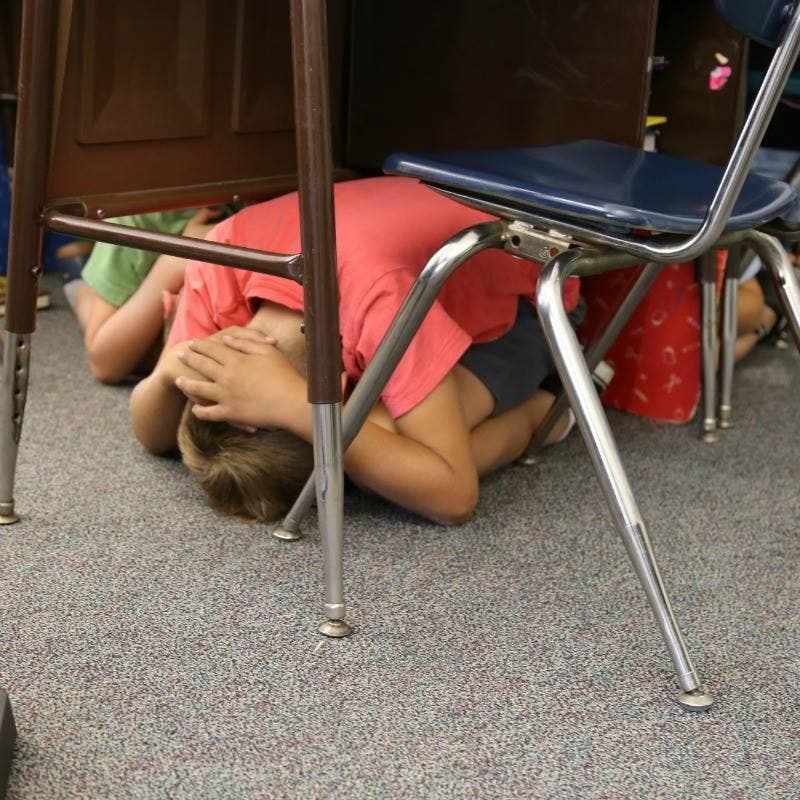
More than 10-million Californians, including one million Orange County residents, workers and emergency responders, practiced their "drop, cover and hold on" skills Thursday, Oct. 20 at 10:20 a.m. as part of an annual earthquake preparedness drill aimed at ensuring people are ready for the "big one."
The website www.GreatShakeout.org registered more than 10 million Californians who participated in the "earthquake drill," but with cities that hug the California coastline, like Laguna Beach in Orange County, the reason to participate in the Great Shakeout is even stronger.
"In Laguna Beach, we have the potential for every disaster that could occur in California," Emergency Opetations Coordinator Jordan Villwock said. "Tsunamis, wildfires, floods, fire, mudslides, all are possible here."
Find out what's happening in Laguna Beachfor free with the latest updates from Patch.
The emergency training for coastal towns, like Laguna Beach, is if you are on the sand and feel an earthquake, seek higher ground.
"The way most of our beaches are faced, we are not as susceptible to tsunamis as some locations," he said. Laguna Beach, as many southern and northern California beaches, is graced with sheer cliffs.
Find out what's happening in Laguna Beachfor free with the latest updates from Patch.
"If you are on the sand, get higher right away," Villwock said. "You never know where an earthquake is centered, and if it was right off of the coast, then tsunamis are possible."
In Laguna Beach, the downtown areas as well as Aliso and Victoria beaches are more susceptible to tsunami activity, the wash of water that could sweep inland following a large quake.
Taking its unique emergency situation seriously, the City of Laguna Beach hired Villwock as a full-time emergency operations coordinator in 2015 where he manages education and outreach, grant writing for the city, as well as annual cross-department exercises like the Great Shakeout.
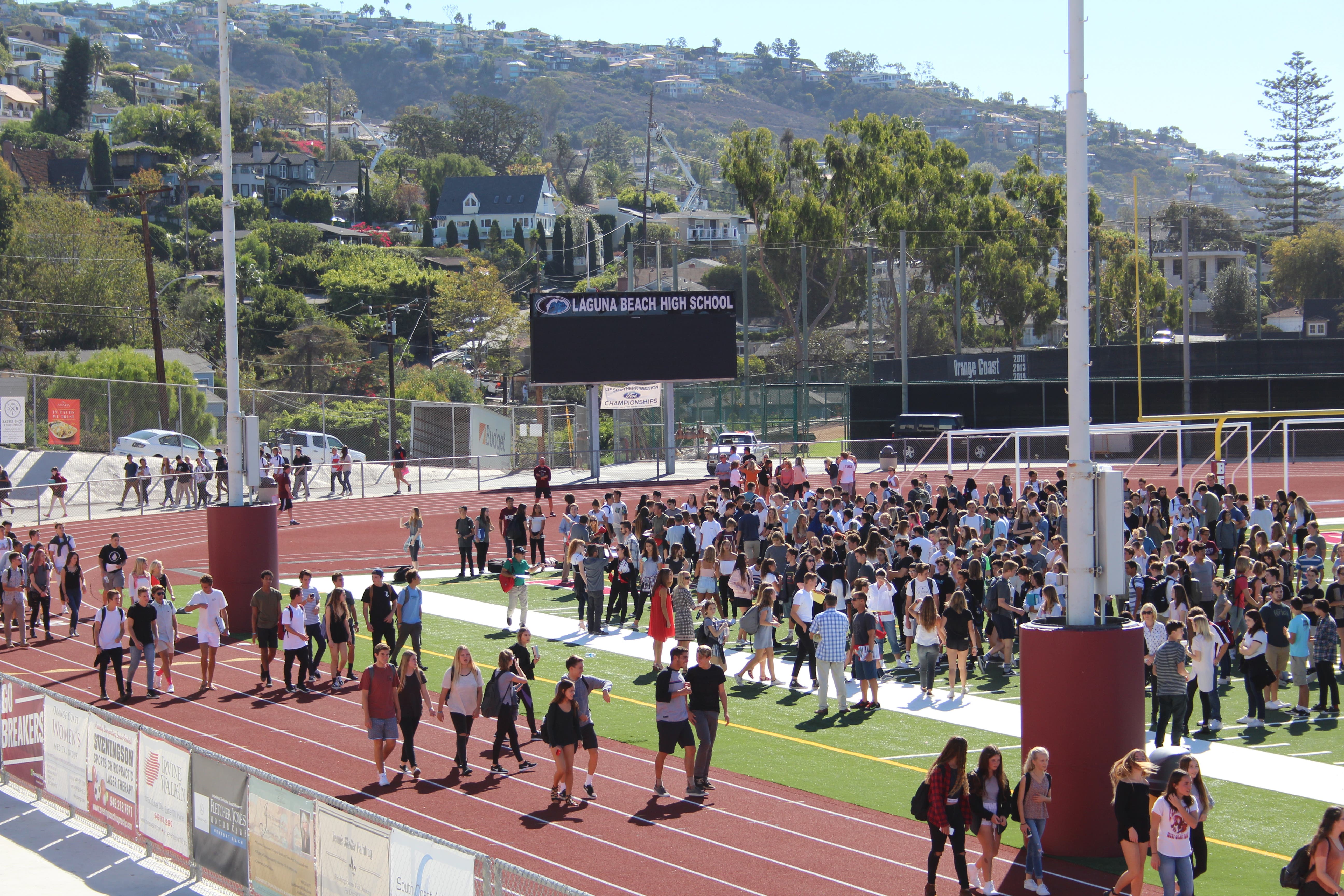
All four Laguna Beach schools did the drill and practiced following their evacuations, as did the majority of school districts across California.
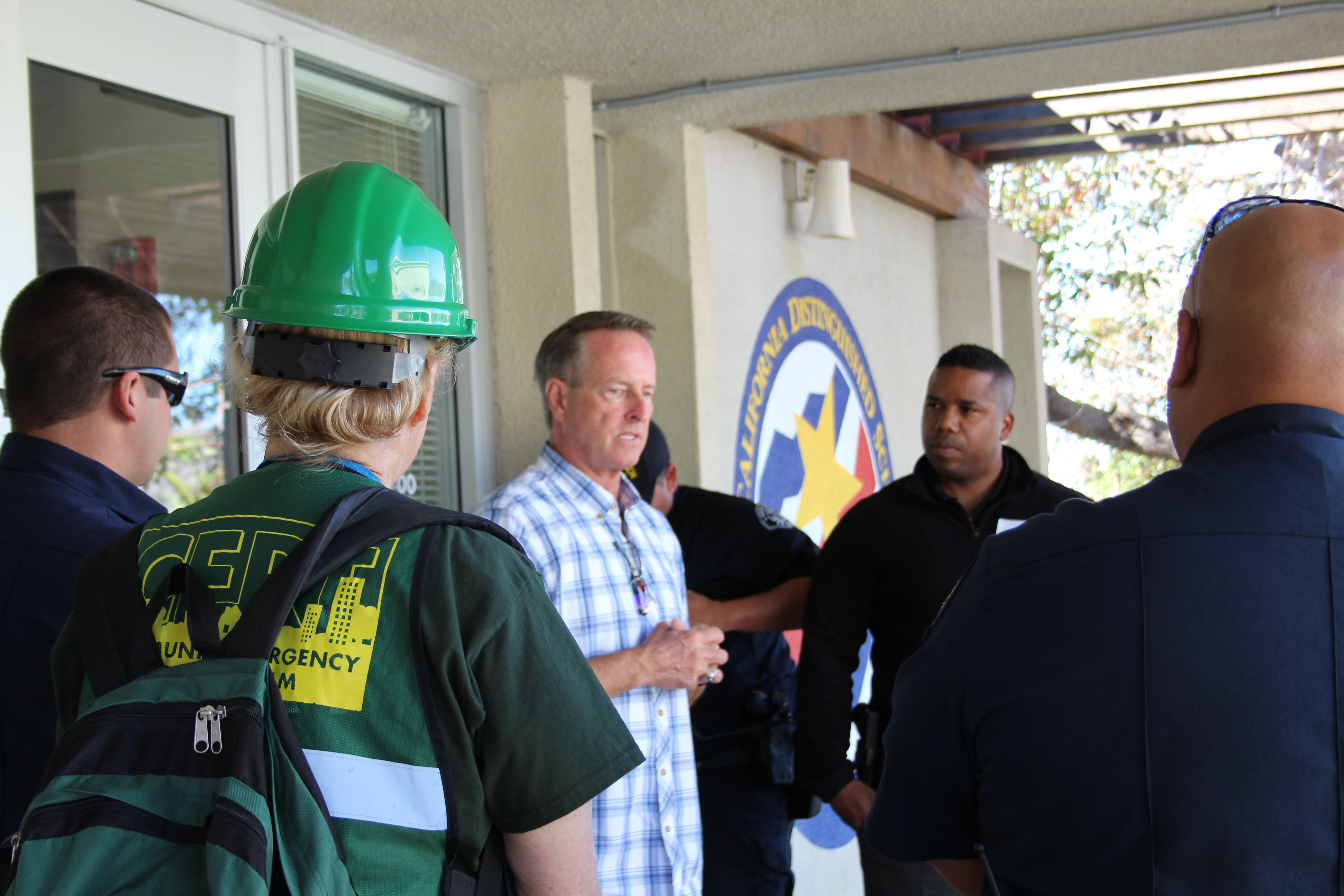
In the city and around the state, emergency response agencies including Police, Community Emergency Response Teams (CERT) all worked together to practice their set plan of post-quake responsibilities.
A bunch of Emergency Managers drilling the #GreatShakeOut Drop, Cover, and Hold on. #iaem16now #IAEM16 pic.twitter.com/RGZ4L3533C
— JordanVillwock (@jdawg911) October 19, 2016
In Newport Beach emergency responders conducted what they call their "citywide windshield survey," according to public information officer Jennifer Manzella.
"If there was a major natural disaster, our first responders have a list of priority facilities where they would conduct a quick survey to see if there had been an impact from an earthquake or tsunami," she said. During the Great Shakeout, teams in the field "role play" those windshield survey, dividing the city into different areas and report their findings back to the station.
"It's a coordinated 'fire drill' and not a difficult process but good to practice," Manzella said. Those high-profile areas include City Hall and facilities for shelters, schools, utilities and communication areas.
Millions of Californians registered to take part in the "Great California Shake Out," which took place at 10:20 a.m. About 10.6 million people registered to take part in the drill statewide.
At 10:20 a.m., participants followed instructions to "drop" to the ground, take "cover" under a desk, table or other sturdy surface, and "hold on" for 60 seconds, as if a major earthquake were occurring.
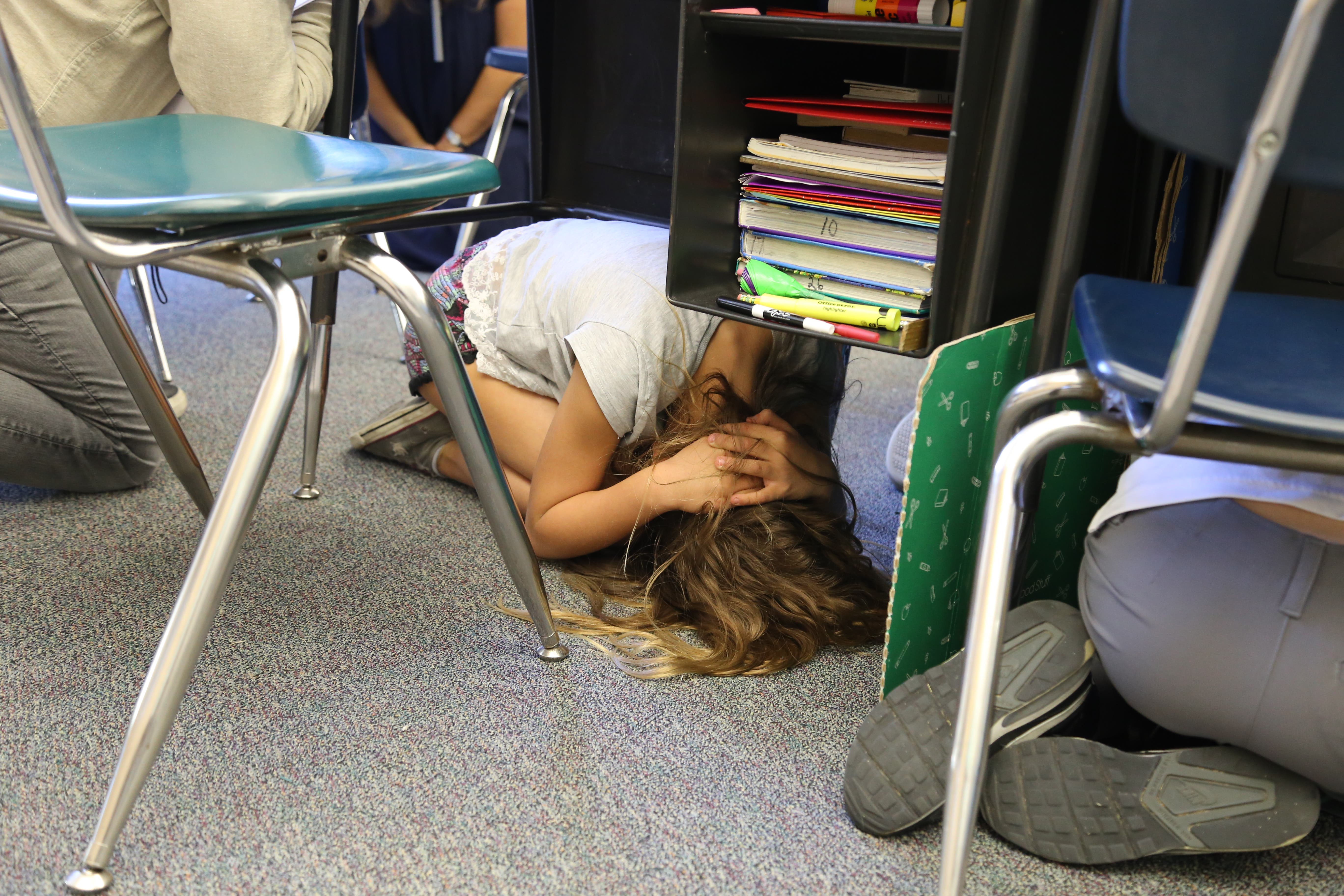
In the event of a large quake, U.S. Geological Survey officials say people who are outdoors should move to a "clear and open" area, avoiding power lines, trees, signs, buildings and other items that can fall. Motorists should pull to the side of the road and set the parking brake — but not beneath bridges, power lines or traffic signs.
"All Californians know that we live in earthquake country, but many of us have not experienced a damaging earthquake, such as young people or those that have moved to the region in recent years," according to ShakeOut.org. "Understanding the risks and preparing to survive and recover can help keep your family safe."
The website also notes that while the San Andreas fault could generate a large-scale earthquakes, up to magnitude 8, "there are over a hundred other active faults in the region that can produce smaller earthquakes like the Northridge quake. If you live in Southern California, one or more of these faults is probably near you."
According to the USGS, some 2,000 people would die, tens of thousands would be injured and more than $200 billion in damage would result from a magnitude 7.8 or larger quake, which would have 50 times the intensity of the Jan. 17, 1994, Northridge earthquake. Hundreds of aftershocks would follow, a few of them nearly as big as the original event, according to the USGS.
In Laguna Beach, a live "Great Shakeout" broadcast by 93.5 radio showed what a city grant could do for a public information system.
Live on @KX935 for the #GreatShakeOut @lagunabeachgov pic.twitter.com/cEW8cxH46X
— JordanVillwock (@jdawg911) October 20, 2016
"They broadcast live on air, using their city-granted generator given for that purpose," Villwock said. "We talked live on the radio that was being run by generator and answered questions and gave away hand crank radios."
Radios, operated by crank, should be part of any "earthquake kit" to assist residents in learning emergency information in the case of a natural disaster.
Homeowners and renters should also know how to turn off the gas in their house or apartment in case of leaks.
Californians should be prepared to be self-sufficient or "shelter in place" for 72-hours following an earthquake or other major disaster, officials say.
That includes having:
- first-aid kit
- medications
- communication plan: radio, family plan for contact
- food and enough water for each member of a household to drink one gallon per day for at least 72 hours
Read Also:
Are You Really Ready for the Next Big California Earthquake?
Photo courtesy City of Laguna Beach Emergency Management
Get more local news delivered straight to your inbox. Sign up for free Patch newsletters and alerts.