Crime & Safety
O.C.'s Worst Mass Murderer Seeks Ruling that Will Avoid Death Sentence
Judge Thomas Goethals said a recent appellate decision raises the bar "pretty high" for Scott Dekraai to get his way.


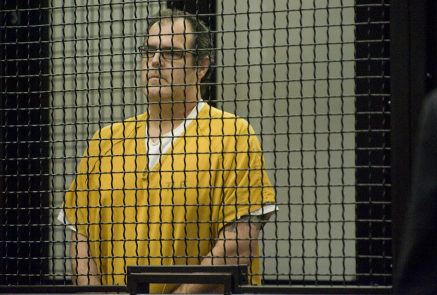
By PAUL ANDERSON
City News Service
A judge today asked the attorney representing the worst mass killer in Orange County why he should rule in his favor in light of a recent contrary appellate court ruling.
A 4th District Court of Appeal panel rejected a bid July 7 to dismiss the convictions of five men who stomped to death fellow inmate John Chamberlain despite the finding of government misconduct that was “about as bad as it gets,” Orange County Superior Court Judge Thomas Goethals said.
Find out what's happening in Laguna Beachfor free with the latest updates from Patch.
Despite the misconduct, the justices ruled the defendants received a fair trial and their convictions should stand, Goethals said.
“This is a pretty high bar,” Goethals said, adding he would re-read the opinion a few more times before issuing a ruling Monday in the motion filed by Scott Sanders of the Orange County Public Defender’s Office on behalf of Scott Dekraai.
Find out what's happening in Laguna Beachfor free with the latest updates from Patch.
Sanders replied the major difference is that his client is not seeking to have his convictions overturned. In fact, Dekraai, 43, pleaded guilty in May, leaving only the penalty phase to be completed as prosecutors seek to have Dekraai sent to Death Row.
“We didn’t come in here and say, ‘Dismiss the case,’ “ Sanders said, adding he sought a “remedy more suitable.”
The real choice in this case, Sanders argued, is whether Dekraai is executed or sentenced to life in prison without the possibility of parole.
Sanders brought up U.S. District Judge Cormac Carney’s ruling that the death penalty as administered in California is unconstitutional because of the average 25 years between when a death sentence is given and an execution is carried out. Given that average and Dekraai’s life expectancy of 73 years, there was only a five-year difference.
Goethals said Sanders had made a “striking” point, and the judge acknowledged that he has not found another legal ruling that was similar in terms of the prosecutorial punishment sought.
Sanders said Dekraai can never be sure he will get a fair shake in the penalty phase because of the repeated failure to meet legal obligations to hand over evidence to the defense, known by attorneys as “Brady violations.”
Sanders also argued that prosecutors made “repeated improper attempts” to obtain Dekraai’s psychiatric records at the onset of the case. Sanders also alleged that some investigators for the prosecution have perjured themselves during the evidentiary hearing.
Also among Sanders’ claims is a conspiracy among sheriff’s deputies to give jailhouse snitches easy access to targeted inmates to illegally pump them for information about their cases. In Dekraai’s case, a confidential informant was placed in a cell next to Dekraai’s.
Sanders alleges that the informant illegally questioned his client after he was charged and established a relationship with an attorney. Perez testified he just overheard Dekraai talking about his case voluntarily, which would be legal.
The informant conveyed some of Dekraai’s comments on his case to investigators, prompting authorities to have Dekraai’s cell wired when he was caught making comments that sounded as if the defendant was bragging about the Seal Beach massacre.
Sanders’ motion has already affected some of the gang cases he uses to buttress his allegations of the improper use of government informants.
In the case against Leonel Vega, prosecutors vacated a murder conviction and will seek another trial. Assistant District Attorney Howard Gundy told Goethals today that another defendant who had pleaded guilty in a gang case is now seeking to have his plea withdrawn.
Sanders said the prosecution’s team cheated because “their natural instinct is they want to win.”
Sanders pointed to a lack of documentation of some of the movements of the confidential informants, which sometimes included putting them in disciplinary isolation with another inmate despite not having done anything wrong, as another example of investigators wanting to cover their tracks.
“It’s basically saying we can do whatever we want in the jails and too bad for you because you’ll never find out,” Sanders said. “It’s horrible. It’s an affront to the justice system.”
Sanders alleged that investigators even blamed Orange County Superior Court Judge Terri Flynn-Peister, when she was a federal prosecutor, for withholding information about confidential informants from state prosecutors, who, in turn, could not provide it to defense attorneys as they are obligated by law. They did so to “protect cases and careers,” Sanders said.
Gundy argued that most of what Sanders cites in his conspiracy theory were just honest mistakes on behalf of prosecutors, who did make some errors in the exchange of evidence with defense attorneys in the gang cases.
As evidence of the government’s good faith, Gundy said, the judge should consider that prosecutors vacated Vega’s murder conviction.
Gundy also denied that sheriff’s investigators were skirting the law when they moved confidential informants around to solicit information from charged defendants. Instead, they were just to keep their ears open to “bragging” about criminal exploits, which is fair game.
The informant’s assignment to a cell next to Dekraai’s was merely a coincidence, Gundy contended. The issue has become moot following a pledge by prosecutors not to play the recording of Dekraai during the penalty phase, Gundy said.
Most of the errors in exchanging evidence came during the cases Deputy District Attorney Erik Petersen was prosecuting as part of a state and federal crackdown on the Mexican Mafia known was Operation Black Flag and the chief reason for those errors was Petersen took on more cases than he could handle because “he just can’t say no,” Gundy said.
There was also “some sort of disconnect” between federal and state authorities working on Operation Black Flag, which also led to some errors, Gundy argued.
“It’s not a big deal. No one’s hiding the ball. There were just too many people in the kitchen,” Gundy said.
Get more local news delivered straight to your inbox. Sign up for free Patch newsletters and alerts.