Health & Fitness
Governor Brown Signs California's Good Samaritan Bill in Law
California's Good Samaritan Law become Law January 2013.
Effective January 1, 2013, California will be one of a handful of states that now has a good samaritan law on it's books.
The drug and overdose problem in California has reached epidemic proportions according to the DEA. Prescription drug use, abuse, and addiction, is a pathway to heroin use as heroin produces the same high but for a fraction of the cost.
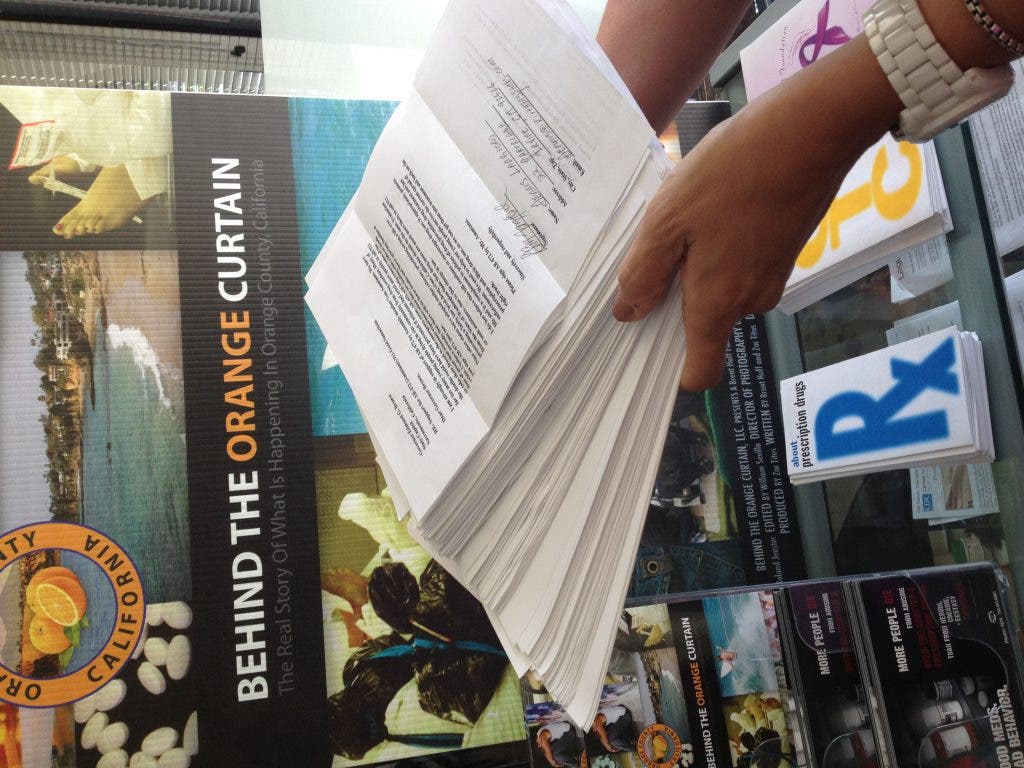
Many of the families depicted in the documentary "Behind The Orange Curtain', lost their children due to drug overdosing. Vernon Porter, a local parent and worship pastor lost his daughter Vanessa after an accidental drug overdose. The individual that she was with, put her in a bedroom and turned the phone off. He then proceeded to entertain his friends and called 911 thirteen hours later, after he cleaned up his home. At that point, Vanessa had already passed.
Find out what's happening in Laguna Niguel-Dana Pointfor free with the latest updates from Patch.
Drive down Camino Capistrano and next to the freeway in the dirt is a decorated no dumping sign. Joey Kennedy from San Clemente was out with his friends. He started to overdose and they panicked. They drove him from Orange back to San Juan Capistrano and made two attempts at a 911 call from a Jack In The Box. When asked their name and would they be there, they continued to hang up. The last call clearly states that there is a young man lying in the road - right where they left them. By this time, the 911 operator thought it was just a group of guys fooling around and chose not to send a first reponder out. The next morning, the next call was from a woman driving to work stating that there is a body on the side of the road. It was Joey and he was dead.
The law goes into effect on January 1st. This will allow anyone in an overdose situation to place a call for help, their friends or whomever they are with, without the fear of arrest or prosecution.
Find out what's happening in Laguna Niguel-Dana Pointfor free with the latest updates from Patch.
First reponders, in the case of an opiate overdose can administer Naloxone which instantly stops the overdose and give them time to transport.
This has been a big victory for the parents here in Orange County who have been aggressively championing this bill. The exact bill verbiage is attached. So now it is time to spread the word that if there is an emergency situation involving drugs and overdosing, help is just a phone call away. Here is the law:
LEGISLATIVE COUNSEL'S DIGEST
AB 472, Ammiano. Controlled substances: overdose: punishment.
Existing law, the California Uniform Controlled Substances Act,
classifies controlled substances into 5 designated schedules, with
the most restrictive limitations generally placed on controlled
substances classified in Schedule I, and the least restrictive
limitations generally placed on controlled substances classified in
Schedule V. Existing law generally provides punishment for the
unauthorized use, possession, and sale of controlled substances.
This bill would provide that it shall not be a crime for any
person who experiences a drug-related overdose, as defined, who, in
good faith, seeks medical assistance, or any other person who, in
good faith, seeks medical assistance for the person experiencing a
drug-related overdose, to be under the influence of, or to possess
for personal use, a controlled substance, controlled substance
analog, or drug paraphernalia, under certain circumstances related to
a drug-related overdose that prompted seeking medical assistance if
that person does not obstruct medical or law enforcement personnel.
The bill would provide that its provisions shall not affect laws
prohibiting the selling, providing, giving, or exchanging of drugs,
or laws prohibiting the forcible administration of drugs against a
person's will. The bill would provide that it shall not affect
liability for any offense that involves activities made dangerous by
the consumption of controlled substances, including, but not limited
to, driving under the influence.
THE PEOPLE OF THE STATE OF CALIFORNIA DO ENACT AS FOLLOWS:
SECTION 1. The Legislature finds and declares all of the
following:
(a) Drug overdose is the second leading cause of injury and death
in the United States, behind only motor vehicle accidents and ahead
of firearms. California has the greatest number of overdose deaths in
the country per year. Moreover, drug and alcohol overdose morbidity
and mortality are not confined to adults but also devastate
California's youth.
(b) The State Department of Alcohol and Drug Programs reported
that there were 3,102 overdose deaths in 2002, the first year the
department began tracking overdose deaths in California. By 2006, the
number of overdose deaths had grown to 3,646.
(c) Many overdose fatalities occur because peers delay or forgo
calling 911 or seeking emergency assistance for fear of arrest or
police involvement, which researchers continually identify as the
most significant barrier to the ideal first response of calling
emergency services. Furthermore, if criminal punishment is intended
to deter drug abuse, it is clearly too late to deter such abuse when
a person is already suffering from an overdose.
(d) The state's network of drug treatment providers, syringe
exchange programs, county public health departments, and others who
work with communities at high risk of drug overdose are well
positioned to disseminate educational messages on the importance of
seeking emergency medical assistance to prevent overdose deaths. In
implementing this act, the Legislature intends to address the drug
user's reasonable fear that they, or the victim, might be arrested if
they seek medical assistance.
(e) It is the intent of the Legislature to encourage a witness of
a drug-related overdose to call 911 or seek other emergency
assistance in a timely manner in order to save the life of an
overdose victim by establishing a state policy exempting minor drug
possession or drug paraphernalia possession from criminal prosecution
in situations involving medical emergencies.
(f) It is not the intent of the Legislature to protect individuals
from prosecution for any offense not specifically described in
subdivision (a) or (b) of Section 11376.5 of the Health and Safety
Code, or to interfere with law enforcement protocols to secure the
scene of an overdose.
SEC. 2. Section 11376.5 is added to the Health and Safety Code, to
read:
11376.5. (a) Notwithstanding any other law, it shall not be a
crime for a person to be under the influence of, or to possess for
personal use, a controlled substance, controlled substance analog, or
drug paraphernalia, if that person, in good faith, seeks medical
assistance for another person experiencing a drug-related overdose
that is related to the possession of a controlled substance,
controlled substance analog, or drug paraphernalia of the person
seeking medical assistance, and that person does not obstruct medical
or law enforcement personnel. No other immunities or protections
from arrest or prosecution for violations of the law are intended or
may be inferred.
(b) Notwithstanding any other law, it shall not be a crime for a
person who experiences a drug-related overdose and who is in need of
medical assistance to be under the influence of, or to possess for
personal use, a controlled substance, controlled substance analog, or
drug paraphernalia, if the person or one or more other persons at
the scene of the overdose, in good faith, seek medical assistance for
the person experiencing the overdose. No other immunities or
protections from arrest or prosecution for violations of the law are
intended or may be inferred.
(c) This section shall not affect laws prohibiting the selling,
providing, giving, or exchanging of drugs, or laws prohibiting the
forcible administration of drugs against a person's will.
(d) Nothing in this section shall affect liability for any offense
that involves activities made dangerous by the consumption of a
controlled substance or controlled substance analog, including, but
not limited to, violations of Section 23103 of the Vehicle Code as
specified in Section 23103.5 of the Vehicle Code, or violations of
Section 23152 or 23153 of the Vehicle Code.
(e) For the purposes of this section, "drug-related overdose"
means an acute medical condition that is the result of the ingestion
or use by an individual of one or more controlled substances or one
or more controlled substances in combination with alcohol, in
quantities that are excessive for that individual that may result in
death, disability, or serious injury. An individual's condition shall
be deemed to be a "drug-related overdose" if a reasonable person of
ordinary knowledge would believe the condition to be a drug-related
overdose that may result in death, disability, or serious injury.