Neighbor News
Why Are Stocks and Real Estate Still Rising?
Rise of Real Estate value VS lowering mortgage rates!

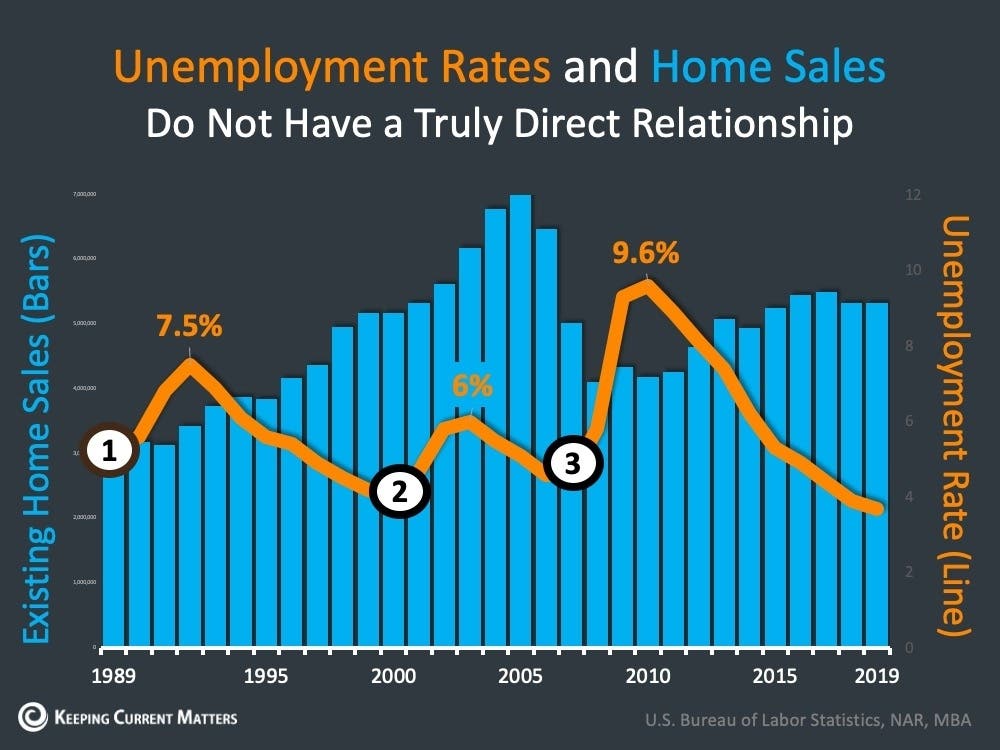


We have just finished one of -- if not the weakest -- quarter in history. The corona virus is still raging. Millions have lost their jobs. Yet the stock market continues to rise, recovering from its lows hit early this year. Thus, the question is -- why? There are many possible explanations for the equity market's resilience, but we will pick just two of these. First, the markets are not looking at today, but the future. And those buying stocks are predicting a brighter future. To that end, the stock market has a history of doing well in troubled times, with many analysts citing 1968 as an example. The year 1968 was a year of escalating war, assassinations, civil unrest and more. Yet stocks that year rose almost 8.0%.
Enter Your Address| Get A Price In 9 Seconds Or Less!!
https://www.ocluxuryproperty.com/home-evaluation.html
Secondly, the medicine the Federal Reserve has applied to the system favors stocks. Record low interest rates discourage investors from parking cash. They are looking for greater returns and, in the long run, stocks have provided those returns. You might ask, what about the average American, who is likely to be a bit more risk-averse in today's challenging environment? Are consumers that bullish on the stock market?
We would argue that the average American is also bullish about the future. But they are taking the Fed's medicine and using it to purchase homes instead of stocks. If you want to look at one investment that is even hotter than stocks, it is real estate. Recently, a Gallup poll confirmed this concept. The poll showed that real estate was the number one long-term investment favored by Americans and stocks came in a distant second. Thus, the big institutions are buying stocks, but the average consumer is putting their money in a place they can call home -- at record low interest rates.
Find out what's happening in Laguna Niguel-Dana Pointfor free with the latest updates from Patch.
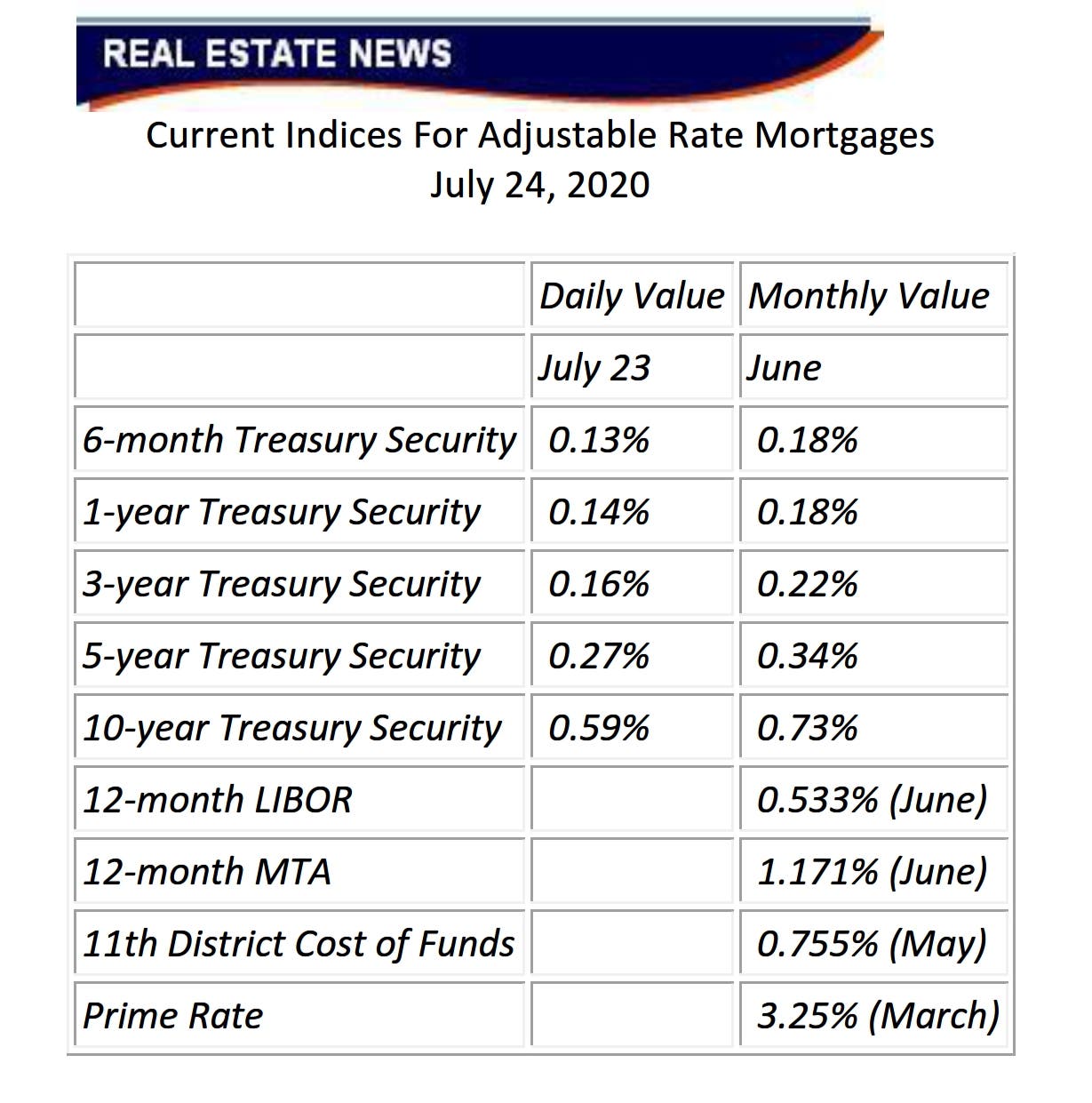
The Markets. Rates rose slightly in the past week. For the week ending July 23, Freddie Mac announced that 30-year fixed rates rose to 3.01% from 2.98% the week before. The average for 15-year loans increased to 2.54% and the average for five-year ARMs rose to 3.09%. A year ago, 30-year fixed rates averaged 3.75%, approximately 0.75% higher than today. Attributed to Sam Khater, Chief Economist, Freddie Mac - "While housing demand continues to rebound, the month-long swoon in economic activity has caused the 10-year Treasury benchmark to drop. In the short-term, this means the demand will continue on the back of near record low rates on home loans. However, the most recent consumer spending data has been pointing to slow growth since mid-June. The concern is that the pause in economic activity will cause unemployment to remain elevated which will lead to longer-term labor market distress." Note: Rates indicated do not include fees and points and are provided for evidence of trends only. They should not be used for comparison purposes.
Find out what's happening in Laguna Niguel-Dana Pointfor free with the latest updates from Patch.
“Record low interest rates are proving to be a powerful motivator and benefit for home buyers in an otherwise challenging time,” says Mark Fleming, Chief Economist at First American. First American recently released its proprietary Potential Home Sales Model for the month of May 2020. Highlights of the report showed that potential existing-home sales increased to a 4.92 million seasonally adjusted annualized rate (SAAR), a 6.2% month-over-month increase. This represented a 46.5% increase from the market potential low point reached in February 1993. The market potential for existing-home sales decreased 7% compared with a year ago, a loss of nearly 368,120 (SAAR) sales. “The early signs of a housing market comeback that appeared in mid-April, rising weekly purchase loan applications, continued to surge through May and into June. In fact, weekly purchase loan applications have now exceeded pre-pandemic levels,” Fleming said. “The two biggest drivers of the increase in May are slightly loosening credit standards, which allow more potential home buyers to qualify for financing, and the increase in house-buying power due to historically low interest rates,” he added. Source: First American
Tappable home equity, meaning the equity homeowners could borrow against while leaving a 20% buffer, rose to a record $6.5 trillion in the first quarter, Black Knight said in a report. More than 75% of homeowners with tappable equity have interest rates above 3.5%, the report said. With rates currently near 3%, the amount they would save each month likely would outweigh the cost of the transaction. While cash-out refis might provide support to the economy in the future, as people tap equity to renovate homes or pay down credit cards, the levels have fallen this year. “Driven by record-low 30-year rates on home loans, the first quarter saw overall refinance lending climb to a 7-year high,” the report said. “At the same time, the number of cash-out refinances, as well as the dollar value of equity withdrawn via refinance, fell for the first time since early 2019.” Rising home prices have increased the equity Americans have in their properties. Home values are based on what comparable properties in the neighborhood sell for, so even if homeowners aren’t thinking of putting a property on the market, it increases their equity when nearby homes sell at high prices. The median price of an existing home rose 4.9% in 2018 and 2019, according to the National Association of Realtors. It probably will increase 3.6% this year, the group said in a forecast recently. Source: HousingWire
Home prices continued to hold up on a national basis in April. The S&P CoreLogic Case-Shiller U.S. National Home Price Index, covering all nine U.S. census divisions, reported a 4.7 percent annual gain in April, up from 4.6 percent in March. The National Index posted a 1.1 percent month-over-month increase before seasonal adjustment and an 0.5 percent gain after it. The 10-City Composite appreciated at an annual rate of 3.4 percent, unchanged from the March rate while the 20-City Composite's annual increase rose to 4.0 percent from 3.9 percent the previous month. The 10-City and 20-City measures had monthly increases of 0.7 percent and 0.9 percent respectively before seasonal adjustment and both posted 0.3 percent increases after adjustment. In April, all 19 cities reported increases before seasonal adjustment. Source: CoreLogic