Community Corner
Ambassador Charles Shapiro Takes Over as President for the Institute of the Americas
La Jolla Patch recently caught up with Ambassador Shapiro to learn how his previous experience will help him succeed in his new role at the Institute of the Americas on UC San Diego's campus.
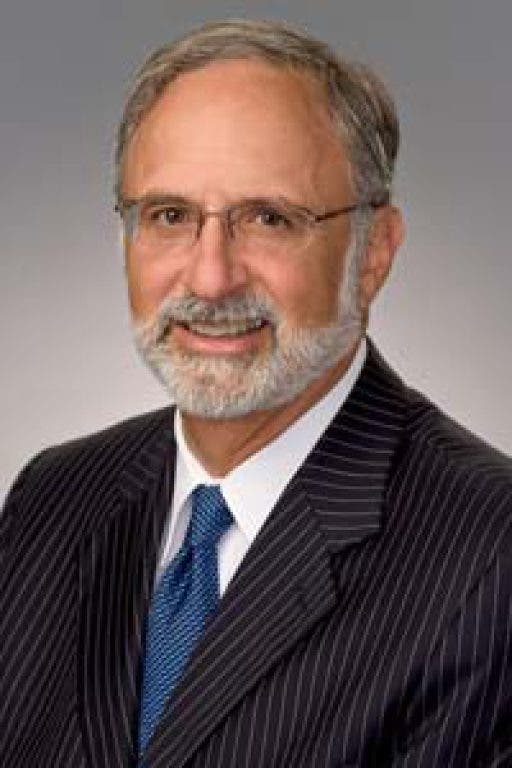
American diplomat and former U.S. Ambassador Charles Shapiro has recently taken on the role of president at the La Jolla-based Institute of the Americas (IOA). He replaced Ambassador Jeffrey Davidow, former assistant secretary of state for Western Hemisphere affairs and U.S. ambassador to Mexico, Venezuela, and Zambi.
A graduate of the University of Pennsylvania, Shapiro received his master's degree at Georgia State University and then went on to complete a course of study at the U.S. Department of State’s Senior Seminar, a course for diplomats who are “doing well and rising in their careers,” he said.
He served as Senior Advisor on Western Hemisphere Initiatives, advising Secretary of State Hillary Clinton. His team worked to promote reforms in more than a dozen countries.His prior positions have included Coordinator, Western Hemisphere Trade Task Force; Principal Deputy Assistant Secretary, Western Hemisphere Affairs; and U.S. Ambassador to Venezuela.
Find out what's happening in La Jollafor free with the latest updates from Patch.
Shapiro and his wife currently live in La Jolla. Although his sons are attending university programs in Virginia, he hopes to entice them to the West Coast in the near future.
La Jolla Patch: How do you feel your tenure as a former ambassador to Venezuela will lend itself to forwarding the mission of the IOA?
Find out what's happening in La Jollafor free with the latest updates from Patch.
Charles Shapiro: That's certainly not all that I've done. I've served all over Latin America and the Caribbean. I've worked on Western Hemisphere issues and trade issues as well as economic development issues. If you add all of that together, it gives me a very varied background. The IOA's mission is pretty varied and we've got a number of roles. We want to help bring Latin America and the Caribbean to San Diego and bring San Diego, San Diego businesses as well as businesses elsewhere in the U.S. to Latin America and the Caribbean.
La Jolla Patch: Your experience in U.S. Foreign Service and your numerous assignments in International Affairs certainly seem to have kept you busy over the course of the past 25 years. What prompted you to leave Washington, D.C., and venture into the nonprofit sector?
Shapiro: Well, first of all the government is pretty nonprofit (laughs). [My wife and I] were looking for a change and weren't interested in taking another post abroad. San Diego and La Jolla have this reputation of being a fabulous place, and my wife and I were delighted to come here.
La Jolla Patch: What are your objectives and vision for the IOA?
Shapiro: I want to build on what's here already. The staff here is terrific and has done a great job. We have strong programs in energy and journalism and in training Latin American journalists. We have a lot of things we do really well right now. We've been working a lot in China and on Latin American issues and so we want to build on that and make it something permanent, and to make it as good and as strong as our energy program. On our energy program, we really want to do more with Canada so this really is the Institute of the Americas and not just the Institute of Latin America.
La Jolla Patch: In your introduction letter, you mentioned the IOA recently held a conference in Beijing on the "evolving energy relationship between China and countries in the Americas." How is the interplay of global energy trade expected to impact the U.S., Latin America and Canada?
Shapiro: They are all interconnected. The Western Hemisphere is really becoming an energy powerhouse. We're traditionally so focused on the Middle East but what a lot of people don't know is that the largest supplier of foreign energy in the U.S. is Canada. Mexico is No. 3, Venezuela is No. 4 and Columbia is a growing exporter of energy as well. There have also been huge discoveries of oil in Brazil, and in a couple of years Brazil will become a major exporter of oil. Two weeks ago we ran a conference in Washington, D.C., where we talked about how to get the Central American countries to hook up their electrical networks so if there is a problem in one country that energy from another will flow in automatically. As far as China goes, they're growing so quickly and are busy buying commodities from all over the world including Latin America. They have huge energy interests in Ecuador and Venezuela and are interested in buying ore oil from Canada if we don't want it in the U.S. The world energy market is global and completely connected. What China does in Latin America and Canada affects our access to energy in those same places.
La Jolla Patch: Recently, the media has been coming down on the Obama administration for the "flop" of its green-jobs training program. It's been reported that after spending approximately half of the $36.8 billion allocated to train individuals for placement in this industry, that only 3,500 jobs have been created, and that the average cost-per-job-created comes at about $4.85 million apiece. At the same time, though, the IOA continues to push for the exploration of clean energy. Do you believe there is in fact a future in green energy?
Shapiro: Well, I can't comment on what the Obama administration is doing or not doing, nor can I comment on what the Republicans and Democrats are doing or not doing. But the heart of your question is whether there is a future in green energy in the U.S., and the answer to that is, of course there is. We have to find a way to move to renewable energy and the whole range of renewable energy. We need to figure out how to make that market work so whether you are a consumer, investor, manufacturer or worker you'll know there will be a consistent policy and will know what the rules of the game will be.
La Jolla Patch: How do advancements in green energy in the U.S. compare to advancements being seen in Latin America and Canada? What do you see in terms of technology shifts that could benefit the clean energy industry overall?
Shapiro: There are different countries doing all kinds of things. Brazil is a huge producer and exporter of ethanol that they're making out of sugar cane. We're working together with Brazil to work with a number of countries in the Caribbean so they may produce ethanol locally. These are countries who don't have oil or petroleum, and whose rivers are too small to dam up and make electricity. In terms of clean energy, there is loads we can do. There is increasing amounts of natural gas that are now recoverable, and the question is how do we use that natural gas as the bridge to get us to clean energy. All of the issues are complicated and are going to require people to adapt and change. Nobody, not me or you, wants to reduce their standard of living and go back to living the way our grandparents did in the 1940s when energy was rationed during the war. We need to figure out which energy is economical and how to make the transition away from hydrocarbon and oil and toward renewable and clean energy sources.
La Jolla Patch: Members of the scientific community have been raising alarms on the dangers of global warming, yet worldwide efforts to reduce carbon emissions have been lackluster, at best. How does the IOA envision shining a greater light on the issue of skewing the reliance currently seen on fossil fuels?
Shapiro: I think we'll naturally shift away, but it will be a process of economics and regulation as that happens. We'll probably shift initially to natural gas. This is still a fossil fuel but it is a much cleaner burning fossil fuel. We'll move toward renewable energy sources from there but there need to be some technological advances.
La Jolla Patch: Is there anything else you'd like to add?
Shapiro: We're working on so much. I want the IOA to do more on trade issues. We operate on different levels. Here at we are part of the university. In San Diego we are part of the San Diego community. In the U.S. we're a U.S. institution, but our board is all over the Western Hemisphere and we are therefore a Western Hemisphere institution. There are different ways we interact within each level. I want to continue to build the IOA and have it continue to be an institute that San Diegans can be proud of. I want them to want to come to our programs and to be proud that we are here in San Diego.