Schools
History Is More Than Memorizing Dates
This year's DAR essay contest asks middle-grade students to step into the past and consider how one extraordinary moment might have changed
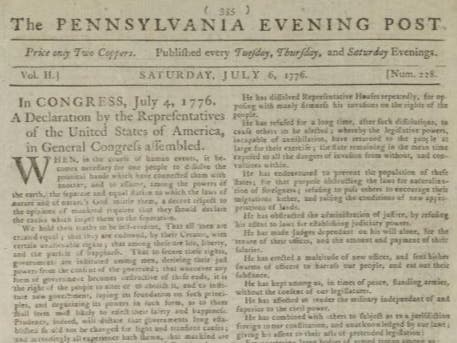
What would you do if you were 12 years old in 1776 and suddenly heard that the thirteen colonies had declared themselves independent from Great Britain?
That is a very different question from asking a student to memorize the date the Declaration of Independence was adopted.
This year's DAR American History Essay Contest asks students in grades 5–8 to use research, writing and imagination to put themselves into the world of 1776.
Find out what's happening in Lamorindafor free with the latest updates from Patch.
The Declaration was publicly read in Philadelphia on July 8, four days after its adoption. In communities farther away, news could take days or weeks to arrive.
Students are asked to imagine hearing the Declaration read in their own community. How would they react? Who would they tell? What would they do? How might independence affect their lives?
Find out what's happening in Lamorindafor free with the latest updates from Patch.
The exercise encourages students to think about history from a personal perspective. A declaration made by political leaders in Philadelphia ultimately affected ordinary families, merchants, farmers, soldiers, women and children throughout the colonies.
For students, that means considering not only what happened, but what it might have meant to someone living through it.
The Acalanes Chapter, Daughters of the American Revolution, invites local public, private and homeschooled students in grades 5–8 to enter.
Grade 5 essays should be 300–600 words; essays for grades 6–8 should be 600–1,000 words. One local winner from each grade will advance to district and state-level competition.
Entries are due October 15, 2026.
Parents and teachers can obtain complete guidelines and submission information by contacting acalanesdar@gmail.com.
America's 250th anniversary is an especially fitting year to encourage young people to discover that history isn't simply something that happened long ago. It happened to real people—and their choices helped shape the country we know today.