Politics & Government
Lafayette Settles Housing Lawsuit For $128K, Will Consider Higher-Density Building
Lafayette agrees to review major zoning changes, reduce future legal risks, and advance plans for new housing near transit and downtown.


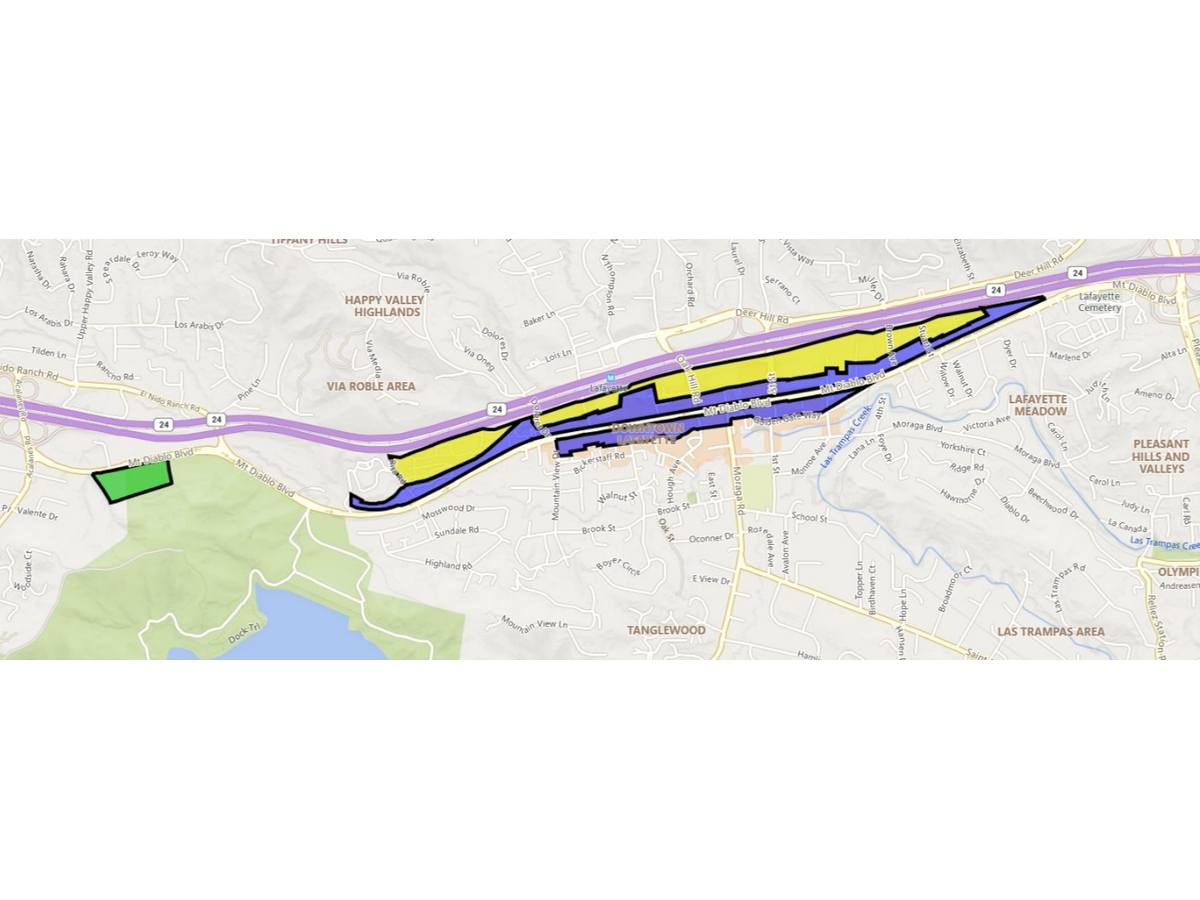
LAMORINDA, CA — Lafayette officials will consider higher-density housing across roughly 130 acres of land after reaching a settlement with the Housing Action Coalition, ending a lawsuit that challenged the city's state-mandated housing plan and reshaping the future of residential development along the Mt. Diablo Boulevard corridor.
Officials accepted a settlement with the Housing Action Coalition (HAC) that ends a lawsuit alleging the Lafayette's Housing Element failed to comply with California housing laws. Under the agreement, the city will consider upzoning approximately 130 acres of land and pay $120,080 in attorney fees to resolve the litigation.
State-required housing elements explain how a city will fulfill its share of future housing needs across income levels. In California, every city and county must update the blueprint regularly and submit it to the California Department of Housing and Community Development (HCD) for review and certification.
Find out what's happening in Lamorindafor free with the latest updates from Patch.
Lafayette, a city with about 25,000 residents, must plan for 2,114 new housing units between 2023 and 2031 under state housing requirements. The city does not develop housing. But it does establish zoning and land use regulations that determines what will be built and where.
The Housing Action Coalition argued that Lafayette lacked sufficient suitable sites and had overstated the development potential of properties identified to satisfy its Regional Housing Needs Allocation obligations, according to a city staff report to the city council Monday evening.
Find out what's happening in Lamorindafor free with the latest updates from Patch.
Rather than continue the court fight, city officials entered settlement negotiations
Mayor Carl Anduri said the Lafayette officials decided to settle in order to avoid prolonged legal costs, while continuing the city's commitment to expanding housing opportunities.
"While we dispute HAC's contentions, this settlement agreement was made as part of a compromise in order to avoid time-consuming and costly litigation," Anduri said in a statement today. "Lafayette has been and continues to be committed to providing for more housing in our community, including much-needed affordable housing."
City officials said the agreement not only resolves the pending lawsuit, but also shields Lafayette from future legal challenges stemming from recent changes in California housing law and court decisions. By addressing disputed issues now, city leaders said they can focus resources on long-term planning rather than additional litigation.
Housing Action Coalition leaders praised the agreement in a joint statement. "Planning for more homes near transit in a high-resource community like Lafayette is exactly the kind of action the Bay Area needs to address the housing crisis and advance fair housing," said Ali Sapirman, HAC's advocacy and policy manager.
Tom Mayhew of Farella Braun & Martel, who represented HAC on a pro bono basis, said the agreement could open the community to more residents who are currently priced out of the city's single-family housing market.
Under the settlement, Lafayette will consider several zoning changes through its regular public hearing and review process before the end of the year.
The proposed changes include:
- Increasing allowable density from 60 dwelling units per acre to 65 dwelling units per acre on land north of Mt. Diablo Boulevard.
- Increasing allowable density from 35 dwelling units per acre to 45 dwelling units per acre on parcels north of Mt. Diablo Boulevard between El Nido Ranch Road and Pleasant Hill Road.
- Increasing allowable density from 35 dwelling units per acre to 45 dwelling units per acre on parcels south of Mt. Diablo Boulevard between Mountain View Drive and Golden Gate Way.
- Adding two additional acres to the De Silva South site, with a maximum density of 35 dwelling units per acre.
The agreement also removes the city's reliance on five faith-based organization properties to help satisfy its Regional Housing Needs Allocation requirements if the proposed zoning changes are ultimately approved.
As part of the settlement, HAC agreed not to fund or support future legal challenges against Lafayette's Sixth Cycle Housing Element or actions taken under the agreement.
Lafayette’s housing stock is a mix of mostly single-family homes built post-WWII, along with multi-family housing downtown near transit and services and larger semi-rural parcels in and abutting the hillsides, according to officials.
The 2023-2031 Housing Element outlines how more than 2,000 new housing units will be constructed in order to meet the regional housing requirements. The plan followed months of revisions and public hearings, before certified by the California Department of Housing and Community Development.
Recent housing projects include The Brant by Lennar, Blue Oak by Griggs Group, the approved Mount Diablo Condominiums project, and the 1001 Oak Hill Road development, which include below-market-rate housing units.
RELATED: Lafayette City Council Considers Settlement Over Growth Plan Tonight
Get more local news delivered straight to your inbox. Sign up for free Patch newsletters and alerts.