Politics & Government
Meet Sonoma City Council Candidate Julian Mackie
Julian Mackie discusses businesses, housing, and community in the Sonoma City Council District 1 race.


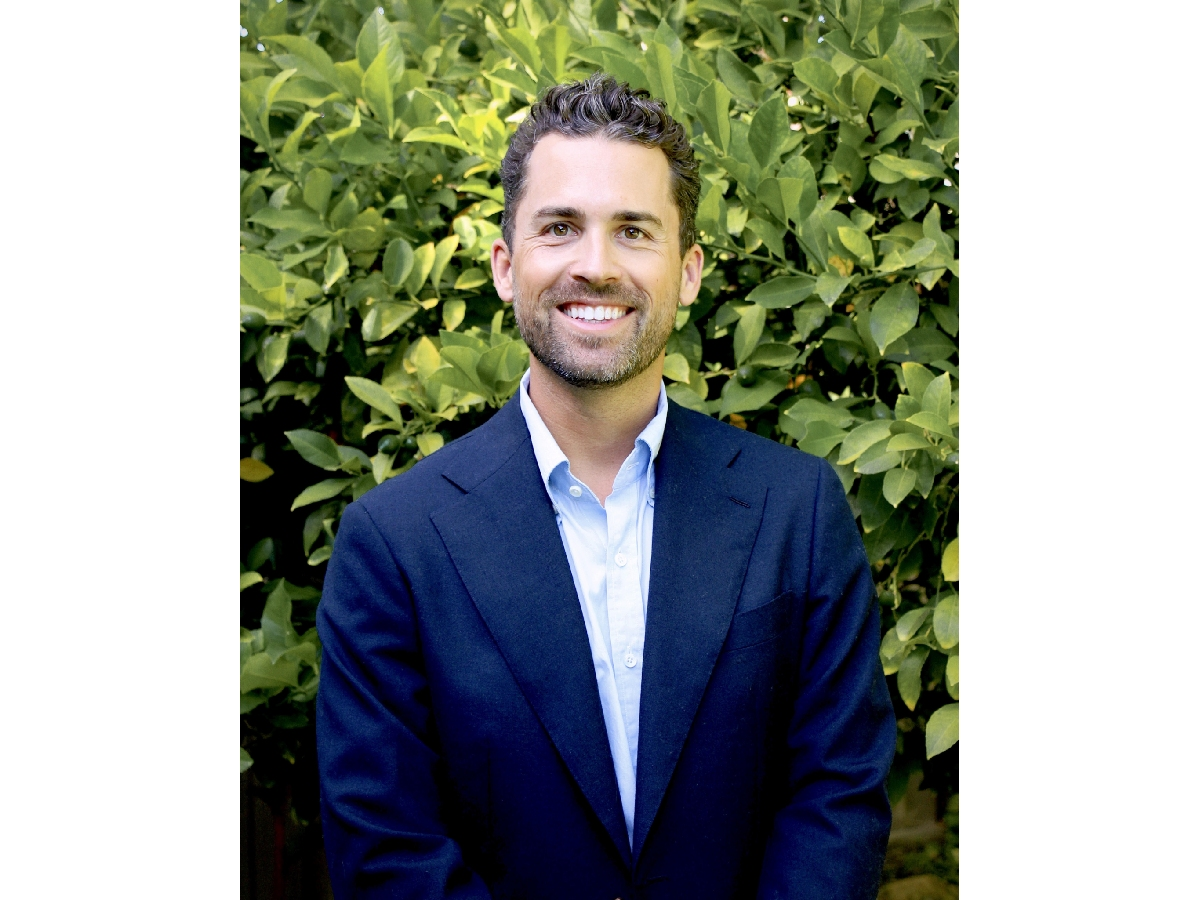
SONOMA VALLEY, CA — Patch reached out to all the candidates for Sonoma City Council.
Three candidates are running for Sonoma City Council District 1.
We sent out questionnaires and reprinted their answers verbatim. Below, read the responses of Julian Mackie, a candidate for a seat representing District 1 on the Sonoma City Council.
Find out what's happening in Lamorindafor free with the latest updates from Patch.
Julian Mackie, 34, is running for a seat representing District 1 on the Sonoma City Council. In the questionnaire, Mackie identified the local economy, housing, and investments in shared community spaces as priorities.
What is your educational background?
Find out what's happening in Lamorindafor free with the latest updates from Patch.
I grew up on Bennett Valley Rd. and attended public schools in Bennett Valley and then Sonoma Academy for high school. I hold a bachelor's in public affairs from Claremont McKenna and a master's degree from UC Berkeley's Goldman School of Public Policy, where I focused on land use and local government. Nearly all of my graduate research centered on housing in Sonoma, and that work led directly to co-founding Sonoma Valley Commons.
What is your professional background?
I'm co-founder and executive director of Sonoma Valley Commons, a local nonprofit creating and preserving affordable homes for working families and seniors. I started my career as a management consultant to public agencies and tech companies, including building Washington State's health insurance exchange. I then moved to education technology, managing workforce partnerships with community colleges and companies like Google and Meta to open up jobs in IT support and digital marketing.
Have you ever held public office, whether appointive or elective?
I have not held elected or appointed public office. My public service started as a teenager working for Congresswoman Lynn Woolsey, and I later interned for a Sonoma County supervisor and a member of Congress in Colorado. In San Francisco, I served as president of a neighborhood organization representing about 4,000 residents, where I created its first land use subcommittee.
What are the top three issues facing your district right now?
These are the three I hear most, over countless coffee chats and through hundreds of doors:
Our local economy. Wine is our core industry and it's hurting. We need year-round jobs for people who live here and fresh reasons for visitors to come. I'd refresh our Economic and Business Development Steering Committee, cut the cost and delay of opening a small business, and invest in shared assets like the plaza and a permanent outdoor performing arts space.
Housing. It's harder every year for young families to stay or return, and seniors aging in place have few dependable options. Two things I'd move on now: finalizing the mobile home park ordinance, and identifying surplus public land for homes local workers and middle-income families can afford.
Responsible government. We face a structural deficit. That means hiring our Administrative Services Director, auditing where the money goes, and building a multi-year forecast so we stop solving one year at a time. I'd grow revenue through activity, sales tax and TOT from a more vibrant Sonoma, rather than new taxes.
What is one specific policy you would implement in your first 100 days?
The Plaza is the soul of this town. It's where my family watched Fourth of July parades, and it's the first place Anna and I took friends when we moved home for good.
In my first 100 days I'd ask the council to form an ad hoc committee to make sure the Plaza Park master plan hears from the people who use the Plaza every day.
The city's RFP went out in January, so the design work lands right as the new council takes office. We've been through processes like this before. A consultant's outreach reaches people who already follow city process. A committee of neighbors reaches families, business owners, and the people too busy to take part on a Tuesday night, and that's where the best ideas usually are.
I have my own hopes for what comes out of it: public art that tells our full story, family zones that give parents a reason to stay downtown all afternoon, real support for the tasting rooms and businesses on the square, building owners at the table instead of hearing about plans after the fact, and year-round events that bring people to Sonoma and are fun for residents.
The committee wouldn't design anything. That's what the consultants and the Planning Commission are for. Its job is to widen the funnel early while the plan is still taking shape.
The Plaza belongs to all of us. The plan for it should sound like us.
What is your plan to enact this plan and how would you measure success after one year?
Before taking office I'd meet with the city manager and the staff running the master plan contract to learn where the consultant's outreach lands, so the committee goes after the people that outreach won't reach. Nothing frustrates staff faster than a new councilmember creating parallel process! Then I'd ask my colleagues to establish it as a temporary ad hoc committee with a defined charge and end date. This will be a narrow, time-limited ask, which makes it easier for colleagues to support than a new standing body. Members would come through an open application, so the seats go to people who use the Plaza, not just the people I happen to know. The measure I care most about is participation: how many residents attended a session, filled out a survey, stopped at a table at the farmers market, or responded online. I'd also watch whether the total grew from the first session to the last, which tells you whether word spread. I will set a real target and publish the numbers either way. If a few hundred Sonomans touched this process, that's a genuine shift from how the city usually hears from people. If turnout is thin, the answer isn't to spin it. It's to figure out who we missed and go find them. My belief is the more input the better, and we'll surface ideas we'd never have discovered without those voices in the room.
What is one specific change you would make to improve livability in your district?
Ask anyone who was here in 2017 and they can tell you exactly where they were the night of October 8th. Sonoma has now studied its evacuation routes, and the results were sobering. We're a funnel: a grid downtown, then a handful of ways out of the valley.
What we haven't done yet is address what the study found. I'd push the council to turn that report into a prioritized list of improvements at the worst bottlenecks, with real money behind it. Some of the best fixes are modest, like keeping traffic signals working when the power goes out so intersections don't lose half their capacity. These routes run past the city line, so this takes genuine partnership with the county, the state and Caltrans.
Most days, though, livability is smaller than that. It's whether you can push a stroller down your sidewalk without swerving into the street, or whether the painted lines at the stop sign have faded away. Block captains in District 1 would help us catch those things early, and would know which neighbors need a hand when something bigger happens.
How would you improve transparency or accountability in your local government?
Our lives are busy and most people are not able to make it to a council meeting. Evening meetings at City Hall ask a lot of people who are juggling work, kids and transportation. I'd bring the conversation to them.
This is Sonoma's first district election. I'll represent the needs of all of Sonoma on the council, but our move to districts gives us a real chance to build the kind of civic infrastructure I saw work in San Francisco, where neighborhood associations gave residents an organized voice between elections.
I'll designate neighborhood representatives across District 1, both on the East Side and West, from Wilking Way to Church, and from Carneros Village to Cobblestone. These would be trusted residents chosen through an open process, who carry information from City Hall to their neighbors and bring concerns back to me before they turn into crises. They would also aid in my quarterly neighborhood meetings, designed to open these conversations up to a broader audience.
The accountability piece is simple. Every meeting would open with me reporting back on what residents raised last time and what happened as a result. If an idea didn't move forward, residents deserve to know why and what they can do next. That habit of closing the loop is how trust gets built, and I can start it on my first day in office.
What makes you a better choice than your opponents?
The other candidates in this race are well-respected members of this community. I've enjoyed getting to know them, and Sonoma is fortunate to have three people willing to take this on. Here's what I'd add:
I'd bring a new voice to a table that needs every generation at it. The decisions the council makes over the next four years will shape Sonoma for thirty, and I want seniors aging in place, young families, and the people investing in a business here to all see themselves in those choices.
My background is an unusual mix. I've worked at a high level in public policy and administration, in nonprofit community work, and in private sector management. I understand the realities of balancing a budget and building a team. I'm rigorous about results, and just as focused on turning community ideas into action. I'd bring that mix to everything, from community input to negotiating contracts to the regional board seats councilmembers hold.
The work of the city is amplified by who we bring to the table, and I'm proud to have the endorsement of four current councilmembers, Supervisor Rebecca Hermosillo, Congressman Mike Thompson, Assemblymember Damon Connolly, and groups like Sonoma County Conservation Action and the North Bay Labor Council. Most of all, I'm proud to have the support of more than 50 neighbors who have worked hard to make this town what it is, and whose energy I hope to carry into this next chapter. Learn more at VoteMackie.com.
Get more local news delivered straight to your inbox. Sign up for free Patch newsletters and alerts.