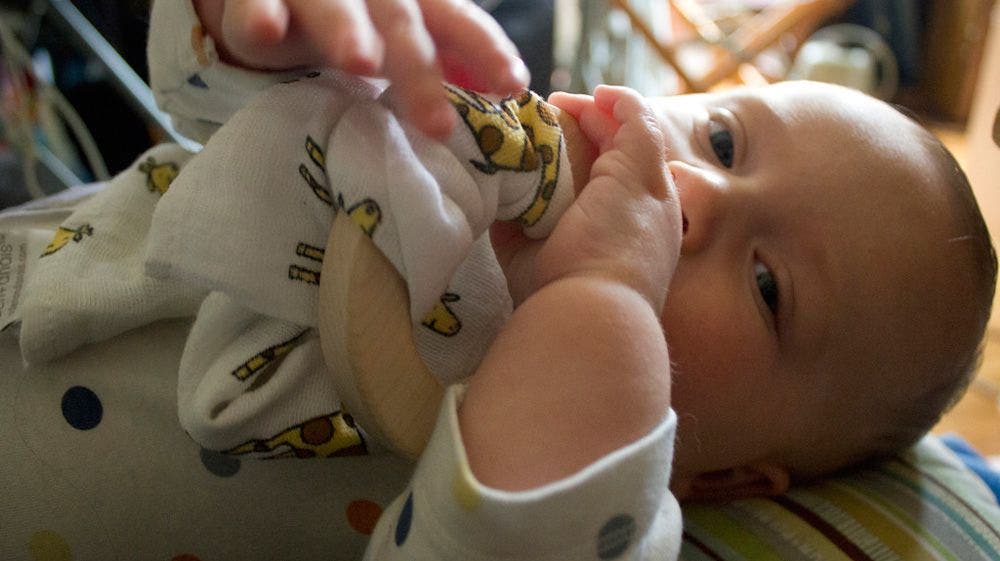
It’s a laundry list of symptoms that every parent is familiar with — a
cranky baby who’s drooling, not eating and not sleeping. It must be
teething.
But despite the advice parents might have heard, a new analysis in
the journal Pediatrics confirms that high-grade fevers are not a sign of
teething. Rather, it might be a sign of another illness, and parents
and doctors shouldn’t just ignore it.
“If a child has a really high fever, or is in significant discomfort,
or won’t eat or drink anything for days, that’s a red flag for
concern,” said Dr. Paul Casamassimo, director of the American Academy of
Pediatric Dentistry’s Pediatric Oral Health and Research and Policy
Center.
Find out what's happening in Lamorindafor free with the latest updates from Patch.
The analysis didn’t completely dismiss a parent’s intuition. It found
the most common symptoms of teething were swollen gums, drooling and
crankiness. Symptoms shouldn’t last for more than three to five days,
Casamassimo said, but he did acknowledge that it can feel much longer.
“By and large, symptoms are not a chronic thing. They come and go,
and the job of the parent is to comfort the child, and keep their finger
on the pulse of their child. Is the child eating? Staying hydrated?”
Casamassimo said.
Find out what's happening in Lamorindafor free with the latest updates from Patch.
The study said teething can lead to a rise in body temperature still
below 101 degrees Fahrenheit. Teething, the study said, is also
associated with decreased appetite, sleeping problems, diarrhea, rash
and vomiting.
Teething through the years
Throughout history, parents, as well as practitioners, have
attributed a number of maladies to teething. It was, perhaps, an easy
explanation for the ever-changing behavior of an infant and illnesses
during children’s vulnerable early years.”Teething infants suffer from
itching of the gums, fever, convulsions, diarrhea, especially when they
cut their eye teeth,” Hippocrates observed in 4th century BC.
For hundreds of years, medical professionals believed that teething
caused the deaths of children. When Lucy Jefferson, President Thomas
Jefferson’s sixth child, died in 1784 at age 2 1/2, a letter from the
doctor said she “fell a Martyr to the Complicated evils of teething,
Worms and Hooping Cough.”
The 1842 Registrar General’s report of England and Wales attributed
12% of all deaths of children younger than 4 to teething. The 1891 “In
Cyclopedia of the Disease of Children,” a respected medical text of the
time, said “Children that have been strong and healthy up to the period
of dentition often droop and die, while the delicate or sickly ones pass
through it with apparent impunity.”
But as medical care improved, it became increasingly clear that there
were other reasons behind infant mortality, and teething was more
annoyance than a sickness.
How to manage teething
Still, there are a lot of old beliefs and advice out there for
parents with cranky, drooling babies. So, how should they manage
teething?”Just comfort your child and get through it,” said Casamassimo.
He said a cold rag or teething toy may help with the discomfort.
Infant pain relievers might also be an option, but Casamassimo urged
parents to be careful. Regular use can lead to tooth decay, and
acetaminophen is a leading cause of liver disease in children. “If you
have to keep doing it day after day, ” it may be a concern, Casamassimo
said.
And stay away from topical anesthetics that contain benzocaine and
lidocaine, he said. Benzocaine can lead to methemoglobinemia, a rare,
but serious and sometimes fatal condition, where the amount of oxygen
carried through the blood stream is reduced. Children younger than 2
appear to be at particular risk, the U.S. Food and Drug Administration
said.According to the Institute for Safe Medication Practices, lidocaine
overdoses have been associated with jitteriness, confusion, vision
problems, vomiting, falling asleep too easily, shaking and seizures.
While it can be a trying time, Casamassimo said, teething is normal.
“Every kid is going to have it in slightly different ways,” he said.
“Pay attention to the symptoms. Ameliorate the symptoms. If things get
out of hand, contact you pediatrician.”
source: CNN Website