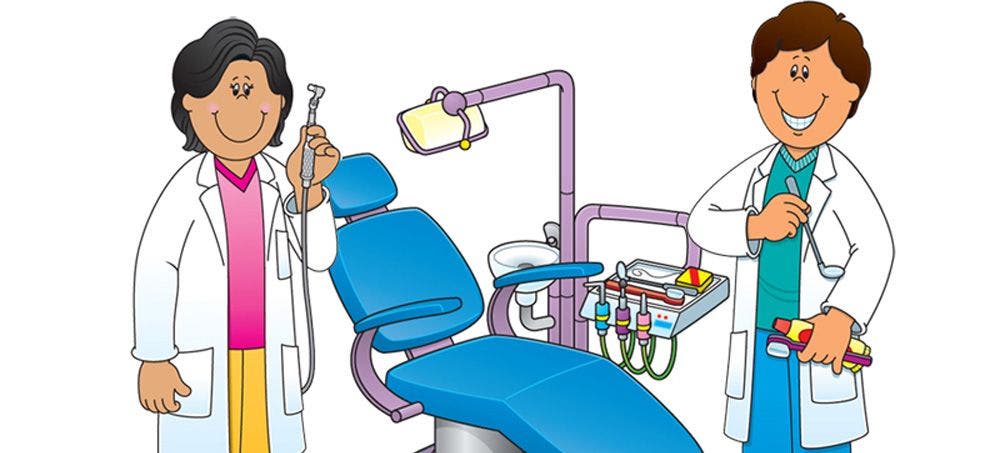
True confession of an autism mom: I waited until my son was 5 years old before I attempted to take him to a dentist’s office.
Between his oral defensiveness and severe anxiety, I couldn’t figure
out how to make it work before then. The only reason I made that
appointment was my concern over an adult tooth that erupted at an
unusual angle with the baby tooth still on top of it.
The Screamer
My son was the kid who screamed uncontrollably every time he entered
anything that looked like a doctor’s office. My son was the kid who
wouldn’t let me look inside his mouth when he was teething or when he
had injuries. I used to seize the opportunity to try to get a brief
glimpse at his teeth whenever he was laughing at a joke or in the middle
of a tantrum. Brushing his teeth was challenging at best, and there
was no way he would rinse and spit.
Find out what's happening in Lamorindafor free with the latest updates from Patch.
Eventually my husband and I were able to reduce our son’s oral
sensitivity enough so that we could take care of his teeth, and we
approached his anxiety from several angles to make that first visit to
the dentist a success.
Here’s how we managed our son’s dental hygiene:
Find out what's happening in Lamorindafor free with the latest updates from Patch.
Establish a daily ritual
1. Be Creative
The National Institutes of Health have a guide for caregivers
emphasizing the importance of creativity and a daily oral hygiene
routine – and those were the keys to my family’s success. Finger
toothbrushes for infants only encouraged my son to bite my finger.
Instead, I offered him a clean, wet washcloth to chew on for a few
minutes in the morning and before bedtime. I helped him move the
washcloth around his mouth so that all of his teeth were scrubbed. Then
I offered water to drink, since he didn’t know how to rinse and spit
yet.
2. Brush Together
The next step was to allow my son to chew on a child-size toothbrush
while I brushed my own teeth. This desensitized him to the toothbrush’s
texture while I modeled appropriate dental hygiene for him. Sometimes
it’s necessary to try several different types of brushes, such as a spin
brush. After many months, when he was accustomed to the texture, I
added non-fluoride toddler toothpaste to his toothbrush so that he would
get used to the idea of flavoring on the brush.
3. Don’t Miss A Day
It was important to continue with the brushing ritual every morning
and evening – if I accidentally skipped one morning, my son would be
uncooperative the next time I tried to clean his teeth!
4. Slow Transitions Are Better
A few years later, my son was allowing me to brush his teeth and he
had finally learned to rinse and spit. Then we switched him to Kids’
Crest fluoridated toothpaste, because the flavor is milder than adult
toothpaste.
Know the causes of tooth decay
In recent years, medical studies have documented a clear connection
between oral health and overall physical health. Tooth decay is now
considered a preventable infectious disease. The bacteria that cause
tooth decay are typically transferred from one person’s saliva to
another person’s mouth. Sugary foods feed the bacteria and promote
decay.
Many children with special needs continue to bottle-feed until they
are 4 or 5 years old because of delays in oral-motor skills, which is
another risk factor for tooth decay.
5. Prevent Cavities
To reduce the risk of cavities, I gave my son a drink of water after
his bottles and made sure his teeth were brushed immediately before
bedtime. I also gave him probiotics, the beneficial bacteria that
balance out the harmful bacteria in the human body, mixed into his milk.
Find a dentist who has experience with special needs
6. Referrals From Families
The best way to find a dentist is to ask for a referral from other
families in the special needs community or from your child’s therapy
team. The Special Care Dentistry Association also provides referrals.
7. Referrals From Therapists
I asked my son’s occupational therapist for a referral to a pediatric
dentist who had experience with special needs. She recommended a
dentist whose office was next door to a pediatric therapy clinic – this
dentist had worked with hundreds of children with all types of special
needs. The office staff was ready for us when we arrived.
8. Accessible and Sensory Friendly
Not all dental offices are equipped for special needs – some offices
do not have enough space for a wheelchair transfer, other offices may
have a harsh sensory environment. Ask the office staff about their
experience with your unique needs.
Get friendly with the dentist’s office
9. Make practice visits
Consider visiting the dentist’s office several times before
attempting any type of examination. One time I had my husband bring our
son in to see me get my exam and cleaning.
10 Make a Social Story
Ricki Robinson, author of Autism Solutions, suggests taking photos of
the equipment, staff and waiting room – then using those photos to make
a storybook about going to the dentist.
11. Prepare With Books
I got a bunch of books about the dentist from the library for my son.
The only books that interested him were those that had photos of
actual dentists’ offices, not cartoons or drawings. He liked clear,
concise narratives that showed him exactly what to expect. He also
liked simple, scientific explanations about the importance of oral
hygiene.
12. Divide & Conquer
Keep in mind that most dentists can bill your visit in three separate
parts: cleaning, exam and x-ray. If a child becomes anxious during the
cleaning, you can reschedule the exam and x-ray for a different day.
Or you can schedule each of the three parts on different days.
13. Bring Their Favorite Toy/Blanket/Object
Ruby Gelman, DMD, advises in the book 1001 Tips for the Parents of
Autistic Boys, “If your child has an object that he particularly loves
(a music player or a clock, for example), bring one with you to the
dental visit so that the dentist can incorporate that into the
appointment.” Familiarity with the dentist not only reduces anxiety
during the visit, but it also increases compliance with dental hygiene
at home.
What If Nothing Works?
On top of the increased risk for tooth decay, individuals with
special needs often have damaging oral habits such as grinding teeth,
picking or biting inside the mouth and tongue thrusting. For
individuals who have a high anxiety level and need long dental
procedures, it may be necessary to consult with the dentist about
anesthesia and restraint options.
14. Say No To The Papoose
Instead of anesthesia, some dentists still use a “papoose,” a tight
swaddle that immobilizes the patient during procedures. Many parents
report that the papoose actually heightens their children’s anxiety and
makes future dental appointments much more difficult.
15. Laughing Gas
A doctor may prescribe a mild sedative before the appointment so that
the patient is relaxed and sleepy during the procedure, or the dentist
may use nitrous oxide (laughing gas) during the procedure.
16. Anesthesia
If the individual is still distressed, then general anesthesia may be
required to get the job done. In these cases, parents usually request
that all cleaning, x-rays and repair be completed while the patient is
under anesthesia.
Success
The last time I took my son to the dentist, he confidently went into
the exam room without me. Afterwards he couldn’t wait to show his dad
how clean and shiny his teeth were. I could hardly believe this was the
same child who used to protest so vehemently every time I tried to
touch – or even just look at- his mouth. Repetition, desensitization,
persistence and familiarity helped him learn a new life skill.
source: “A Special Needs Guide to Dental Hygiene.”
friendshipcircle.org. Special Needs Resources, May. 2012. Web. Jan.
19th, 2017.