Event Details
A power outage strips away more than convenience once the sun goes down, and fumbling in the dark creates real safety risks, from tripping hazards to difficulty administering first aid. Good off-grid lighting is one of the simplest, most immediately impactful preparedness investments a household can make.
Unlike food or water, lighting needs are relatively cheap to solve well, and a modest investment covers most households completely. The key is having a layered approach rather than relying on a single light source that could fail or run out of fuel at the worst moment.
Battery-Powered Lanterns and Flashlights
Battery lanterns remain the most practical everyday choice for most households, offering bright, even light without any fire risk. LED models have become remarkably efficient, often running twenty or more hours on a single set of batteries while producing far more usable light than older incandescent versions.
Solar-Powered Lights and Chargers
Solar lights have improved dramatically in both price and performance, and they offer a genuine no-fuel, no-battery-replacement option for ongoing outages. Small solar garden lights can be brought indoors at night after charging outside during the day, providing a modest but reliable light source at essentially no ongoing cost.
Oil Lamps and Candles for Fuel-Based Backup
Oil lamps have lit homes for centuries, and a simple kerosene or lamp oil lantern still provides reliable, long-burning light using minimal fuel. A single quart of lamp oil can provide many hours of light, and the fuel itself stores for years without degrading significantly.
Crank and Solar Combination Radios With Built-In Lights
Many emergency radios now include a built-in flashlight or lantern function alongside their radio and phone-charging capabilities, making them a genuinely efficient addition to an off-grid lighting plan. These units typically combine hand-crank, solar, and battery power, which means they keep working regardless of which power source is actually available at the moment.
This kind of multi-function device earns its shelf space by solving several problems at once rather than requiring you to stock separate devices for light, radio, and charging. Ask A Prepper has reviewed several of these combination units in detail, comparing runtime, brightness, and durability across different models, which is worth checking before choosing one for your own kit.
Fire Safety Considerations for Fuel-Based Lighting
Any open flame indoors carries real risk, and that risk increases during an emergency when household routines are already disrupted. Keep oil lamps and candles well away from curtains, bedding, and paper, and never leave an open flame burning unattended in a room, especially one with children or pets.
Building a Layered Lighting Plan
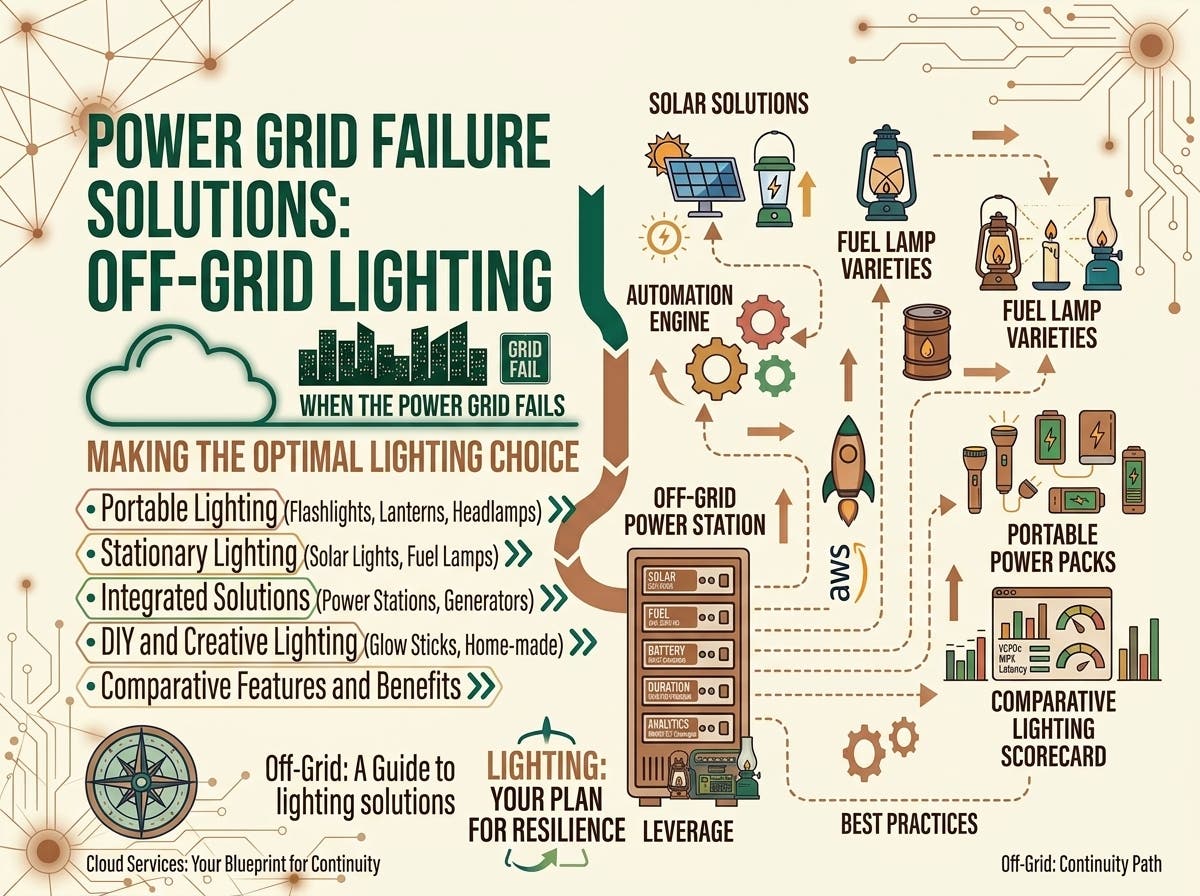
No single lighting method covers every situation perfectly, which is why a layered approach serves most households best. Battery lanterns for immediate, safe, everyday use, solar lights for sustained no-fuel operation, and an oil lamp as a long-duration backup together cover the realistic range of outage lengths a household might face.
Calculating How Much Light You Actually Need
Think through your household's actual nighttime needs rather than guessing at supplies. A single lantern in a common area covers basic movement and safety, but individual flashlights or headlamps for each family member prevent the frustration and safety risk of everyone competing for one light source.
Estimating Runtime for Extended Outages
Understanding roughly how long your lighting supplies will actually last helps you ration usage appropriately during an extended outage rather than running through batteries in the first two nights. Check the rated runtime on your battery lanterns and calculate how many sets of spare batteries you would need for a genuine multi-day scenario.
Keeping Spare Bulbs and Parts on Hand
Beyond batteries, keep a small stock of spare bulbs for any lantern that uses a replaceable bulb rather than an integrated LED. A single failed bulb should never take an otherwise functional light source out of commission when a two-dollar spare part could have kept it running.
A Note on LED Efficiency
Modern LED bulbs draw a fraction of the power older incandescent flashlights required, which is part of why battery life has improved so dramatically in recent years. When replacing an aging light source, choosing an LED model over an older-style bulb is one of the simplest upgrades you can make to your overall lighting reserve.
Testing Your Lighting Setup Before You Need It
The worst time to discover a lantern's batteries have corroded or an oil lamp's wick has hardened is during an actual outage. Test every light source in your kit at least twice a year, replacing batteries, checking fuel levels, and confirming everything still functions as expected.