Business & Tech
El Camino Hospital Places High Priority on Chinese Health Initiative
Many in the Chinese community welcome the news, and some wish for an additional language service.

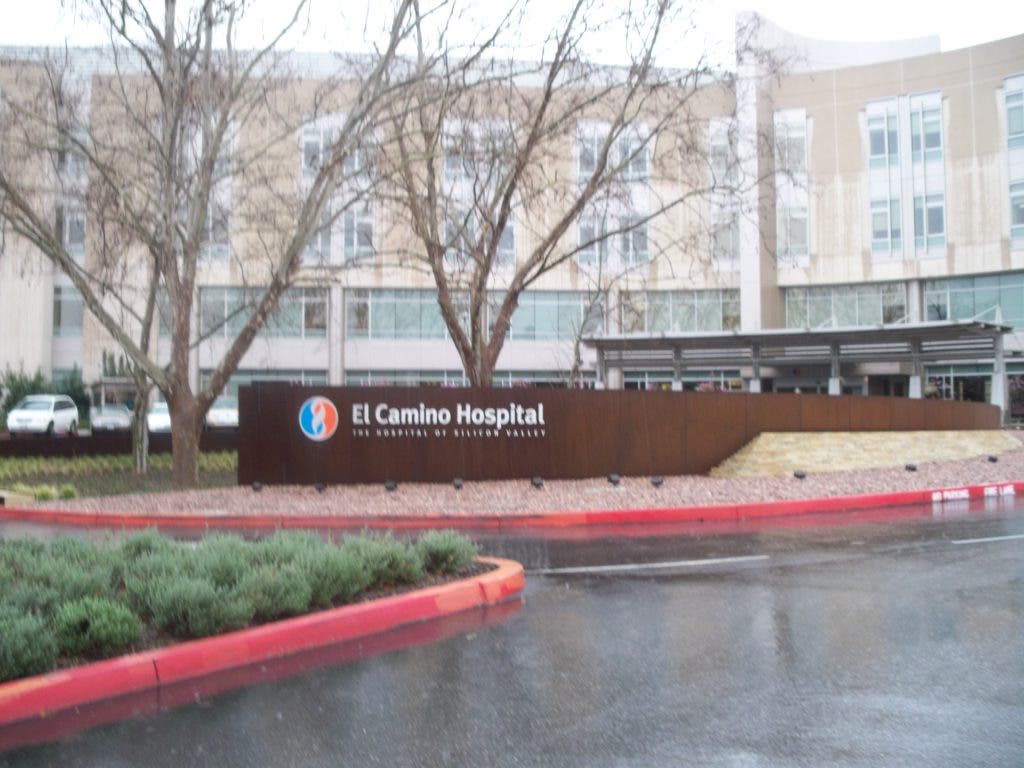


With the growing Chinese population in Silicon Valley, El Camino Hospital has embarked on an active outreach campaign for its newly created Chinese Health Initiative (CHI) program.
"Would you like to search for a Chinese-speaking doctor?" reads the large-font Chinese characters on the hospital's home page. The query, both in English and Chinese, link to a long list of 51 doctors, their specialties and their dialects, which include Mandarin, Cantonese, Taiwanese and Shanghainese.
Below that is a photo of a group of physicians and a link to the CHI page. Established last March and promoted in January, the program focuses on offering help to Chinese-speaking residents in El Camino Hospital’s service area who lack access to culturally appropriate and language-specific health providers.
Find out what's happening in Los Altosfor free with the latest updates from Patch.
"From what we know this is the first time a mainstrem hospital is reaching out to the Chinese population," said Yu. Hospitals might have different Chinese-focused events, or a screening or a service, but not a program like El Camino's to integrate the outreach and cultural sensitivities into different departments and throughout the whole hospital, she said. To find something like that, one might have to go as far as Chinese Hospital in San Francisco's Chinatown.
El Camino Hospital has put a high priority on the program, with health screenings for hepatitis B and TB, which disproportionately affect the Chinese population, Twitchell said. In January, the hospital acted as the host institution for two four-day volunteer training sessions in hospice and end-of-life issues for 11 Northern California organizations that work with Chinese clientele.
Find out what's happening in Los Altosfor free with the latest updates from Patch.
El Camino serves communities throughout Santa Clara County, including Los Altos, Los Altos Hills, Mountain View, Sunnyvale, Cupertino, Saratoga, Campbell, Los Gatos, Monte Sereno and West San Jose. All these communities have a large and growing Chinese population, said Jean Yu, manager of the initiative.
Census data forecasts indicate that by 2014, 100 percent of Silicon Valley's 58,000 new residents will be Asian, nearly a quarter of them Chinese. In the meantime, certain health problems, such as chronic Hepatitis B, affects one in 10 Asian or Pacific Islanders, compared to just one in 100 in the general U.S. population.
In response to these statistics, CHI has an advisory panel, which includes physicians. They help suggest what services comprise CHI, which now includes a Chinese-speaking physician network, special health screenings targeted to the Chinese community and a new breakfast option for patients—rice porridge, known in Mandarin as xi fan or hsi fan, which is a quintessential comfort food served to patients in Taiwan, Yu said.
The simple meal addition has been met with enthusiasm, Judy Twitchell, manager of community relations for El Camino Hospital, said the hospital served about 90 portions of xi fan, which is essentially a very plain porridge of rice and water, last month.
El Camino hopes to reach out through churches, temples, and community organizations in Los Altos and the other communities. There are at least two Chinese churches in Los Altos, Faith in Grace on Magdalena Avenue and the Chinese Bible Baptist Church on Richardson Avenue.
To promote CHI, El Camino Hospital has done outreach at numerous community events, including last year's Fall Festival in Cupertino and a health fair sponsored by Tzu Chi, an international Buddhist organization with local offices.
CHI has also been publicized through local Chinese media, such as KTSF (Channel 26), New Tang Dynasty TV, the World Journal, the Sing Tao Daily and the News for Chinese, Yu said.
Many have heard about the initiative, including Eugene Tuan, a software architect of Cupertino. Tuan says this is definitely good news to his mother, who speaks very little English.
Tuan, who has always served as an interpreter for his mother and her doctors, says it will be better for his mother to directly communicate with a Chinese-speaking doctor. But he points out a concern at the same time.
"The only thing is," says Tuan, "if my mother prefers a doctor who is not Chinese but highly recommended by people we know, the language barrier is still there."
Tuan's mother, Fang, says in Chinese that she hopes CHI will add a medical interpretation service so Chinese-speaking patients won't be limited to seeing Chinese-speaking doctors only.
Fang essentially said that if she chose a doctor who doesn't speak Chinese, her son can only translate part of what the doctor says, because he's not a professional interpreter. A professional interpreter can translate medical terms more precisely and interpret the diagnosis more thoroughly, she added.
Sunnyvale resident Ching Ling agrees with Fang that a medical interpreter would be helpful. Ling has used a medical interpreter's service at Stanford Hospital.
Ling says in Chinese that it would be nice if El Camino Hospital also offered medical interpreters, though she personally doesn't need one at this point, because her doctors at El Camino Hospital all speak Chinese.
El Camino Hospital, does subscribe to AT&T's language line, where a certified medical interpreter is accessible on the phone. But Fang and Ling say they have never heard of the service, probably because they always went with their children, and that made the hospital staff assume they had their own interpreters.
Both Fang and Ling say in Chinese that they would prefer a medical interpreter in person over one on the phone, because face-to-face communication is clearer.
Compared with Chinese-speaking patients, pregnant women of the same background seem even more eager about clear communication with their doctors. Several Chinese-speaking expectant mothers write blogs in Chinese to exchange information about where to find an obstetrician who share their language.
Most of these bloggers say they speak enough English for daily conversations, but they still feel more comfortable seeing a Chinese-speaking obstetrician, because they are unfamiliar with medical terminology in English.
These bloggers represent many expectant mothers of the same background, who find English medical terms difficult because they are used to the way Chinese medical terms are coined—combinations of common nouns. For instance, gestational diabetes is "pregnancy sugar urine disease" in Chinese. Since these women were raised with easy-to-remember Chinese medical terms, they have a hard time memorizing English medical terms with Latin roots.
Mountain View resident Annie Lee has been such an expectant mother three times, though she doesn't write blogs. She gave birth to her third child at El Camino Hospital Jan 20.
Lee says one of the reasons why she chose El Camino Hospital was for the hospital's Chinese-speaking obstetrician, Dr. Ken Liu, who is highly rated in the local Chinese moms' circle, according to their blogs. However, Lee was unaware of CHI when she made the choice.
Lee also didn't know of the hospital's new offer of rice porridge as a breakfast option for patients. During her stay there, she ate pre-ordered meals delivered from I-San House, a Chinese postpartum counseling center that prepares dishes specifically designed to optimize the health of postpartum women.
Lee says it was her husband who ordered from the hospital menu and ate the hospital food brought to her, but she didn't see any porridge in his orders.
"He probably wanted something more solid," she says. "I still think porridge is a nice option, even though we didn't use it. Chinese women after delivery usually eat special kinds of food and don't eat hospital food. But porridge is good for other Chinese patients."