Community Corner
Elder Abuse: The Size of the Problem
Elder mistreatment is defined as intentional actions that cause harm or create a serious risk of harm (whether or not harm is intended).

America’s Growing Elderly Population
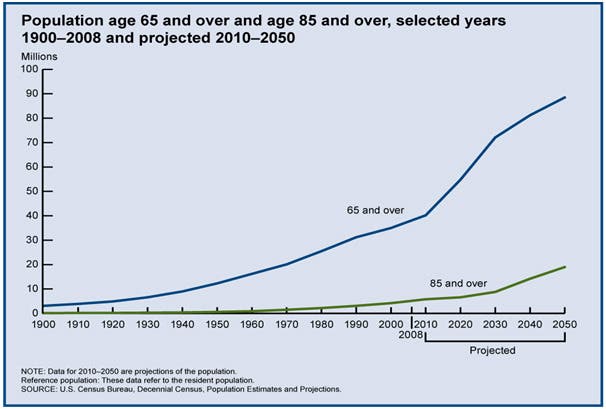
In the United States, the 2010 Census recorded the greatest number and proportion of people age 65 and older in all of decennial census history: 40.3 million, or 13% of the total population. This “Boomer Generation” effect will continue for decades.
By 2050, people age 65 and older are expected to comprise 20% of the total U.S. population. The fastest growing segment of American’s population consists of those 85 and up. In 2010, there were 5.8 million people aged 85 or older. By 2050, it is projected that there will be 19 million people aged 85 or older.
Find out what's happening in Los Altosfor free with the latest updates from Patch.
Elder Abuse: The Size of the Problem
Elder mistreatment (i.e. abuse and neglect) is defined as intentional actions that cause harm or create a serious risk of harm (whether or not harm is intended) to a vulnerable elder by a caregiver or other person who stands in a trust relationship to the elder. This includes failure by a caregiver to satisfy the elder’s basic needs or to protect the elder from harm.
Find out what's happening in Los Altosfor free with the latest updates from Patch.
Unfortunately, we simply do not know for certain how many people are suffering from elder abuse and neglect. It appears that female elders are abused at a higher rate than males and that the older one is, the more likely one is to be abused.
Signs of elder abuse may be missed by professionals working with older Americans because of lack of training on detecting abuse. The elderly may be reluctant to report abuse themselves because of fear of retaliation, lack of physical and/or cognitive ability to report, or because they don’t want to get the abuser (90% of whom are family members) in trouble.
Below is a sampling of findings that show what is known about the incidence and prevalence of elder abuse and neglect:
- The most recent major studies on incidence reported that 7.6%–10% of study participants experienced abuse in the prior year. The study that found an incidence of 1 in 10 adults experiencing abuse did not include financial abuse.
- Available data from state Adult Protective Services (APS) agencies show an increasing trend in the reporting of elder abuse.
- Despite the accessibility of APS in all 50 states (whose programs are quite different), as well as mandatory reporting laws for elder abuse in most states, an overwhelming number of cases of abuse, neglect, and exploitation go undetected and untreated each year.
- One study estimated that only 1 in 14 cases of elder abuse ever comes to the attention of authorities. The New York State Elder Abuse Prevalence Study found that for every case known to programs and agencies, 24 were unknown.
- Major financial exploitation was self-reported at a rate of 41 per 1,000 surveyed, which was higher than self-reported rates of emotional, physical, and sexual abuse or neglect.
Those Who Abuse
In the only national study that attempted to define the scope of elder abuse, the vast majority of abusers were family members (approximately 90%), most often adult children, spouses, partners, and others.
Family members who abuse drugs or alcohol, who have a mental/emotional illness, and who feel burdened by their caregiving responsibilities abuse at higher rates than those who do not.
Abuse of Those with Disabilities
Approximately 14 million U.S. adults aged 65 and over and 19 million U.S adults aged 18 to 64 have a disability. Unfortunately, some of these vulnerable adults are abused by family members, service providers, care assistants and others. This abuse places the victim’s health, safety, emotional well-being, and ability to engage in daily life activities at risk.
Below is a sampling of research findings relating to abuse of adults with disabilities:
- Institutionalized adult women with disabilities reported a 33% prevalence of having ever experienced interpersonal violence (IPV) versus 21% for institutionalized adult women without disabilities.
- When considering lifetime abuse by any perpetrator, a sample of 200 adult women with disabilities indicated that 67% had experienced physical abuse and 53% had experienced sexual abuse.
- In a study of 342 adult men, 55% of men experienced physical abuse by any person after becoming disabled. Nearly 12% of these men stated they experienced physical abuse by a personal assistance service provider over their lifetime.
- In a comprehensive review of literature published from 2000–2010, lifetime prevalence of any type of IPV against adult women with disabilities was found to be 26–90%. Lifetime prevalence of IPV against adult men with disabilities was found to be 28.7–86.7%. It was concluded that, over the course of their lives, IPV occurs at disproportionate and elevated rates among men and women with disabilities.
Dementia and Elder Abuse
Research indicates that people with dementia are at greater risk of elder abuse than those without. Approximately 5.1 million American elders over 65 have some kind of dementia. Close to half of all people over 85, the fastest growing segment of our population, have Alzheimer’s disease or another kind of dementia. By 2025, most states are expected to see an increase in Alzheimer prevalence. One 2009 study revealed that close to 50% of people with dementia experience some kind of abuse. A 2010 study found that 47% of participants with dementia had been mistreated by their caregivers.
Abuse in Nursing Homes and other Long Term Care Facilities
Elder abuse occurs in community settings, such as private homes, as well as institutional settings like nursing homes and other types of long term care facilities. 3.2 million Americans resided in nursing homes during 2008.
Below is a sampling of research findings relating to abuse in long term care facilities:
- of all complaints regarding institutional facilities reported to long term care Ombudsmen were complaints of abuse, neglect, or exploitation.
- In 2000, one study interviewing 2,000 nursing home residents reported that 44% said they had been abused and 95% said they had been neglected or seen another resident neglected.
- A May, 2008 study conducted by the U.S. General Accountability Office revealed that state surveys understate problems in licensed facilities: 70% of state surveys miss at least one deficiency and 15% of surveys miss actual harm and immediate jeopardy of a nursing home resident.
Impact of Elder Abuse
Elders who experienced abuse, even modest abuse, had a 300% higher risk of death when compared to those who had not been abused. Research has also shown that victims of elder abuse have had significantly higher levels of psychological distress and lower perceived self-efficacy than older adults who have not been victimized. In addition, older adults who are victims of violence have additional health care problems than other older adults, including increased bone or joint problems, digestive problems, depression or anxiety, chronic pain, high blood pressure, and heart problems.
The impact of abuse, neglect, and exploitation also has a profound fiscal cost. The direct medical costs associated with violent injuries to older adults are estimated to add over $5.3 billion to the nation’s annual health expenditures, and the annual financial loss by victims of elder financial exploitation were estimated to be $2.9 billion in 2009, a 12% increase from 2008.
Find a research based fact sheet on abuse of residents of long term care facilities
Visit Starlight Caregivers for help. We are a professional home care agency located here in the Valley. https://starlightcaregivers.com/