Politics & Government
Updated: La Hacienda Owner Sues Monte Sereno Over Housing Policy
Legal challenge claims city has failed to comply with state mandates for multi-family housing and moderate-income dwellings.


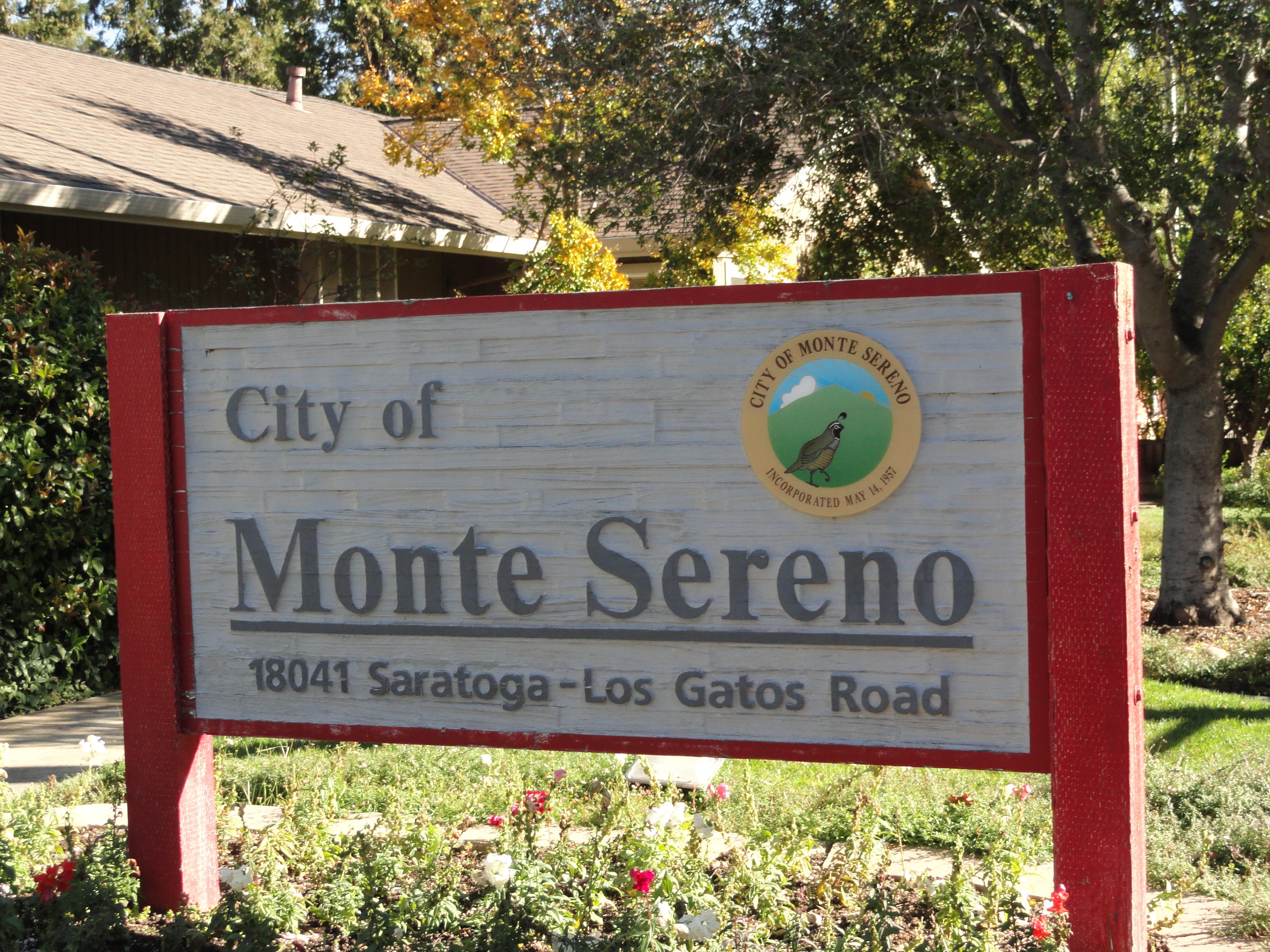
The owner of the La Hacienda Inn property on Saratoga-Los Gatos Road has filed a lawsuit against the for allegedly failing to comply with the state housing-element law.
The petition, filed May 4 in Santa Clara County Superior Court, also claims the small city of about 3,000 residents has misrepresented its level of compliance with the law, which requires municipalities to provide their "fair share" of the region's housing needs.
The suit seeks to order the city to annex certain parcels of land and amend its General Plan and zoning to provide for multi-family housing and moderate-income housing at the La Hacienda Inn site, which is about 4½ acres and is currently occupied by an extended-stay hotel which rents 20 units, a catering business, a couple of boarded-up buildings and one office complex.
Find out what's happening in Los Gatosfor free with the latest updates from Patch.
The action also wants the court to overrule recent actions taken by the Monte Sereno City Council that it alleges "perpetuate the city's noncompliance with its mandatory duties to provide housing."
It also seeks damages for allegedly violating La Hacienda Inn owner Russel Stanley's due process rights in his attempt to convert his property, 18840 Saratoga-Los Gatos Rd., into a housing development.
Find out what's happening in Los Gatosfor free with the latest updates from Patch.
On Feb. 7, the Monte Sereno City Council voted 4-1 to proceed with a study to build between three and eight units per acre on his land. However, Stanley contended that such density would not meet the municipality's regional housing needs allocation.
Council members declined comment on the lawsuit Wednesday and referred all questions about the action to their attorney, Kirsten Powell.
Update: 10 a.m., Thursday, May 31: Powell said Monte Sereno is in the process of implementing programs outlined in its Housing Element document and anticipates completing those by year's end. "It appears that Mr. Stanley is attempting to use this ... He has an application pending to redevelop the La Hacienda site and the City will continue to assess his application.
"We believe that we're in compliance with state law and we're not violating our Housing Element. We believe this lawsuit is without merit," Powell said.
Monte Sereno Vice Mayor Curtis Roger said he was aware of the suit and said he wished the legal action could have been averted. "I'm wishing this wasn't happening. It's really sad," he said.
Mayor Susan Garner said the Council has been directed to have Powell answer all media inquiries.
The city's regional housing needs allocation for 1999-2006 was 76 new units, according to the suit. In its annual reports, the city said it had produced 173 new housing units for this period, including 64 rehabilitated units, the suit said.
However, La Hacienda attorneys claim they discovered the numbers were much lower—with only 27 units produced during this time period—and that the municipality "made no attempts to rectify the discrepancies in its reporting."
The city's regional housing needs allocation for 2007-2014 was 41 new units, however the city reported that it had produced 24 new housing units, including seven from 2006 which were improperly added to this time period, the suit states. The city only produced 11 units during this period, the suit claims.
Combining the two reporting periods reveals that the city has over-reported to the California Department of Housing and Community Development by at least 159 units based on an independent audit of 12 years worth of housing records and conducted by the plaintiff during the past nine months.
Stanley has presented between 10 and 15 residential development proposals, but has only submitted two actual applications for the La Hacienda property.
Hacienda's Feb. 1, 2011 application to develop the land proposed a density of about 11.4 units per acre, yielding about 40 units, but it's not been processed, the suit contends.
Hacienda has also proposed building a multi-family project at a density of between 15 and 20 units per acre, which would result in between 66 and 88 units. This proposal, too, has not been accepted.
"The Council hasn't even allowed [Stanley] to do an environmental impact report to build on his property," said former Monte Sereno Mayor Curtis Wright, who's a consultant to Stanley on his housing development proposals. "They wanted him to put three tri-plexes in 4½ acres and the problem is that Monte Sereno has not been making their numbers for several years. They need a lot of density. The only way to force them to do the right thing is to sue them," Wright said.
If Stanley prevails in court, the city will be forced to build housing according to the density in the municipality's general plan which is between 15 and 20 units per acre, Wright said. "He's going to force them to do a housing project that neither he nor the city wants, but it's the only way that he can get something done."
Wright regretted that when he served on the Council from 2002 and 2010 he was unaware that the city wasn't making its housing needs' numbers. "The staff had misrepresented them," he noted. "I'm particularly amazed that some of this stuff happened on my watch and the more that I look into it, the more I find that mistakes have been made by the city. Those errors are the basis of this lawsuit."
Get more local news delivered straight to your inbox. Sign up for free Patch newsletters and alerts.