Neighbor News
The Psychedelic Sounds of San Francisco
A look back at the San Francisco scene that changed rock n roll History



During the months of February and March, I had the opportunity to speak with my Dad, his friends, and those still lingering around the Bay Area some 55 years after the San Francisco music scene started. They were there at the Fillmore, the Avalon Ballroom, and the Monterey Pop Festival. They were hippies, they had long hair, they used drugs, and they listened to music. And they felt it. They knew how to “mellow out, get trippy, and live for today.”
My preconceived notions of the effects of the San Francisco Sound had left me with doubts about its true effect on the country and the legend it has born.However, after interviewing these people, after standing in the Fillmore, after spending hours listening to their music and hearing their stories, I believe. It was pure magic.
NOTE: Some of the names of those interviewed have been changed at their request.
Find out what's happening in Los Gatosfor free with the latest updates from Patch.
It was July of 1999. I was 19 and going to leave on an LDS mission in a few weeks. But right then, I was on the way to the Fillmore Auditorium with my Dad. I had bought the tickets for us as one last hurrah before I left for two years. For most of my life I had been given a comprehensive education on the music of the 1960’s, much of it springing from my home turf in the Bay Area. I knew the groups and their songs, had listened to their records, and had been there in my imagination. And that night I hoped to capture some of that experience. I wanted to see. I wanted to feel…
While there is so much to come out of the San Francisco music scene, particularly in the 1960’s, the starting point for many of the bands, the drugs, and the vision, came from a man named Ken Kesey and his rowdy band of Merry Pranksters. A graduate student from Oregon, Kesey was now at Stanford on a writing fellowship. Feeling the pressure for more cash, Kesey was urged by a friend to be a test subject for the psychiatric ward at the local hospital. While under the influence of chemicals and hallucinogens, Kesey began to see and experience a different world. He never looked back.
Find out what's happening in Los Gatosfor free with the latest updates from Patch.

The year was 1961 and much of America still resembled the “Leave it to Beaver” life of the 1950’s. Suburbia, government and the American dream image were dominant. For teenagers and college students looking to step outside of the box of conformity, their master was Ken Kesey. His parties took root and started to draw a crowd. Friends were found that would become The Grateful Dead, Jefferson Airplane, Moby Grape, and many others. However, the celebrity at all of these happenings was the kool-aid filled buckets laced with LSD. Elektric Kool-aid. The shape shifting colors of the psychedelic era was born in the acid tinged cups consumed by Kesey’s clan.
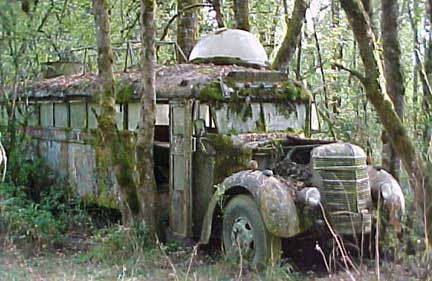
One of the great symbols of the 60’s and the Imagination of rebellious youth were the Merry Pranksters and their magic bus. The Kesey and the Pranksters took refuge in the naturalistic setting of La Honda, away from the crowded city. With the Worlds Fair in New York the summer of 1964, the party decided to hit the road. They bought a 1939 International Harvester bus and painted it “with brooms, mops, spray, splash and feet” (Rick 46). The bus was fully psychedelic and equipped with sound systems, platforms on top, a generator, and microphones. Further was scrawled on the side and became the name of the bus.
What does Ken Kesey and his Merry Pranksters have to do with the San Francisco Sound? In some ways it was the very beginning of it all. They not only birthed the sights and sounds of an acid inspired generation, but also brought their antics into the nations spotlight as they spread their influence across the country. Jeff, a bay area ex-hippy remembers, “Ken Kesey came and showered at our dorm once at UC Santa Cruz. Being around the guy was totally electric. He was powerful, and he was a leader. An absolute leader.” Perhaps the name of their magical bus embodies all that the 1960’s wanted, Further. Further….it’s where the bands wanted to go, where they wanted their music to go. In One Flew over the Cuckoo's Nest, Kesey writes, "Big Nurse hates him [McMurphy] for weakening . . . Control, and the System” (Kesey 155). Further…where rebellious and politically conscious youth wanted their voice to reach, wanted their minds to go. From the city of San Francisco, it all went, it pushed, and it soared. It went further.

Don't you remember, remember
Here's your favorite radio station, in your favorite radio city
We built this city
The city by the bay, the city that rocks, the city that never sleeps
We built this city on rock n’ roll
-Jefferson Starship
If San Francisco was the Garden, the fruits were the dozens of bands that sprang up from its foggy heights. Jefferson Airplane is often credited with bringing about the psychedelic sounds of the 1960’s. In 1966, the city was boiling over with talented artists of all varieties. Pantomime and theater groups infiltrated the streets while the musicians, of one form or another, joined in. Spearheading the revolution, Jefferson Airplane, featuring Grace Slick, unleashed two of the scene's most important tunes. Some say "Somebody To Love" and "White Rabbit" more or less opened the door to psychedelia. Suddenly all eyes were on San Francisco. “Man, every time I hear that song start, White Rabbit, that haunting sound. Get this feeling, it digs deep. In my mind I can see it all over again. Hear it. We all wanted to be Alice, we all wanted to chase the rabbit and go down the whole into Wonderland. And many of us did!” says Dave, a longhaired faithful hippy living in Petaluma. And it’s true, the lyrics of that song embody where the youth of the day had their voice, their ears, and their anger.
When men on the chessboard
Get up and tell you where to go
And you've just had some kind of mushroom
And your mind is moving low
When logic and proportion
Have fallen sloppy dead
Remember what the dormouse said:
"Feed your head
Feed your head
Feed your head"
Drugs certainly had their place in the music scene. They inspired the music to go higher, louder, and to new creative heights. For the youth of Alta California, it gave them confidence against those who wanted to “tell them where to go.” Drugs like acid liberated them. Physically they may be forced to conform to the social whims of society, but mentally, they were free. The music drove the colors and ideas, gave them confidence. As political conflicts like the Vietnam War penetrated the young generation’s lives and ripped friends from their side in the draft, this was their only escape.
By 1967, the amount of music coming out of San Francisco was mind-boggling. The Grateful Dead continued on their experimental route, taking it to the people. The Dead became notorious for their live, free shows in Golden Gate Park. They changed how music recordings were done with their live recordings. They gave people their hearts on these live tracks, the extended jams with songs lasting up to 20 or 30 minutes each. It hypnotized listeners across the country. And it still does. Younger, contemporary hippies in Santa Cruz make a connection and draw their inspiration from these live albums. Sam, a local resident of the area says, “It’s like your there. You put on some of their music in a dark room, having taken a taste of acid, and you can just hear Jerry [Garcia] calling to you. I would have given anything to stand in person and see one of his shows. But like I said, I feel like I have been there.”
"San Francisco was like the capital city of the 60s."
-Barry Melton, lead guitarist for Country Joe and the Fish
Probably the most famous political statement to come out of San Francisco in the sixties came from Country Joe and the Fish. Loudly protesting the war and the President, they would harangue the crowd with loud cries and chanting participation. While he normally got the crowd to yell out F-I-S-H, the cheer was changed to F-U--. On the well known Woodstock recordings, you can hear Country Joe shout out, “Gimmie an F….” and the whole crowd screaming back. “What’s that spell?!” and the reply would be deafening. “It was more than just saying obscenities for obscenities sake,” says Jeff. “It was saying F--- the government, F--- the war, and F--- those who didn’t like long hair.” It was the youth of a nation telling the world to “get stuffed.” When the band performed in Central Park, there were a number of executives from the Ed Sullivan Show in the audience. They had asked the band to appear near Christmas time that year. The following week they signed the contract, and sent in the agreed upon performance payment in full with a request: please don't appear on the show -- keep the money. Though relatively short-lived, Country Joe and the Fish proved to have a major influence on a whole generation of singer-songwriters and bands, notably due to their insistence on mixing music with politics, satire, and irreverence in an unprecedented way.
While the list of San Francisco bands is long and prestigious, Moby Grape is the best example of the blessings of the Garden that are cut short with the apples curse. Moby Grape was the most hyped of the SF bands. Less than six months after being "discovered" by Columbia Records, the group released its first album, and the record company released six singles at once. The record company rented out the Avalon Ballroom to put on a huge party with all of the major music heavies of the day. But later that night, three members of the band were busted up on Mt. Tamalpais in Marin County for having sex with underage girls. Their songs were removed from radio stations around the country. Due to the morals charge, which made headlines, the subsequent tour degenerated into chaos as Moby Grape were thrown out of many cities before they could even play. Things got worse, in New York while recording the follow up album. Lead guitarist Skip Spence went over the line on acid and “had to be restrained from chopping up the studio with an axe” (Slick 53). Hospitalization and further drug use sank the band’s fame and success. Ironically their most well known surviving song Omaha cries out:
(Listen, my friends) You thought never but
(Listen, my friends) I'm yours forever
(Listen, my friends) Won't leave you ever
The Curse was certainly felt throughout the SF music scene as Janis Joplin and Dead guitarist Pigpen were two among many premature deaths. These tragedies were felt throughout Alta California and changed the sound dramatically. Fear of overdosing, bad acid trips, and death penetrated the blissful, carefree hippy lifestyle as shadows crept into the imagination. With each despair and death, hearts were shocked back into the harsh reality that was trying to be forgotten. It would change the music forever.
Walking into the Fillmore that warm night of 1999 was awesome. The crowd was predominantly older, there to watch Tower of Power one of the major band forcess of San Francisco in the 1970’s. Shaggy heads filed in, passing by the classic Fillmore Posters that advertised the show. Everyone seemed casual and friendly. For many of them, this was routine, like coming home.

“Many of the posters could not be read when you were straight but had completely clear meaning when you were high.”
If the San Francisco bands were the fruit from the Garden, the Fillmore Auditorium was the Garden itself. A temple of the sixties, a sacred place where people came to worship and commune with their gods of music, their immortals. As the hippies would wait early inline for the doors to open, “Guys would roam up and down the line whispering ‘grass, acid, mushrooms, crank, etc.’ Money would change hands and the person would get a pill or joint or whatever- you never knew what was in the pills,” recounts Jeff. “By the time you climbed the stairs into the auditorium, the posters lining the walls had begun to run and flex with the very walls.” People certainly danced and moved, but inside the hallowed walls there was comradery and respect. Participants sat down on the crowded floor and passed joints up and down the rows. You trusted people, this was their sanctuary. “The stage was magic,” Jeff says. “With a room full of absolutely high folks, the electricity between those on stage and those in the crowd was thick. Many times you felt completely one with the music and the performer, as though they were singing or performing just for you, with a deep meaning that touched your innermost being.”
The Fillmore launched the careers of too many bands to list. The careers of the Grateful Dead, Jefferson Airplane, Santana, Quicksilver Messenger Service, Big Brother and the Holding Company, Moby Grape, the Butterfield Blues Band, and countless others started at the Fillmore. The stage was also the respected visiting place of every major band from The Who to Jimi Hendrix. Eric Clapton remembers, “If you were in the audience, you didn't know who was playing. Not at all. It was a sensory thing” (Sculatti 210). And it was a sensory thing. Jeff says that being there, “felt like you were part of a conspiracy, a secret brother and sisterhood that was defying the establishment by getting high, listening to extreme music with a message mostly of love and peace.” This is life in the Garden. You came to the Fillmore to free yourself from the world. It was dark and sublime. With the lights, the shadows, and the drugs it was mysterious, gothic, and a little wicked. It was exciting and new, rebellious and unconventional. It was the San Francisco Sound.
As the music started, I wondered to myself, “Would I feel, would I see?” A transformation took place in the crowd that pressed ever closer to the stage. I glanced over at my Dad who was seeing something far beyond my eyes. The room was hot, and the occasional smell of smoke and pot filled my nostrils. The music was funky, sublime; it hit into the core of ones stomach and you felt like your bobbing head was helping drive the music forward. I glanced over again. His hands were up, reaching higher. Like the name of the magic bus, pushing further…further. My hands went up, I let my mind go and the music consume me in its warm arms. Further… It was funky, it was mellow, it was cool. I was digging it…digging…dig it.
I could finally hear.
I could finally see…