Community Corner
Black Bear Likely First To Make Santa Monica Mountains Home In Decades
Meet BB-12, the young black bear that survived a freeway crossing to carve out a lonely life in the Santa Monica Mountains.


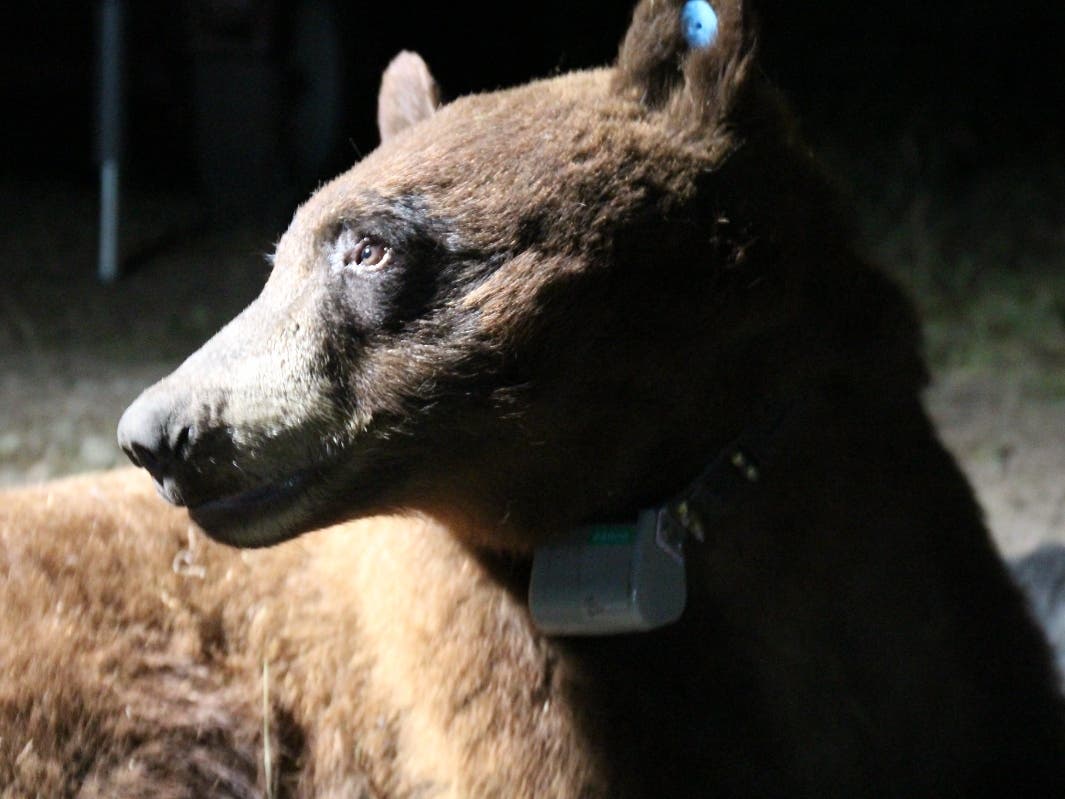


LOS ANGELES, CA — Less than a year after Hollywood's mountain lion P-22 died, Los Angeles may have a new symbol of hope for local wildlife surviving amid its freeway-disected urban sprawl. National Park Service biologists captured and collared a 210-pound black bear in the western Santa Monica Mountains believed to be the only bear living in the Santa Monica Mountains.
He likely survived a trek across the Ventura (101) Freeway from the Santa Susana Mountain range.
It's the first time in decades that a bear has made a home in the Santa Monica Mountains, according to the National Park Service.
Find out what's happening in Malibufor free with the latest updates from Patch.
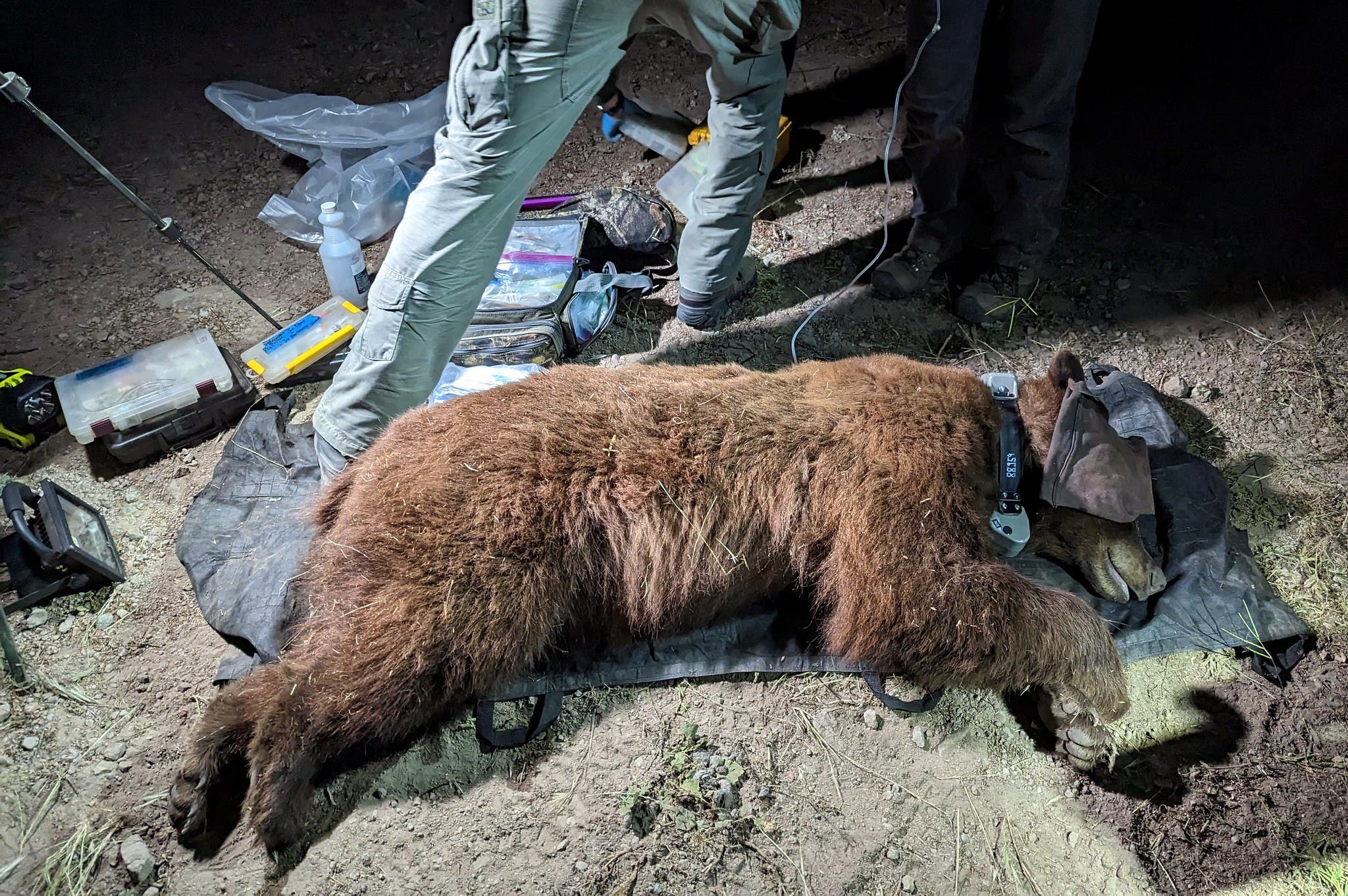
The bear, dubbed BB-12, was captured and collared April 23. He is believed to be about 3-4 years old and has likely been living in the Santa Monica Mountains for about two years, according to NPS biologists who did a full workup on the BB-12.
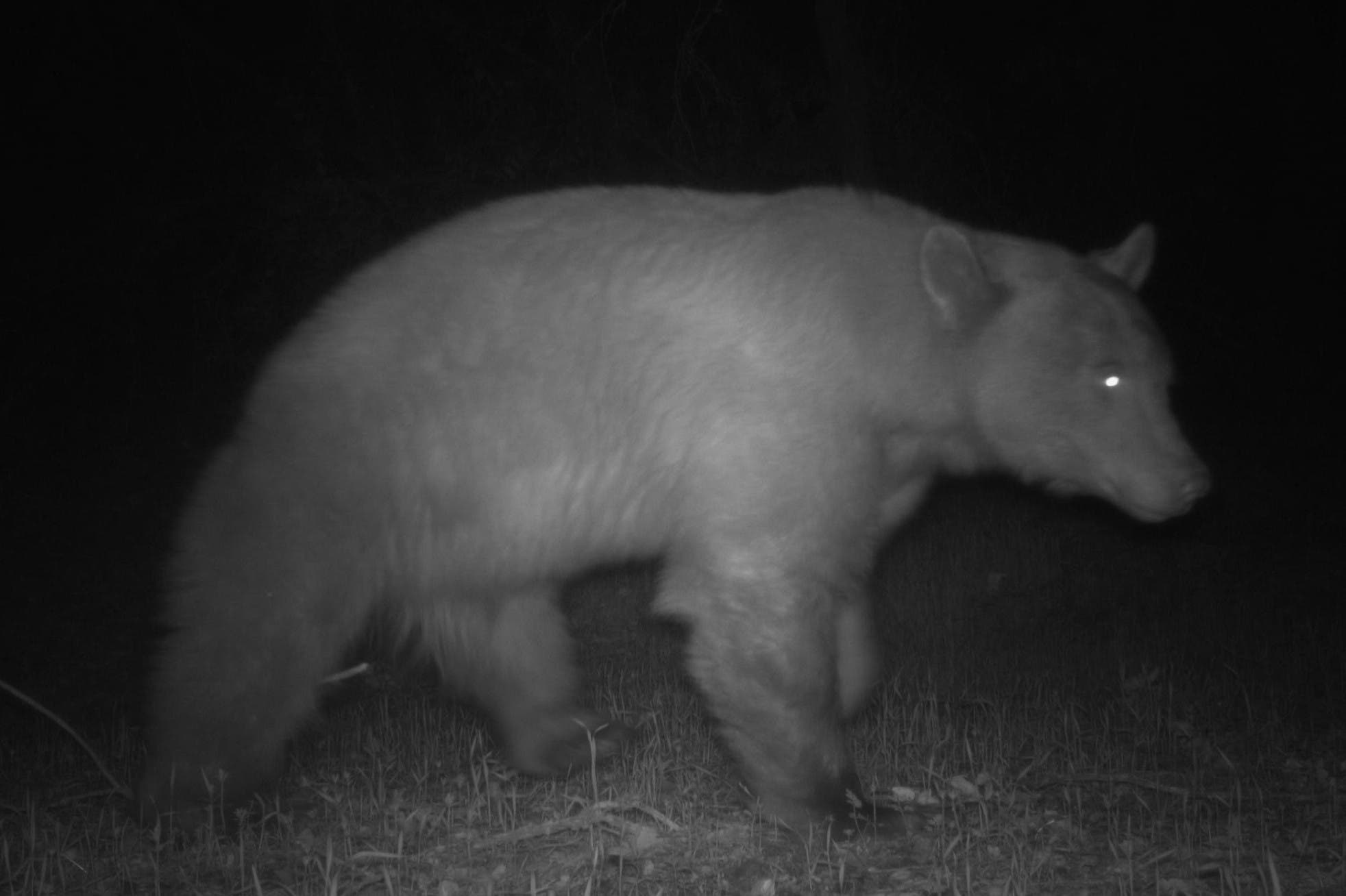
“He appears to be the only bear here in the Santa Monica Mountains, and he’s likely been here for almost two years based on our remote camera data,” said Jeff Sikich, the lead field biologist of the park’s two-decade mountain lion study. “This seems to be our first resident bear in the 20 years we have conducted mountain lion research in the area. It will be interesting to see how he shares the landscape with our other resident large carnivores.”
Find out what's happening in Malibufor free with the latest updates from Patch.
Scientists collected biological samples, took body measurements, attached an ear tag, and fitted a GPS radio-collar around the bear's neck. BB-12 is the first bear biologists have captured and radio-collared in the Santa Monica Mountains.
According to the National Park Service, the nearest population of black bears is in the Santa Susana Mountains, north of the 118 Freeway.
"Although bears have occasionally been documented in the Simi Hills, south of 118, and even in the Santa Monica Mountains, south of the 101 Freeway, there is no evidence of a breeding population in either area," the National Park Service wrote in a written release.
There are indications that the bear has made the area his home over the last couple of years.
In July 2021, a young black bear was spotted lumbering along Reino Road in Newbury Park and has since been seen on wildlife trail cameras in half of the Santa Monica Mountains - from Malibu Creek State Park to the range’s western border in Point Mugu State Park. Biologists believe BB-12 is the same bear.
BB-12 is a relative youngster. Black bears tend to live between 15 and 25 years. As residents in the foothills of the San Gabriel Mountains well know, black bears are opportunistic eaters, gorging on fruit, insects, small animals, deer and leftovers found in trashcans,
“As this bear gets older and is looking to mate, it might attempt to move back north and cross the freeway again,” Sikich said. “There is no evidence of an existing population here in the Santa Monica Mountains, and therefore likely no females. With the radio-collar, we can track its movements and hopefully know where it may attempt to cross the freeway. This can help us better understand habitat connectivity for wildlife in the area.”
Though he is the first bear to make his home in the Santa Monica Mountains in many years, others have ventured into the area from time to time
"In the early 2000’s, a bear carcass was discovered under a landslide in Malibu Creek State Park. In 2016, a bear was documented three times over three months on wildlife trail cameras in the central portion of the mountains but then never detected again," according to the National Park Service.
Sightings are more common near the San Gabriel and Santa Susana mountains.
Bears are sometimes spotted north of the 101 Freeway in the Simi Hills. A bear was spotted near Westlake High School in 2006, and one was killed by a vehicle on the northbound 101 Freeway near Lindero Canyon Blvd.
According to the National Park Service, black bears are not native to Southern California. They arrived in 1930 when about 30 bears from Yosemite National Park were translocated into the San Gabriel and San Bernardino Mountains, NPS biologists said.
The bears are mild in temperament and attacks on people are rare.
"If you encounter a bear while hiking, keep a safe distance and slowly back away. Let the bear know you are there," the National Park Service warned. "Make yourself look bigger by lifting and waving your arms and making noise by yelling, clapping your hands, using noisemakers, or whistling. Do not run and do not make eye contact. Let the bear leave the area on its own. If a bear makes contact, fight back."
Get more local news delivered straight to your inbox. Sign up for free Patch newsletters and alerts.