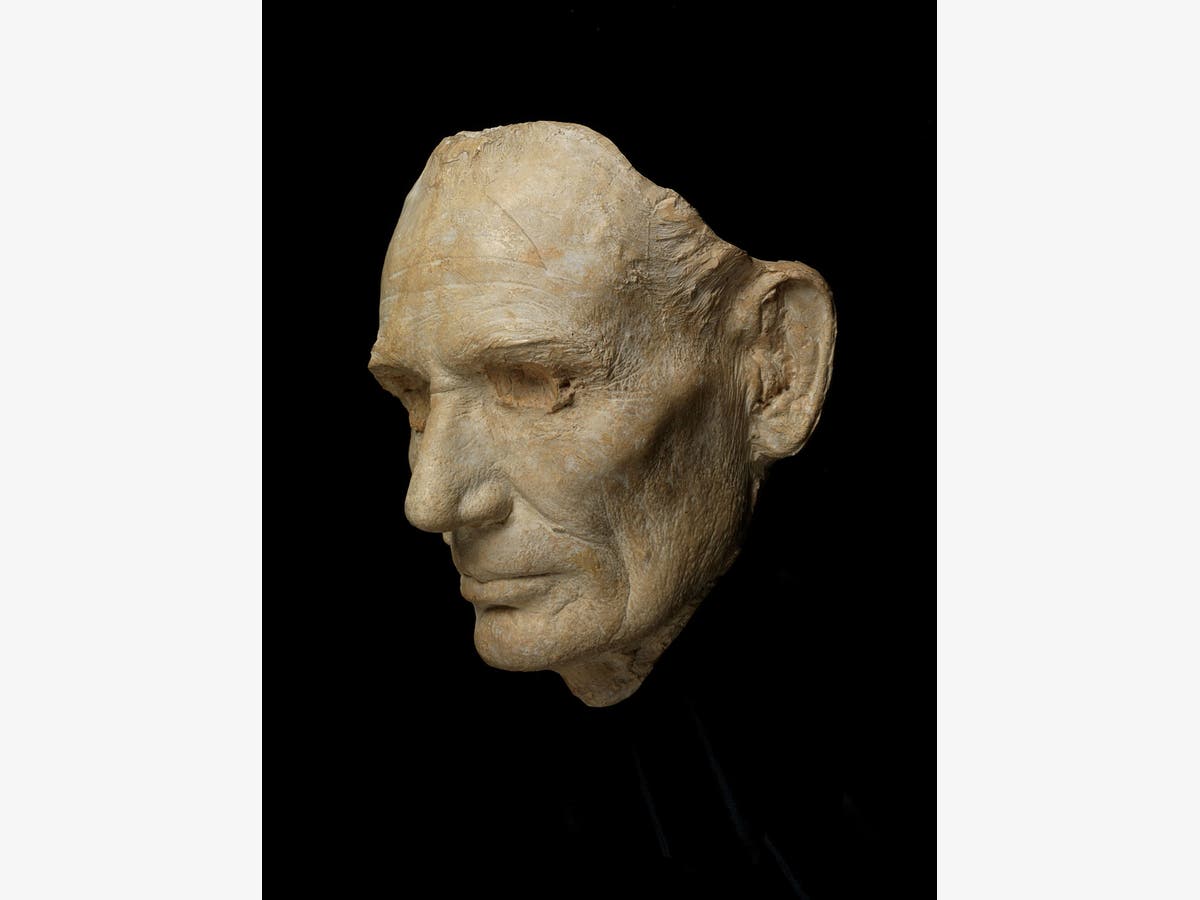
Abraham Lincoln. When you utter those words, people almost take off their hats. There is a reverential pause. Lincoln is sacrosanct, a demigod; nobody lays a glove on this guy. Not even Santa Claus gets this much respect. But, has Lincoln's Presidency ever really been examined critically by the masses?
There are two things to discuss here: a) who is the real Lincoln? and b) why is it that our society has granted this man sainthood? It's as if we need a Moses figure to prop up at all costs because he has grown to represent the best of who we are as Americans. But is he really worthy of this lofty perch? Do we really know him?
If asked why Lincoln was so great, a solid majority of people would say, "Because he freed the slaves." And that is the end of the discussion. Actually, that is far from the end of the discussion. Oh, Lincoln was truly brilliant. He was a master politician, maybe the best ever. He was famously eloquent with spoken word and pen. He was a master lawyer whose powers of persuasion were legendary. He was also 6' 4'' tall, a giant of a man. Throw in the top hat and you have a Titan.
Find out what's happening in Malibufor free with the latest updates from Patch.
Consider this: If any truly objective person, let's say someone from outer space, were to come down to the United States and ask, "What is the darkest period in your country's history?", without a doubt, all Americans would say "the Civil War." It's not even close. It's not quite the Holocaust (off the charts "dark"), but standardized for today's population, the Civil War would be the equivalent of 5 million American deaths in four years (the Lincoln years). The actual number is 620,000 deaths.
To put this in context, we lost 58,000 in nine years in the Vietnam war. We lost only a few thousand in the 10-year war with Iraq and Afghanistan. The South lost one fourth of all the white males between 20 and 40 years of age. The carnage started shortly after Lincoln's election in 1860, and it ended (in theory) a few days before his death.
Find out what's happening in Malibufor free with the latest updates from Patch.
And, what did these men die for? To end slavery? Even a cursory look at the facts will reflect that ending slavery was not even a slight priority for Lincoln. So then, what did all these men (and women and children and slaves) die for? Now that we have established that it wasn't slavery, can any cause be worth this grotesque level of human slaughter? This treatment was far worse than even this disease (slavery), especially when there was medication that had far, far fewer side effects. Upon setting out to do any task, great or small, most would look at the proverbial "cost/benefit ratio". If you are trying to save starving dogs but in the process you kill an equal amount of perfectly healthy ones then you are left with a very questionable result and an even more questionable line of reasoning.
If one could imagine the possible outcomes of what appeared to be a standoff between the South, insisting on their right to secede from the Union, AND, Lincoln's strong desire to keep the Union intact, what are the possible hypothetical results of the various scenarios? One would be the end of slavery and the South remains in the Union without any concession from the North. There would be almost an unlimited amount of scenarios short of War that could satisfy the South and the North....The absolute WORST scenario is war....Civil War. Any President could usher in a war. The worst outcome of War is the South being victorious---the South actually winning the War...the second worst outcome possible was what we got with Lincoln as President...Total war with the North winning in a nail biter to the finish... So, if Presidents are judged based on their diplomatic talents and abilities to avoid disasters (man made) then how can Lincoln be the recipient of so much unbridled canonization? If Kennedy had invaded Cuba in 1962 and started a small scale nuclear exchange which killed a million people but left us as the victor would we be similarly as enthusiastic about his leadership? Of course not...JFK avoided that potential disaster and he is rightly credited for his genius act of diplomacy.
What, in fact, was the cause of the Civil War. I think any credible academic on this issue would concede that Lincoln invaded the South to extinguish its right to secede from the Union, nothing more. The South indeed had that "right" in the eyes of the author of the Declaration of Independence. Thomas Jefferson was a strong supporter of the Union, but he defended the right of any state to secede from it. In Jefferson's first inaugural address, he stated:
If there be any among us who would wish to dissolve this Union or to change its republican form, let them stand undisturbed as monuments of the safety with which error of opinion may be tolerated where reason is left free to combat it.
On numerous occasions, Jefferson maintained that the states had "never yielded their rights to be sovereign over the federal government which they had created." Moreover, although actual succession would be a "calamity", such a rupture, would be necessary if, in the opinion of the citizens of a state, the federal government had become one of unlimited powers--that is, one which exceeded the expressed powers given it by the Constitution.
John Adams said virtually the same thing in support of a states right to secede. Alexis de Tocqueville stated in Democracy in America that:
The Union was formed by the voluntary agreement of the States; and in uniting together they have not forfeited their nationality, nor have they been reduced to the condition of one and the same people. If one of the states chooses to withdraw from the compact, it would be difficult to disprove its right of doing so, and the Federal Government would have no means of maintaining its claims directly either by force or right.
The original framers of the Constitution denied the centralization of power that we experience now. Lincoln's presidency forever changed the original intention of decentralization of our government and the hallowed principles of state sovereignty.
Lincoln unloaded the full military force of the federal government, hell-bent on death and destruction for what? To keep some states from leaving the Union? If your wife wanted a divorce, would it be righteous or legal to beat her into submission until she agreed to stay married? It's atrocious to kill your brothers to keep them in the family. Eleven Southern states ratified a declaration to secede from the Union. It was very calculated and clear.
Just so there is no confusion about Lincoln's lack of commitment to racial equality, let's visit some of his rhetoric from the time. In his first Inaugural Address he stated:
I have no purpose, directly or indirectly, to interfere with the institution of slavery in the states where it exists. I believe I have no lawful right to do so, and I have no inclination to do so.
In 1858 debate with Stephen Douglas, Lincoln declared:
I have no purpose to introduce political and social equality between the white and black races. There is a physical difference between the two, which, in my judgment, will probably forever forbid their living together upon the footing of perfect equality.
"Eliminating every last black person from American soil", Lincoln proclaimed, would be "a glorious consummation." He advocated the peaceful "deportation" of blacks so that "their places be filled up by free white laborers."
In a famous letter to Horace Greeley in 1862, Lincoln's ambivalence is undeniable:
My paramount object in this struggle is to save the Union, and is not either to save or to destroy slavery. If I could save the Union without freeing any slave I would do it, and if I could save it by freeing some and leaving others alone I would also do that. What I do about slavery, and the colored race, I do because I believe it helps to save the Union.
The Emancipation Proclamation was a smoke screen at best. It was immediately dismissed in the North as a political trick:
The President has purposely made the proclamation inoperative in all places where we have gained a military footing which makes the slaves accessible. He has proclaimed emancipation only where he has notoriously no power to execute it. The exemption of the accessible parts of Louisiana, Tennessee, and Virginia renders the proclamation not merely futile, but ridiculous.
Lincoln's own secretary of state, William Seward, disparaged the Emancipation Proclamation by saying, "We show our sympathy with slavery by emancipating slaves where we cannot reach them and holding them in bondage where we can set them free." Lincoln himself said that the proclamation was just a war measure, not an attempt at real emancipation.
The list of Lincoln quotes denouncing racial equality and supporting slavery in the existing slave states is vast and in the public record. He spoke repeatedly for colonization, sending blacks to Haiti, New Guinea, Africa, the West Indies and other places.
Let us just pretend that this whole unnecessary train wreck (the Civil War) was about ending slavery. Anyone can impose their will using brute force. It is the Gandhis and Martin Luther Kings who bring about profound change through cunning and mindfulness and finesse. We tried to enforce democracy on the Vietnamese by destroying their country and killing millions of them--that just emboldened them.
A true statesman, a great president would have ended slavery without a war and without reckless disregard for the U.S. Constitution. The United States was far from being the only country in the world with slavery at the time. In virtually every other country of the world, slavery ended through peaceful means. Only Haiti, in 1794, had a violent uprising over the end of slavery.
The U.K. brought about peaceful emancipation in six years. The British government had the ingenuity to compensate slave owners an amount that was estimated at 40 percent of the value of their slaves. By 1840, all the slaves in the U.K. had been freed. The cost to buy the slaves would have been much cheaper than the price that our fellow Americans paid. We could have given every slave 40 acres and a mule and been spared the Armageddon. Emancipation was realized peacefully in the Dutch colonies, Brazil, Argentina, Chile, Peru, Bolivia and many more countries during the same general period as our Civil War. What if, instead of ending slavery in the U.K. without bloodshed, the Prime Minister of England had hosted a Civil War where over a half million of it's citizens were killed and where citizens and their countryside were demolished? Would we be carrying this man through the streets of town with an olive wreath on his head?
Besides, slavery was waning anyway. It was in marked decline in the border states and the upper South mostly for economic reasons. The industrialization of the South was underway and it was becoming more and more difficult to justify slavery from an economic standpoint. Ironically, slavery was supported to a large measure by the Fugitive Slave Law (which was unequivocally supported by Lincoln). If it wasn't for the Fugitive Slave Law, thousands of slaves could have escaped to freedom through the underground railroads to the border states without fear of retribution.
Lincoln did not meet once with Confederate President Jefferson Davis. Nor did he ever meet with General Robert E. Lee to discuss possible outcomes that would satisfy the South's real concern, a threat to their lifestyle due to the elimination of slave labor. That is breathtaking. It would never pass today's standards of leadership and statesmanship. The notion that the South was full of "bad" Americans and the North of good Americans is wild. Slavery became part of the fabric of the South because of their economic way of life. The North didn't have an economic use for slaves due to its vastly more industrialized culture. Truth be told, the people of the North didn't want freed blacks coming up their way. There were no open arms for freed slaves.
It is fair to say that the Founding Fathers designed the Constitution, the rule of law, as a check against ever expansive centralized control by the federal government. They had witnessed the oppressive totalitarian control of the British monarchy and were determined that the United States be a government of laws, not men. It was during the Civil War that many of Lincoln's greatest assaults on the Constitution were carried out. It was nothing short of dictatorial. He suspended the writ of Habeus Corpus, a sacred tenet in the Constitution. This allowed him to arrest and hold a citizen indefinitely without trial. This prompted this comment by a prominent Federalist icon:
The people of the United States are no longer living under a government of laws; but all citizens hold life, liberty and property at the will and pleasure of the army office in whose military district he may happen to be found.
Martial law implemented by Honest Abe enabled the military arrest and imprisonment of thousands of citizens, sometimes on mere rumors. This is hardly what the framers of the Constitution had in mind. Don't even think of protesting the war. Lincoln imprisoned anyone, many newspaper editors and owners, and even priests and preachers. The secretary of state established a secret police force that made thousands of arrests on suspicion of "disloyalty," defined as disagreement with Lincoln's war policies. No trials were held, prisoners were not told why they were being arrested. There was no legal process at all.
A minister in Alexandria, Virginia was arrested for omitting a prayer for the president in a church service as required by the Lincoln administration. This was not America ... this was tyranny. The administration protected itself from criminal prosecution for depriving so many citizens of their constitutional rights by assembling the passage of an "indemnity act" in 1863 that placed the president, his cabinet and the military above the law with regard to unconstitutional and arbitrary arrests. There are endless anecdotes of Lincoln's abuse of power, an abuse that would forever change the United States system of government, centralizing it and giving the president much more power than was originally written by our founding fathers.
Lincoln's war with the South proved to be devastating well beyond its official end in 1865. Lincoln thought the war would last only a few months, easily the biggest miscalculation in American history. George W. Bush wasn't the first Republican to hold up a "Mission Accomplished" sign well before its time. The "Reconstruction" that followed was anything but; the South was gutted head to toe. The southern economy took many years to recover.
General Sherman, at Lincoln's behest, carried out a program of extermination through the South that violated all international rules of law to say nothing of the fact that these were American citizens. Upon taking command in Memphis, Sherman described his ultimate purpose in the war to his wife, "Extermination, not of solders alone, that is the least part of the trouble, but the people."
Civilians were killed in the streets, women and children, property (all property) was torched or stolen. Sherman boasted that his army alone, while passing through Georgia and South Carolina, destroyed $100 million in private property and stole another $20 million. In many cases, no buildings were left standing.
It is estimated that over 50,000 southern civilians, many of them black slaves, died in Lincoln's war. How could anyone question the resentment that the South has to this very day? Blacks in the South arguably suffered even more than the white people ... disease ran rampant.
What if the British had succeeded in doing this to us during the Revolutionary War? We seceded from the British Empire and we fought a risky, bloody war to do it so that less than 100 years later we could see war being waged by the federal government on our own citizens for not complying with a "theoretical" Lincolnian notion that we needed to stay together (at all costs). If you don't join us, we are going to kill you and your children and your property.
After 150 years, I don't think anyone can fathom the level of devastation. It is surreal. Families on both sides demolished, thousands maimed for life ... a provoked poverty. How much racial tension that even exists today could have been squelched by a peaceful, non-apocalyptic ending to slavery. How many lynchings and burning crosses and reigns of terror in the south in the 20th century can be traced to the tremendous resentment felt by the South at having their land and entire way of life set ablaze by a directive of the President of the United States. The scars and resentment haven't healed as of yet. We look at these Middle Eastern countries that have uprisings and civil wars, Libya, Egypt, etc., over government oppression and we can only imagine how foolish and uncivilized we must have looked to the rest of the world back in 1861-1865. If CNN were around then, our public image would have died with Lincoln.
And, so what if the South had seceded. At least it would have preserved the original intent of the American system for a limited federal government. Slavery would have fizzled shortly as the South grew more and more industrialized and as internal pressures mounted. It is seemingly certain that the new South would have, like Canada and England, fought wars alongside the North, our economies would have intermingled, and with a little less centralized government ambition, the Union might have reformed. After all, the Union didn't create the states, the states created the Union (under conditions outlined by the founding fathers in the Constitution).
In closing, let me reinforce the obvious; that the institution of slavery is abhorrent, a violation of everything about humanity. History is full of leaders who avoided war and disaster in favor of a peaceful resolution. For all the credit MLK receives, I don't think it is quite enough. It was King, not Malcolm X, whose peaceful approach to fighting inequality can never be understated for its wisdom and grace.
Happy Presidents Day, Thomas Jefferson!