Crime & Safety
Malibu Sea Lion Video Sparks Outrage Toward County Lifeguards, California Wildlife Center
The sea lion was likely suffering from domoic acid poisoning, a neurological disease. The California Wildlife Center director says "the video doesn't really explain the situation."
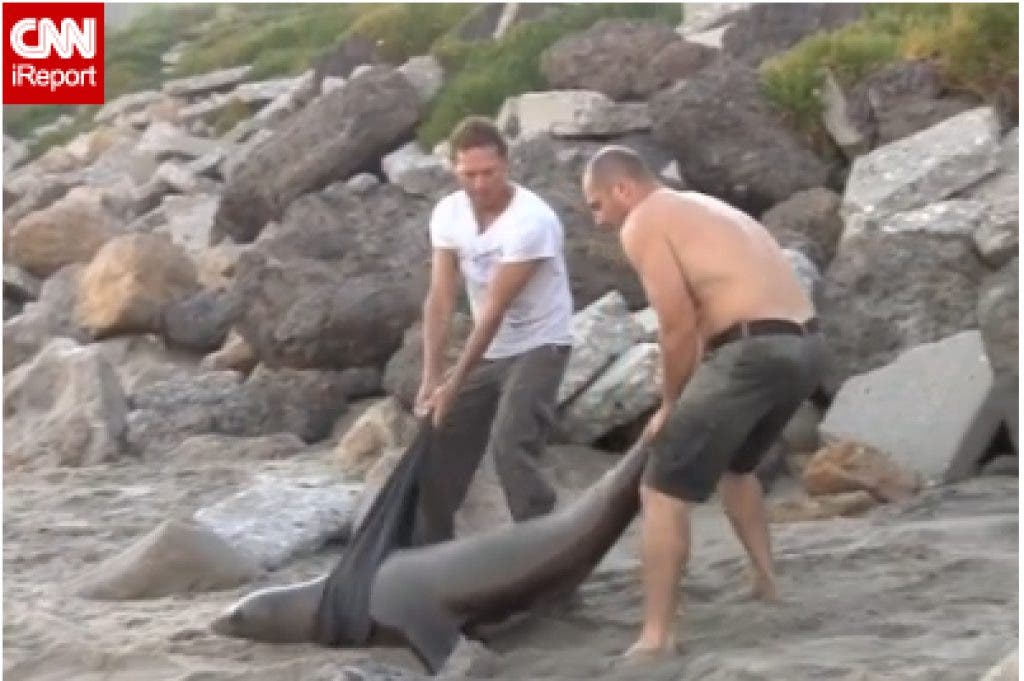

A video that first appeared on CNN’s iReport website April 5 showing two men attempting to rescue a sea lion at in Malibu attracted more than 55,000 hits in three days and has sparked a debate over whether the men were helpful or made the situation worse.
Following the release of the video, numerous people contacted the California Wildlife Center and Los Angeles County lifeguards stating they believe the sick animal was neglected. Cindy Reyes, executive director of the CWC, said, “the video doesn’t really explain the situation.”
In the video, two men haul a sea lion out of the water, and put her down on the sand. They walk around her and touch her, and speak to CNN iReporter Julie Ellerton, who is a Malibu resident.
Find out what's happening in Malibufor free with the latest updates from Patch.
The sea lion is clearly disturbed by their presence, and tries to go back into the water. The men, identified as Gabor and Truce Mitchell, said, “She was seriously injured, hitting the rocks, starting to drown. She was not biting or fighting us. We called the [California Wildlife Center] and lifeguards.”
The men said they feared the sea lion could die if she did not immediately receive help.
Find out what's happening in Malibufor free with the latest updates from Patch.
Leslie Lentz, a volunteer from the CWC’s Marine Mammal Rescue Team arrived after sunset, and the video showed her telling the men it is against the law to touch or get too close to seals and sea lions. She warned that sea lions can inflict serious bites. Lentz further told them that the CWC’s one truck was already in use, that the marine mammal facility in San Pedro had closed for the day and the sea lion would have to be left on the beach overnight. She also tried to explain the sea lion’s obvious malady—domoic acid poisoning.
The men became emotional and angry, and insisted that if the sea lion had to wait until morning to be rescued, they would stay with her on the beach until then. They pleaded with Lentz, “Just get someone with a truck to drive her to a hospital and save her.”
A county lifeguard soon arrived, and told the rescuers to leave because no one is allowed on the beach after dark.
Shortly after the video appeared online, the CWC and the county lifeguard headquarters began receiving angry calls and emails from throughout the country.
CWC head Reyes said it was unfortunate the video does not explain the situation. She said at the time, the CWC truck was not available because it was transporting three marine mammals to the facility in San Pedro.
Reyes said a CWC rescue team went back to the site the next morning, and rescued just south of Dan Blocker what they believe was the same sea lion.
“We don’t do rescues in the dark,” Reyes said. “A rocky beach in the dark is not safe for the animal or the human. We work very hard to respond to these animals beginning early in the morning. And in most situations, our current setup works.”
This year’s outbreak of domoic acid poisoning—an algae-caused neurological disease that causes disorientation, a variety of related symptoms and possibly death—began last week.
Reyes said sea lions are not the only marine mammals being affected. Four long-beaked common dolphins (the kind usually found in Malibu) have washed up at various places in the local area. One died immediately after washing up at , and has now been necropsied and taken to USC for further testing to confirm cause of death.
County Chief Lifeguard Mike Frazer, who has also been taking some flak from the public over the video, said a new marine mammal care center planned for Playa del Rey will help take care of the response problem because of its closer proximity to the Malibu area.
Peter Wallerstein, head of the nonprofit Marine Animal Response group, which handles rescues for Los Angeles County outside the Malibu area, is raising money for the new center.
“It’s tough right now rescuing all the juvenile elephant seals along with the domoic acid cases," he said. "I had five domoic rescues just yesterday … There’s a lot of problems with good intentioned people. People need to have patience and stand by and stay away, even though I understand their motivation and empathy.”
To see the video, go here.