Neighbor News
IN DEFENSE OF SUPREME COURT JUSTICE ANTONIN SCALIA
Scalia points out that the 14th Amendment to the Constitution, adopted in 1868, defines marriage as being between a man and a woman.
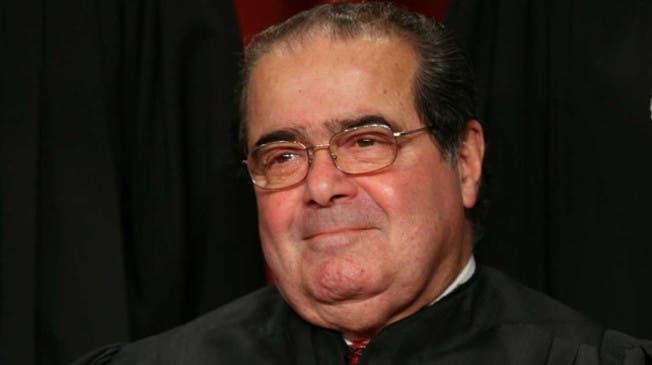
Sitting Supreme Court Justice Antonin Scalia died yesterday in his sleep. He was 79. Scalia served on the Supreme Court for 30 years, making him the longest serving Supreme Court Justice in history.
Scalia was considered to be a very polarizing figure. He was arguably the most controversial of all the sitting Supreme Court Justices and certainly one of it’s most loved (and despised) in American Judicial history.
Scalia was appointed by then President Ronald Reagan and he was soon considered to be the most stalwart supporter of the most literal translation of the Constitution. Scalia called himself a “textualist” which meant that he interpreted the Constitution to mean only what (he believed) the framers intended and nothing more. With very few exceptions he did not see the Constitution as a “living” document that allowed for modernization and contemporary “rebooting” the way that Justices who are more liberal are known to interpret the Constitution…
Find out what's happening in Malibufor free with the latest updates from Patch.
He was rigid in his beliefs and he felt that the job of any Supreme Court Justice was to show restraint and to resist the temptation to give rights to citizens that weren’t explicitly granted for in the Constitution. It is not that Scalia believed in limiting “rights”, he just believed that some ”rights” were granted in the Constitution while the validity of other “rights” should be voted on by the People, not a high court. This ends up meaning that Scalia preferred, in many cases, to rule that there was no Constitutional right provided to all Americans by the Constitution and therefore it should be ruled on by democratic processes, which means that it is an issue for the individual states to decide and therefore, it is not a Constitutional right that all citizens in the United Stats are granted….
Perhaps Scalia’s most widely expressed Constitutional view regards the 1973 Supreme Court decision Roe vs. Wade which made abortion rights a Constitutionally protected right of all Americans. Scalia wasn’t on the Supreme court at the time but he vehemently opposes that decision …not because he is necessarily against abortion (though he surely is by virture of his being a Roman Catholic) but because he feels that the proper reading of the Constitution does not say one way or another that abortion rights should be protected by the federal government or not protected by the federal government. He thinks that the state’s have the right to decide this through the democratic process, therefore deferring this decision to the individual states. Though I am personally a strong supporter of abortion rights (with some restrictions), I would tend to agree with Scalia on Roe vs. Wade. If we want to make it a federally guaranteed right we should amend the Constitution…(which isn’t easy to do).
Find out what's happening in Malibufor free with the latest updates from Patch.
Another highly controversial Supreme Court ruling was made in 2015 when Justice Scalia was on the court.. Scalia wrote a strong minority opinion against federally protected marriage equality along with 3 other dissenting justices. The majority opinion in a 5-4 decision ruled that marriage between two people of the same sex was protected by the Constitution..
Here is where the nuance rests…Justice Scalia wasn’t voting that people of the same sex should not be allowed to marry…he felt that the 14th Amendment to the Constituion had already expressly defined marriage as being between one man and one woman. Scalia points out that the 14th amendment to the Constitution, adopted in 1868, defines marriage very clearly as being between a man and a woman, and therefore, he sees it’s repudiation by a patrician group of 9 lawyers to be very un-American and a clear act of judicial overreach by the Supreme Court. Scalia feels it is not consistent with the Constitution to rule that same sex marriage is legal.
Scalia said this in his minority opinion:
This is a naked judicial claim to legislative — indeed, super-legislative — power; a claim fundamentally at odds with our system of government. … A system of government that makes the People subordinate to a committee of nine unelected lawyers does not deserve to be called a democracy.
Again, I would have to agree with his interpretation. I am very much in favor of gay marriage, but as Scalia, a strict “textualist” would point out….that is irrelevant. If you want to guarantee the right of same sex couples to be married you have to amend the Constitution and not read into it something that is clearly not there. The Federal government does not grant same sex couples the right to be married, according to Justice Scalia
So, Scalia’s personal politics (which he feels are irrelevant to his rulings, and they may be) are not what influence his vote on a particular issue before the Supreme Court. He has a view of how the Constitution should be interpreted, and his responsibility to uphold it’s integrity…and other Justices feel the Constitution should be viewed as a fluid document that can be interpreted in light of its presumed “spirit” and not necessarily it’s “letter” of expression. Clearly some issues before us now were never anticipated by the original framers for various reasons. Scalia feels as though it is his job to exercise judiciary restraint in those cases and rule to put those issues before a vote of the people, not 9 judges who don’t even slightly reflect the American electorate.In short, Scalia doesn’t believe in “writing”new law (that is for the United States Congress or individual states, but only in interpreting it.
More of Scalia’s dissenting opinion on same sex marriage ruling:
But what really astounds is the hubris reflected in today’s judicial Putsch. The five Justices who compose today’s majority are entirely comfortable concluding that every State violated the Constitution for all of the 135 years between the Fourteenth Amendment’s ratification and Massachusetts’ permitting of same-sex marriages in 2003. They have discovered in the Fourteenth Amendment a ‘fundamental right’ overlooked by every person alive at the time of ratification, and almost everyone else in the time since.
They are certain that the People ratified the Fourteenth Amendment to bestow on them the power to remove questions from the democratic process when that is called for by their ‘reasoned judgment.’
The opinion is couched in a style that is as pretentious as its content is egotistic. It is one thing for separate concurring or dissenting opinions to contain extravagances, even silly extravagances, of thought and expression; it is something else for the official opinion of the Court to do so.
A very recent Supreme Court ruling where I personally disagreed with Scalia’s majority opinion is the recent decision regarding “Citizens United”, i.e., Campaign Finance reform. Scalia ruled that the Federal government could not limit campaign contributions because to do so would be expressly forbidden by the 1st Amendment of the Constitution, the right to free speech. He felt that giving money to a campaign fell under the right of free speech. He compared limiting personal campaign contributions to limiting how much a newspaper could spend to produce its newspaper, after all, newspapers have editorial opinions and endorse candidates, etc…so he claims.
I don’t see these two things as being similar, at least not similar enough…and I can’t see the reasoning that a strict “textualist” would cite to support this view. One thing is for certain…..allowing billionaires to have a very disproportionate influence on how our country is run, essentially by trying to buy elections or unduly influence the business of government is anti–democratic and not something that the founding fathers would have envisioned or approved of…
I will miss Supreme Court Justice Scalia…he changed the way the Court works…before Scalia it was rare for Justices to ask questions during oral arguments, now, almost all of the justices asked spirited questions of the attorneys arguing their cases before the high court. Before Scalia, most justices just listened to the arguments presented by both sides…the way Supreme Court Justice Clarence Thomas has done for all of his 25 years on the court. Thomas recently went 10 years without saying one word during Supreme Court arguments. Scalia asked a lot of questions…he was colorful, witty, scholarly, articulate, imposing at times and sometimes even condescending…but there is no doubt that he changed the court….he was a scholar…and one of the great Constitutional minds of this, or any, time…
Bill Clinton said this today about Justice Scalia:
I always kind of liked Justice Scalia because he never pretended to believe something he didn’t. He never pretended to be anything he wasn’t. And I think that’s one reason why by all accounts he became good friends with Justice Ginsburg...
Tonight, all of us, whether we agreed or disagreed with him, should be praying for his family and thankful for the fact that he was able to live a life where he could say what he thought and do what he thought was right and do it with a smile on his face and reach out and make friends with Ruth Bader Ginsburg.
Yes, in strange irony, Justice Scalia’s closest friend on the court was Ruth Bader Ginsberg, known for being the Court’s most liberal Justice…how refreshing!
R.I.P. Antonin Scalia