Schools
Malibu School District Separation Still In Limbo
LACOE voted Saturday to move Malibu's petition to create a unique school district forward.


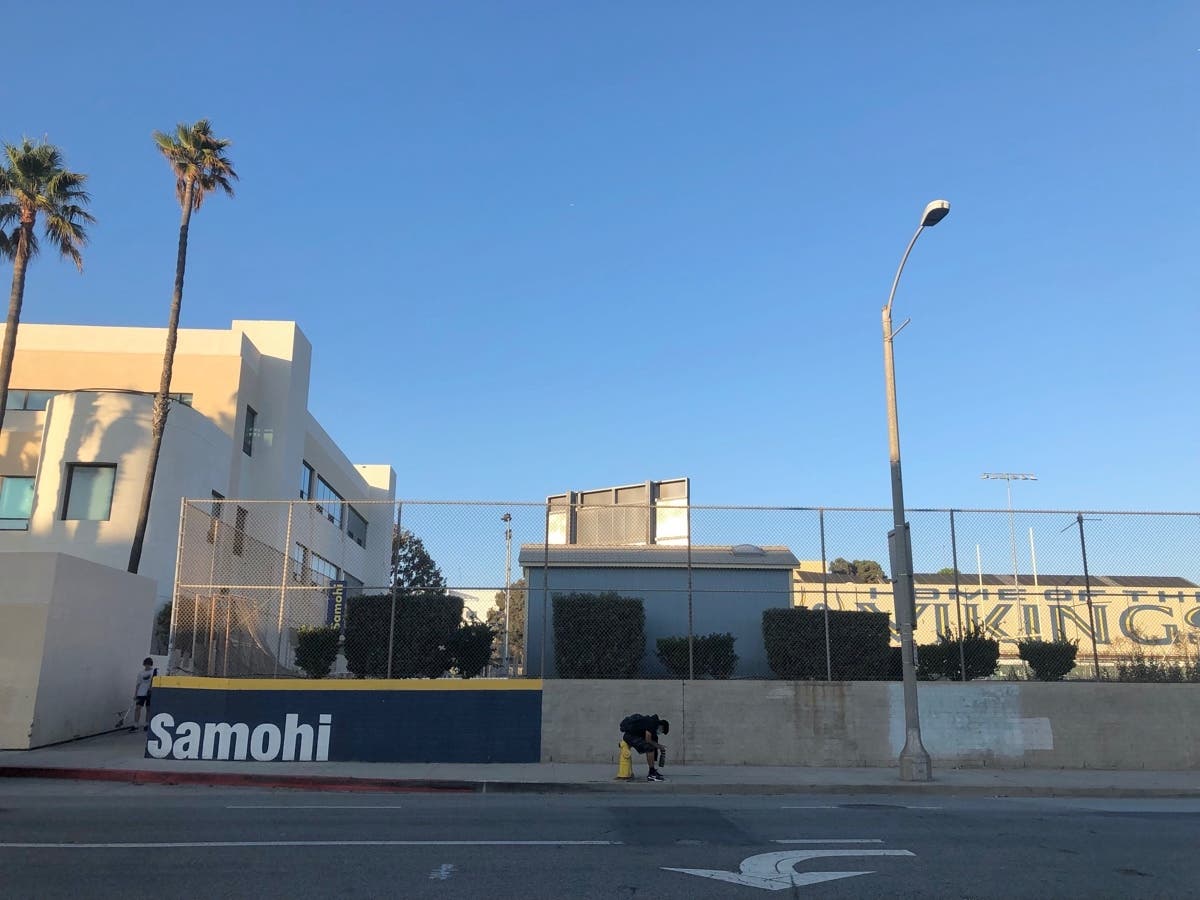
MALIBU, CA — It’s still not clear if or when Malibu will have its own school district, as the Los Angeles County Office of Education voted Saturday to move the city's petition forward for further review.
The 8-2 vote means that the LACOE County Committee on School District Organization will investigate a petition to decide whether the Santa Monica-Malibu Unified School District will separate into two unique districts as requested in Malibu’s petition. Saturday’s decision does not endorse or approve that petition in any way.
Allison Deegan, regionalized business services coordinator for LACOE, said it could be awhile before the district is able to make such dramatic change.
Find out what's happening in Malibufor free with the latest updates from Patch.
"No changes will happen today, and no changes will happen quickly," she said at Saturday's hearing.
Saturday’s Hearing
The decision came during a public virtual hearing Saturday where Malibu and Santa Monica stakeholders plead their cases before LACOE. More than 50 members of the public spoke about separation during the hearing, reviewing the details of this lengthy and messy school district divorce that has been on LACOE’s plate since 2017.
Find out what's happening in Malibufor free with the latest updates from Patch.
The City of Malibu and SMMUSD both made their arguments before the County Committee. Malibu’s key claims remain that SMMUSD ignores and mistreats Malibu constituents and that Malibu and Santa Monica are too geographically different to work as a single district.
“Although Malibu and Santa Monica are joined together with this school district, we are not joined together in any other way,” Malibu city council member Karen Farrer said.
Given the more rural landscape of Malibu and the urban sprawl of Santa Monica, Malibu representatives emphasized that the geographical separation between the cities creates many problems, especially in responding to natural disasters. Commenters and representatives of Malibu levied complaints that the 2018 Woolsey fire — which caused massive destruction in Malibu and destroyed more than 400 homes — recieved a poor response from Santa Monica.
A Santa Monica speaker, Ana Maria Jara, took issue with claims that the city didn't care about their Malibu neighbors and didn’t come to their aid during the Woolsey fire. Jara countered that she and other Santa Monica community members helped provide temporary shelter and other support.
Malibu City Council Member Karen Farrer and public commenter Scott Dittrich described poor conditions at Malibu schools, including insufficient resourcing for special needs educators and music programming. Due to these issues, enrollment at Malibu schools has rapidly declined, Farrer and Dittrich said.
Jon Kean, President of the SMMUSD Board of Education, described a "perfect storm of a declining number of school-aged children, paired with stagnation in housing. Today, Malibu students have 1,099 students enrolled. Not the 12,024 stated by the Malibu City Manager earlier."
Ralph Mechur — a former SMMUSD board member — countered that all district campuses had been renovated through the "window, pain and floor” program, with several million dollars dedicated to each school.
He's been involved with the district for some 40 years.
“Malibu Middle High School has recently opened a new 12-classroom building and a new admin library building,” Mechur added. “Malibu is completing a plan to rebuild its high school.”
SMMUSD emphasized the findings of a preliminary report published earlier this month by LACOE’s Division of Business Advisory Services, which found that Malibu’s petition insufficiently met eight out of nine criteria used for evaluation. The key factor SMMUSD focused on is whether Malibu could meet and sustain the enrollment requirement for an independent district.
Considering a petition so flawed, SMMUSD argued, moving forward is a waste of precious time and resources that should be going toward student education — especially in the aftermath of a pandemic.
“It would be unfair to require the district to continue to defend against a city council petition that is fundamentally and irreparably flawed,” legal counsel for SMMUSD David Soldani said.
“Subjecting the district and its families to more process and more hearings based upon this flawed petition is a waste of the committee and the districts’ time and resources, both of which are in dangerously low supply right now,” Soldani added.
Dr. Ben Drati, Superintendent of SMMUSD, addressed the demographic shift that would occur as a result of the split, leaving an independent Santa Monica school district with a far more diverse enrollment than Malibu and less per-pupil funding. This was all included in the preliminary report from LACOE.
“Sadly, there is a continuing precedent of systemic and structural discrimination in this country that has even touched the educational system in the form of rich, wealthy and predominantly white communities peeling themselves away from bigger and more ethnically diverse districts, while taking the community resources assigned to public education in their region or district,” Drati said. “This is happening all over the nation and in our own backyard with the city council’s petition.”
Public commenters, including a representative of the NAACP, drew attention to discrimination faced by students of color in Malibu schools, referencing a racist incident at Malibu High School last year in which a Black student was threatened by his peers with a noose.
Despite these incidents, Maria Leon-Vazquez, a SMMUSD school board member, added that both high schools — Malibu High School and Santa Monica High School — continue to rank as top high schools in California.
The contentious nature of this process has called all parties’ facts and arguments into question, Deegan said.
“In light of the significant disagreement amongst the parties [to] this proposal, nothing presented to date can constitute definitive information that makes the picture more clear or directs what the county committee or staff must accept or understand as the reality of this situation,” Deegan said. “It is the interpretation of the city, or district, or staff, or consultants or the public. And while valuable and potentially illuminating, it is not the same as objective directive fact.”
Moving Forward
Another virtual public hearing on the petition will be held before Nov. 17. Details will be determined at a future date, district officials said.
Within 120 days of the next public hearing, the County Committee will gather data, prepare a feasibility study on the petition, according to LACOE.
Within this 120 day period of creating the feasibility study, the County Committee will decide whether to move the petition forward to the State Board of Education based on the nine criteria that LACOE used in its preliminary report. Should the County Committee approve the petition to move forward to the SBE, SBE will hold a public hearing and decide to either approve or reject the proposal.
Should SBE approve the proposal, the reorganization will go to a local election for the voters to decide.
This process could be extremely lengthy, Deegan said. With current wait times and SBE processes, the petition could drag on for another 5 years.
Get more local news delivered straight to your inbox. Sign up for free Patch newsletters and alerts.