Community Corner
Malibuite Of The Moment: Lisa Benya
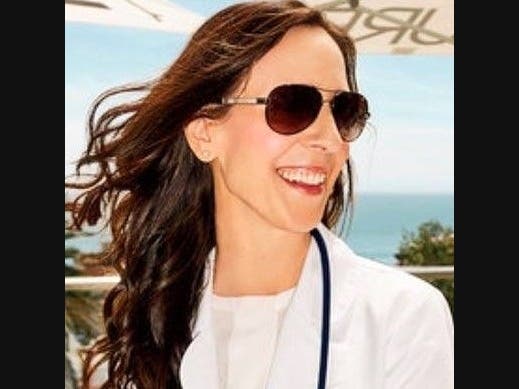
Patch is interviewing different Malibuites and finding out what makes them tick. Meet Dr. Lisa Benya of Malibu Medical Group.


Where did you grow up?
I actually grew up in Ohio – a small town called Wadsworth, Ohio. It’s about 45 minutes south of Cleveland.
When did you know you wanted to be a doctor?
Find out what's happening in Malibufor free with the latest updates from Patch.
It’s so funny – my dad would say that ever since I was little, that’s what I was gonna do. I don’t know if it was just – I feel like it was definitely a calling. I never had to decide, I just knew growing up that that’s what I wanted to do, so I was so lucky: I pretty much was set, I didn’t have to figure out what I wanted to do. I volunteered in high school as a candy striper in our hospital and then went to college, knew I wanted pre-med, and it was kind of weird: I don’t have anybody in my family that’s in medicine, so I think somehow it was just meant to be.
What about medicine interests you so much?
Find out what's happening in Malibufor free with the latest updates from Patch.
I was always fascinated by the human body and the science behind it, and how the chance of being born are – all the things that happen from when the egg and sperm come together, and how that can actually turn out to be a human being, over and over and over again millions of times, just different enough that we’re all unique, but all the same pieces and parts, so that whole concept just fascinated me, and I find that again and again, I just want to help people, and I can’t stand to see anybody hurting, so I think my combination of my love of science and the human body and my want to help every human being in any way possible goes together.
How did you know you wanted to practice internal medicine?
That was a journey: as I went to school, I love athletics, so I was initially interested in some kind of sports medicine. Once I got into our rotation – the first couple years of medical school you learn the science behind everything, and the last couple years you start to do rotations where you go and spend time in all the different practices, and I loved internal medicine, because I found that I couldn’t just focus on one path. I found that I couldn’t shut off my need to know about everything, so I was always wanting to know what’s happening with the heart, what’s happening with the stomach, and how is this all connected. So as I went through my rotations I kept finding myself –I would see a specialty like cardiology, and I love the heart, but I didn’t want to just focus on that. So naturally, internal medicine came up as the one specialty that you have to know tons about everything. And our goal as internists is truly knowing, in-depth, about every single organ system, and being able to be that frontline person where we’re the first go-to for whatever anyone has. But it’s our job to dig into every organ system and make sure that they’re figuring out as much as we can what happens. It enables you to not have to turn a blind eye to anything or just focus on one thing.
That’s a lot to learn!
It is, but to me, it was harder to just study one thing. The way that the human body works is, obviously we need a heart and lungs and a brain, without any of those we wouldn’t do so well, but I found that it all goes together. It’s kind of that natural thing where heart is pumping because oxygen is in the lungs, and oxygen is in the lung because the heart is pumping blood through it, so just to me it all makes much more sense. It was harder for me to focus on just one thing, but it seems to be much easier for me to go in.
Pandemic aside, how have medicine and healthcare changed since you began practicing?
I started my private practice 20 years ago in Malibu, and at that time, medicine was I feel like was absolutely the right way. We had very little insurance – what’s the right word? Interference! – and we were really able to spend as much time as we needed with a client, we were able to do the testing we needed, we didn’t have all the bureaucracy where we needed to submit the authorization, we didn’t have timed appointment, we didn’t have these electronic records, so it really was kind of the end of the era where we actually got to know our patients, it was a direct relationship to the patient. That as I got farther into the practice changed, so managed care came into play, insurances started to really get in between us and patients, and that change in medicine where you can no longer practice the way I feel medicine should be practiced, and that’s between you and the patient. It really allows you to make sure patients are healthy and happy.
Are fewer doctors going into private practice because it’s gotten so much harder?
Absolutely. Unfortunately it is more difficult for a private practice to exist today. The amount of reimbursement that insurance companies are giving is much less than it used to be, and in order to even get a reimbursement, there’s 15 additional steps that you have to take, so it’s time, and extra staff, and then the reimbursement at the end isn’t what it was before. I’ve been here for 20 years, and have kind of a membership model and a concierge model that I truly feel like now is the future of medicine. It has allowed me to go back to the direct patient care without having to rely as much on insurance, so that has been my choice, but it’s also been the choice of the community that I live in. Patients value care, direct care, and so I’ve been able to develop that practice in Malibu and that’s my love and passion, and it’s really been a great fit for Malibu, but a general primary care office struggles every day to build the level of care that we need to.
Could you explain the concierge model?
Basically the model is there is a cash fee for the membership, but what that cash fee allows is that it covers all of the things that insurances don’t cover, like house calls and emails and phone calls and all of the things that are very important insure basic level of care, but we’re not getting reimbursed, so it allows me to actually be a part of the patients’ life from start to finish, so if they’re traveling, I can still care for them. They have my cell number and my email, I telemed with them, so it isn’t that they have to call the office and I’m just there during 9-5, and then they call back and get in the schedule for two weeks out at the time. So the concierge directly allows us to care for the client 24/7, no matter where they are, and they have the same doctor, so they don’t have to find another doc, wherever they’re at, they don’t have to phone urgent that doesn’t know them. It’s so much better for the patient, it’s so much more cost-effective, and it’s the way that medicine should be practiced.
So it’s like a monthly membership fee, and you form a mini insurance pool.
Exactly! I can still use insurance for care, but that membership that very direct care, direct 24/7 access, and I can be there, and usually insurance pays for everything that it will allow, so then the patients don’t have to pay out-of-pocket for everything – it’s kind of the hybrid model, it’s the best-case scenario. They’ve got the healthcare team they can reach any time, but they can still use their insurance for prescriptions, for visits, so that it’s not payments over and over. In Malibu and surrounding communities, we have so many clients who have to be at peak performance all the time, and for decades in their life. And they travel a lot, and could be performing a concert in Italy one day and in Russia two days later, so being able to provide that stable care from a team that knows them no matter where they are is just the best.
What brought you to Malibu?
I was in Ohio, I finished my training, and I started to work, and at the time I said I wasn’t in a relationship, and I had said before I develop that and put my roots back down in Ohio, I wanted to just travel and see other parts of the country and the world, and I thought, what’s the opposite of Ohio? And I thought LA, so I just thought it was my time to go to a bigger city, and see what life would be like. I love the ocean, and started to look at practices in the Los Angeles area, and I worked with two medical practices. It was so interesting - Dr. James Allen, who owns the practice I ended up taking over, was also from Ohio, so when I called him we just got along so well, and he had his own private practice here, which was my dream to find a private practice on the West Coast. So we got along really well, so I moved out a couple months later, and I never looked back.
What do you like about living in Malibu?
Malibu is the most unique community. It allows you to be in the ocean, or hiking, or skiing, bike riding - all within a few hours. The ocean has always been to me very healing and very calming, and the mental health aspect can offer amazing qualities. And so most of the town and the set up of the community itself – Malibu has a very sophisticated and intelligent community and also very natural. The types drawn to our community tend to be the types who appreciate solid care. I find it different than other communities where often, you have to peel through some of the external layers to really know what you’re getting, and so for the Malibu community, the sophistication, the intelligence, the worldly views, the traveled nature of our clientele, I find that it’s challenging for me that I can keep up with everything that my clients know and are requiring and also, the values that are here align with my values.
What are some challenging of living and working in Malibu?
Probably the biggest challenge is we are remote, so the nearest hospital is 30 minutes away, so we you need to do CAT scans or MRIs, it takes a while to keep the facilities, so it’s been a challenge, but for me, it’s enabled me to really beef up my case when it comes to diagnosis, so I am forced to really use my skills always so that I don’t always have the ability to run a quick scan, or send them to the hospital quickly, so it’s challenging but it’s also been really good for my knowledge base.
In terms of being a resident, I love the nature part of it – I love that we are isolated enough that we have our community, but the one thing that I look for as a person that enjoys doing other things, we don’t quite have a nightlife out here, but we are limited somewhat in the cultural aspect, from perhaps concerts and some other entertainment, but I think that it’s difficult to have both, so I would much rather drive down to Santa Monica and do what I love but come home to my haven here, so it’s turned out to be much less of a problem at this point.
Can you talk about your work start drive-thru COVID-19 testing in Malibu?
I think when it all hit, I was staff at St. John’s, so we had gotten briefed really early on that this was coming, and I felt that Malibu’s isolation could be a good thing or a bad thing. Either it could run rampant out here, or we could isolate ourselves. So as I saw cases coming into Southern California, the City Council and myself had already been talking about how best to help the Malibu community. So CORE [Community Organized Relief Effort] was founded by Sean Penn who lives in Malibu, so at the very beginning CORE was starting to set up testing sites around the Los Angeles area, so Sean Penn had reached out to the city and said he was interested in setting something up for his hometown, so the city reached out to me, and together we dove in and made it happen. And it was great – with the city and CORE support, we were able to test thousands of people in our community, and first responders. We could get our caseloads quickly, and acknowledge contract tracing, so we planned multiple days of contact tracing, over two months, when it first happened so we could get a handle on it. We’re actually in talks right now to redo that. I’m worried that when influenza starts to come around, we’re gonna have to ramp up our protection for the Malibu community, so we’ll probably do some more citywide testing.
Why did the drive-thru testing stop?
A couple of reasons: there were multiple testing sites that became available throughout the LA area, so CORE and the city donated the finances to actually fund all of that. It can be quite expensive and it requires volunteers and labs to run each test, so CORE had allocated funds to do that, but then it became apparent that there were tons of sites available throughout the city, and also my office came up to test hundreds a day as well, so we decided that once we got a better handle for the first couple months and the cases were low, we could switch to making my office a testing center, so we’re doing hundreds of tests in our office right now, as well as the other testing sites in LA, so it became much more acceptable for the community to either go to another testing site or my office, but we’re gearing back up. We’re in talks with CORE and the city to look at doing some further drive-thru testing for our community and other areas.
How has the pandemic affected your day-to-day practice?
The first couple of months it was like 99 percent COVID, and we were obviously to always keep up with any other needs, but I think it just became the center focus for everybody. Over the past few months, we’re good: we staffed up, so we’re in three teams right now. We have one team that actually goes out into the community and does COVID testing, one team at our office that does that, and then we have a third team that takes care of all the primary care. So right now we are able to take care of all the COVID cases, so our private practice can 100 percent continue with all primary care, and we’re able to do a lot more by telemedicine and direct-to-people care, so if people don’t feel safe leaving their home, we’re able to do telemedicine, so we can still take care of blood pressure issues, and cholesterol, and muscle aches and strains, and house calls, and things like that, so we are now full go with primary care as well. We have administrators, nurses, nurse practitioners, and physicians, and physician’s assistants.
Do you see telemedicine as the future?
I do. I think there has to be the appropriate usage of telemedicine. Right now we’re stretching as much as you can, because you always have to weigh out the risk of the client leaving the home vs. being safe at home, so I think that once the pandemic clears and we are safe to move about the building, I think that telemedicine will absolutely have a wonderful place in care in the future, and it will be for those things that people will not have to drive to the office and wait get care, so there’s a lot we can do, and we should for sure.
How do you feel the city of Malibu has responded to the pandemic?
They’ve been amazing in every single aspect and helped with everything I needed, from PPE equipment to testing site, to now they’re ready to go with more testing, so I feel like Malibu has just been amazing – I just can’t say enough good about how the town has responded.
What do you recommend for staying safe and sane right now?
The best practices are still going back to those pieces that we’ve seen all along, and that is wearing your mask, social distancing, and having the proper hygiene – washing your hands, using hand sanitizer, and making sure you’re not touching your face. And avoiding large gatherings – it sounds simple and I think that’s part of where the frustration comes. It’s like, here’s what you all really need to do and in essence right now this is all we can do. But even though that’s all we can do, we have able to see time and time again with countries around the globe that are adhering strictly have absolutely controlled the viral spread, so those are the answers, and whether people want to follow them or not, those steps are what it’s gonna take to keep the virus controlled until we get a vaccination.
What’s it like to wear a face shield and an N95 mask and gloves all day? Are you used to it?
Yeah, I think that I often catch myself saying it’s really weird that it’s kind of become the new normal. I’ll look forward to the time we don’t have to, because I’m a hugger and I just feel like it’s a little awkward. I still keep six feet distance between myself and patients when I have to examine them. Even though I keep six feet distance I have face shield, goggles, N95, gloves – I’ve directed our staff to follow every single sanitation guideline and then some, and our staff tests every single week for COVID, for we’re doing everything that we need to do. It’s awkward and it’s not ideal for truly being able to connect with clients, but I definitely have gotten used to it as much as one can.
How much do you have to self-isolate?
I have a practice I do every day where I come home, I actually take off all my gear upstairs, and I go downstairs and immediately take a shower, so I have done that since day one. Our washer-dryer is upstairs, so I’m able to take all the gear and put it into the washer, go downstairs to the showers, and then I can interact with my family. It still always kind of makes me worry, but I feel like that’s the most that we can all do.
Can you still enjoy the outdoors?
We really are pulling 16-hour days, so my lack of enjoying Malibu is more my schedule than anything, but at home when I’m able to sit outside on the deck and look at the ocean, I’m grateful to do that.
You must be exhausted.
I’m definitely tired, but this is what I’m trained to do: during our residency we do overnight calls, sometimes multiple days in a row, that’s part of medicine: this isn’t a 9-5 job Monday through Friday, their needs are 24/7, so we’re able to jump in, so I love what I do, and I’m so grateful to be able to do it. I know there will be an end in sight, so that’s what’s keeping me going.
Favorite music: I actually like all music. It’s interesting – I used to not like hard rock and liked more pop, but I’m finding that I love music in general. Some days I like hard rock, some days I like the oldies like some of the new renditions that Rod Stewart has done. I think that music can move you in a million ways. It depends on your mood. If I need to keep myself awake, I’ll go with rock, if I need to calm down, I’ll go with something quieter, so I like it all.
Favorite TV show: “Modern Family” is my favorite show on the planet. I will watch reruns till I can’t watch them anymore.
Favorite movies: “March of the Penguins” – it was the most beautiful movie I’ve seen.
Favorite books: I don’t read much outside medicine – I have to take my 10-year boards, so I’ve been reading nothing but medicine.
Favorite food: Pizza – that’s so bad. I like all things junk food. I don’t eat them very often, but if I were on a desert island I would want to order a big pizza.
Favorite drink: Coffee
Favorite travel destination: Switzerland is my favorite country on the planet – I love everything about it.
Somewhere you’d like to go next: I love Europe – I think that between all the different countries and cultures. Probably one I’d like to go to is Slovakia, because that’s where my roots are. My father’s parents were from there.
Favorite person: Edison. I can’t figure out how he kept going at the light bulb. You hear how it took him so many tries till he got it. There’s something about perseverance and what makes somebody keep trying over and over even when it seems like it’s not gonna work out.
Favorite Malibu spot: I like the beach. I think that no matter what it helps. We live near La Costa, so I love that. Carbon Beach, whether it’s wet or dry – I find the beach soothing.
Favorite Malibu business: I love to support all of the small businesses here, from Nicolas Eatery, to Tramonto. We’re all in this together, and they’re all fantastic.
Get more local news delivered straight to your inbox. Sign up for free Patch newsletters and alerts.