Traffic & Transit
Manhattan Beach Extends $5 Wave Rider, Cuts Service To 3 Days A Week
Ridership climbed through summer, but reduced service is projected to nearly halve the city's subsidy per passenger.


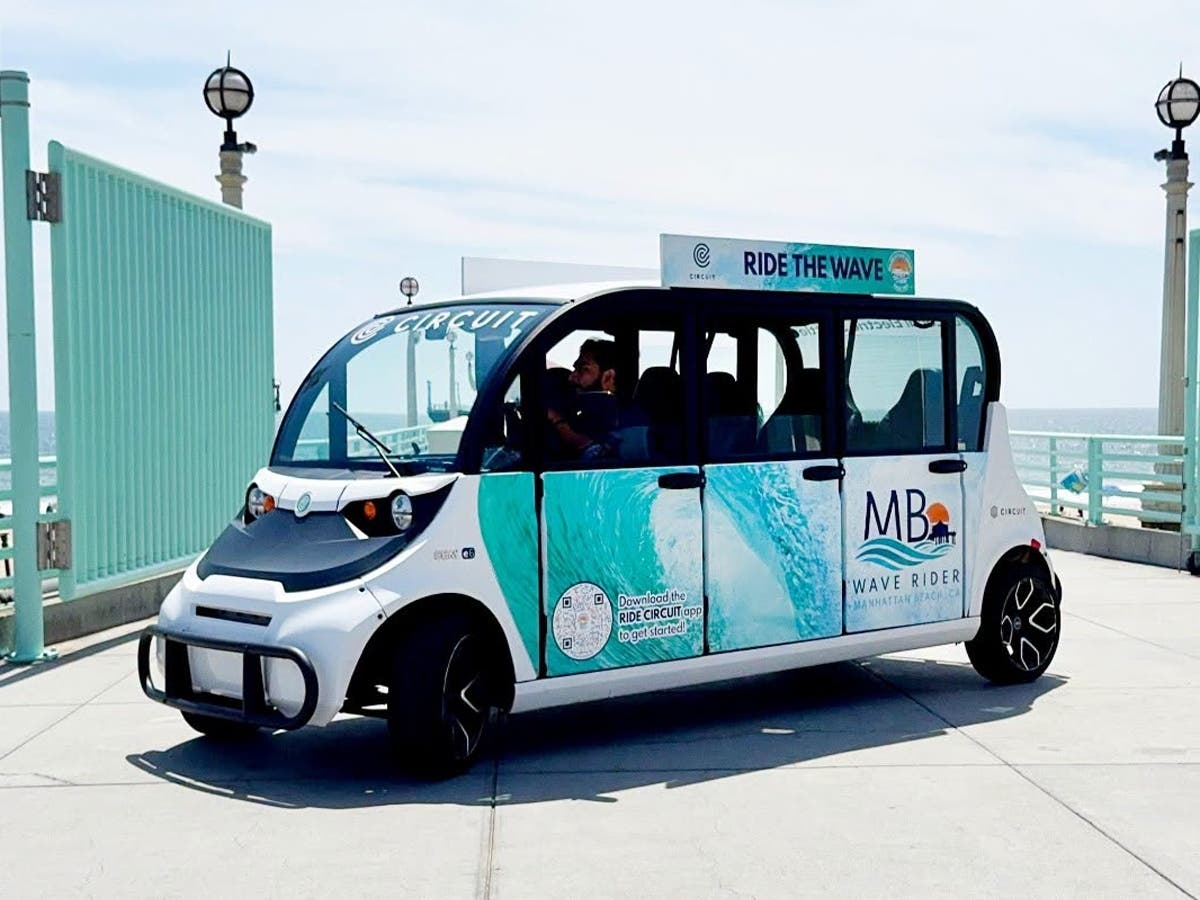
MANHATTAN BEACH, CA — Manhattan Beach's $5 on-demand Wave Rider will continue for another seven months, but with fewer vehicles and less than half its current operating hours as the city tries to rein in the cost of the increasingly popular microtransit service.
The Manhattan Beach City Council voted Sept. 15 to extend the MB Wave Rider pilot program, which began in June and uses electric vehicles operated by Circuit Transit to carry passengers anywhere within Manhattan Beach or to the Metro K Line's Douglas Station.
Beginning Dec. 1, Wave Rider will operate with three vehicles for 30 hours each week, down from five vehicles operating 70 hours across seven days, according to the city's Sept. 15 staff report.
Find out what's happening in Manhattan Beachfor free with the latest updates from Patch.
The new schedule will run from noon to 10 p.m. Fridays, 11 a.m. to 10 p.m. Saturdays and noon to 9 p.m. Sundays. The regular fare will remain $5 per passenger, while adults ages 55 and older will continue to pay $2.50. The extension will carry the pilot through June 30, 2027.
Ridership More Than Doubled
The substantial reduction in service comes even as ridership has grown since Wave Rider's launch. Monthly ridership more than doubled from 1,310 passengers in June to 3,125 in August, while more than 1,700 unique customers created Circuit accounts during the service's first three months, according to the city.
Find out what's happening in Manhattan Beachfor free with the latest updates from Patch.
Net fare revenue also climbed from $3,234 in June to $8,053 in August. Wave Rider recorded an average wait time of 8.5 minutes, and about 12 percent of rides included more than one pickup. Users gave the service an average satisfaction rating of 4.94 out of 5.
About half of rides were requested by adults ages 55 and older, who receive the discounted $2.50 fare. More than half of passengers were headed to restaurants, followed by 28 percent traveling to residences, according to the city. Demand was concentrated from Thursday through Sunday during afternoon and evening hours, a pattern city staff used to develop reduced-service options.
Manhattan Beach News, citing the city's performance data, reported that Wave Rider carried 6,531 passengers from June through August. The outlet reported that 54.6 percent of trips went to restaurants, 5.2 percent to retail or shopping destinations and 3.9 percent to hotels.
Cutting The Cost Per Passenger
The initial six-month Wave Rider pilot was funded with a $540,626 allocation of Proposition A Local Return money and currently costs $87,216 per month to operate at its existing service level.
After fares and $1,000 in monthly vehicle-wrap advertising revenue that began in August, the city's current net operating cost is $78,162 per month, according to the staff report. The city calculates the current public subsidy at about $35.23 per passenger. Staff examined several alternatives aimed at "right-sizing" Wave Rider around periods of greatest demand while reducing operating costs and idle vehicle time.
The three-vehicle, 30-hour schedule selected by the council has a projected seven-month operating cost of $214,438. The city anticipates collecting $36,750 in fares and $7,000 in advertising revenue during the extension, leaving a projected net operating cost of $170,688. If those projections hold, the subsidized cost would fall to $17.94 per passenger, roughly half the current figure.
The city primarily funds Wave Rider through Proposition A Local Return funds, generated by a Los Angeles County sales tax and restricted for transportation purposes. The same funding source also supports Manhattan Beach's Dial-a-Ride and medical transportation programs. City staff determined that as much as $242,851 in currently unallocated Proposition A money could be used toward a seven-month Wave Rider extension.
Searching For More Revenue
Advertising and sponsorships could further reduce the city's cost. Manhattan Beach began receiving $1,000 per month in August from advertising wrapped around one Wave Rider vehicle through an arrangement involving Manhattan Village Shopping Center.
Under the city's agreement with Circuit, the company retains 50 percent of revenue generated through marketing and advertising services. Circuit told the city it had turned down more than $50,000 in potential advertising revenue because the prospective advertising involved alcohol, which Manhattan Beach has not authorized on the service.
The city is also considering corporate sponsorships, contributions from business groups, transportation grants and providing parking and electric vehicle charging itself to reduce costs. Staff said the additional seven months would provide more time to determine whether Wave Rider can maintain ridership outside the summer months and develop a more sustainable funding model.
"Based on actual ridership data and performance measures over the first three months of the pilot program, the Wave Rider microtransit service has proven to be popular and is experiencing continued significant growth in use," staff wrote in its report to the City Council.
Staff said reducing the days and hours of service, along with the number of vehicles, would increase vehicle occupancy and lower the per-passenger cost. The city plans to prepare another Wave Rider update and a financial plan before officials consider whether to continue, expand or end the service beyond June 2027.
Get more local news delivered straight to your inbox. Sign up for free Patch newsletters and alerts.