Politics & Government
Ballona Freshwater Marsh - Seventeen Years of Success
Built to Treat Rainfall Runoff from Playa Vista, the Marsh and Riparian Corridor Are One of L.A.'s Best Birdwatching Spots

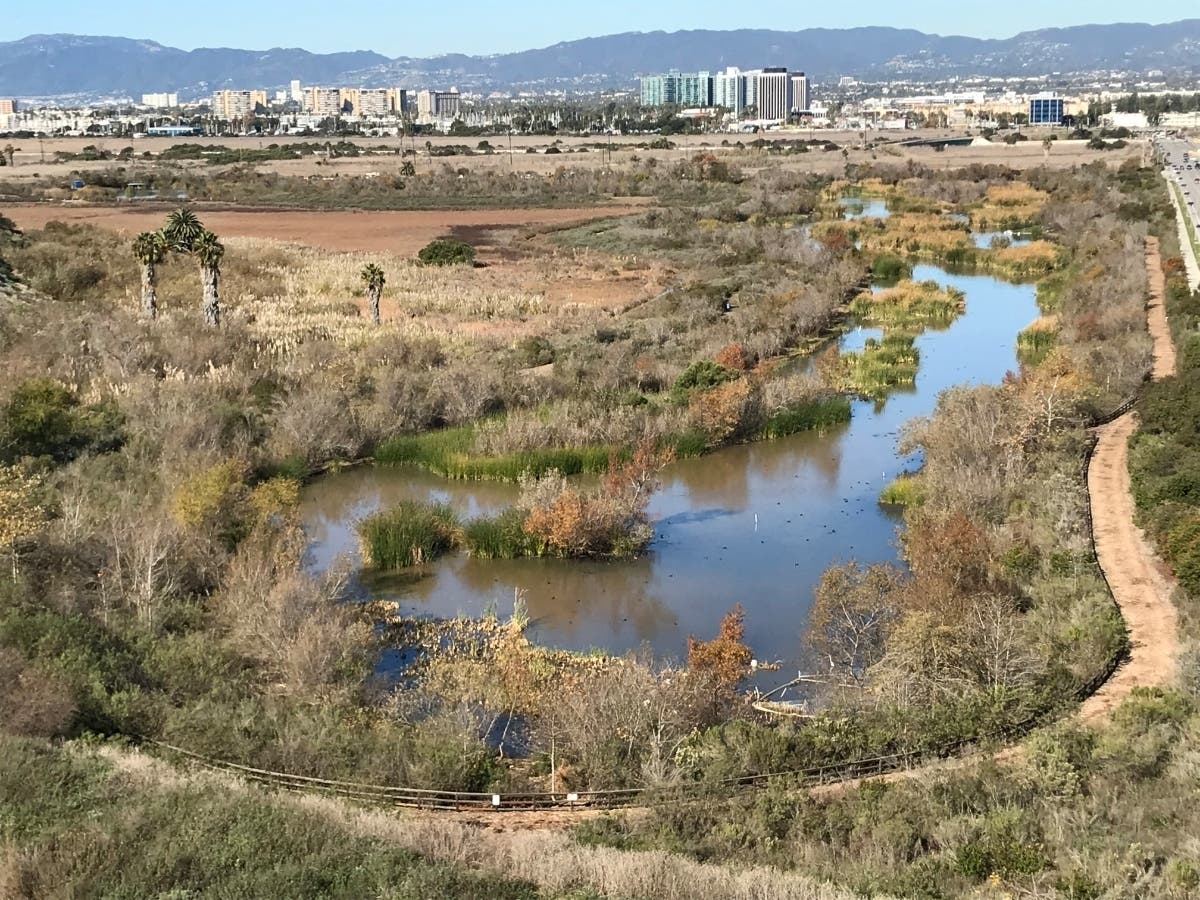


Feathered friends from near and far flock to the Ballona Wetlands Ecological Reserve during the winter months to rest, feed and prepare for the coming spring nesting season. One of their favorite spots is the Ballona Freshwater Marsh.
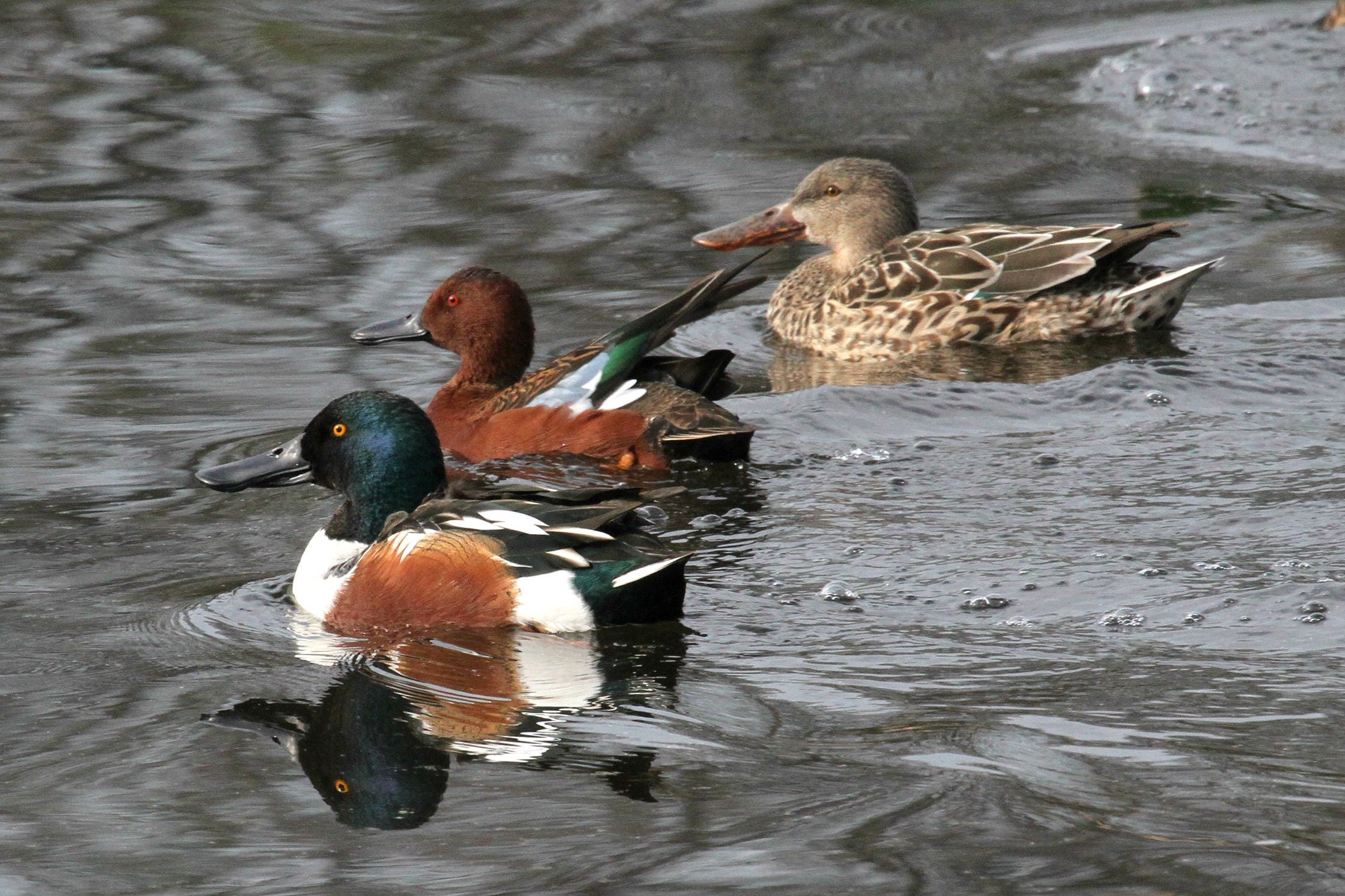
Above: Northern Shovelers gather at the Ballona Freshwater Marsh and pair up to mate. Don Sterba photo.
Seventeen years ago this February, the Playa Vista developers completed the 26-acre Ballona Freshwater Marsh to cleanse urban runoff from Playa Vista and neighborhoods to the south. The marsh construction and future maintenance cost were made the developer's responsibility and are partially funded through special assessments on Playa Vista property owners, though the area is open to the public.
Find out what's happening in Marina Del Reyfor free with the latest updates from Patch.

Above: The Ballona Freshwater Marsh is a rainfall runoff treatment wetlands, built in a celery field in 2003 with bulldozers, scrapers and backhoes.
The Ballona Freshwater Marsh lands were originally high tidal marsh that were later cultivated for lima beans and celery. You can see the old celery fields, where the Freshwater Marsh now stands, by clicking this 1968 photo Link.
Find out what's happening in Marina Del Reyfor free with the latest updates from Patch.
Bulldozers reshaped the land in 2002-03, native marsh vegetation was planted and irrigated, and fresh water supplied by rainfall and urban runoff. The Project was controversial back then, as was everything related to Playa Vista, but was nonetheless advocated by Friends of Ballona Wetlands and others. The marsh, it was argued, would not only cleanse runoff from the new development and adjacent areas in a way unlike any existing Los Angeles neighborhood, but would provide habitat for threatened and endangered bird species, including the Least Bell's Vireo.
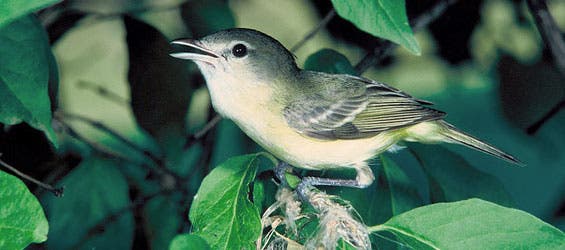
Above: The Least Bell's Vireo, an endangered species. U.S. Fish and Wildlife Service.
The Least Bell's Vireo requires willow habitat near fresh water for nesting, which the Freshwater Marsh plans included. The final approvals required the developer to create habitat better than what previously existed on its footprint.
Despite opposition from various community activists (which delayed construction for over a year), the Freshwater Marsh was completed in February, 2003, and now provides a system that benefits not only Playa Vista, but the surrounding community as well. Even the former opponents now visit and escort guests at the marsh.
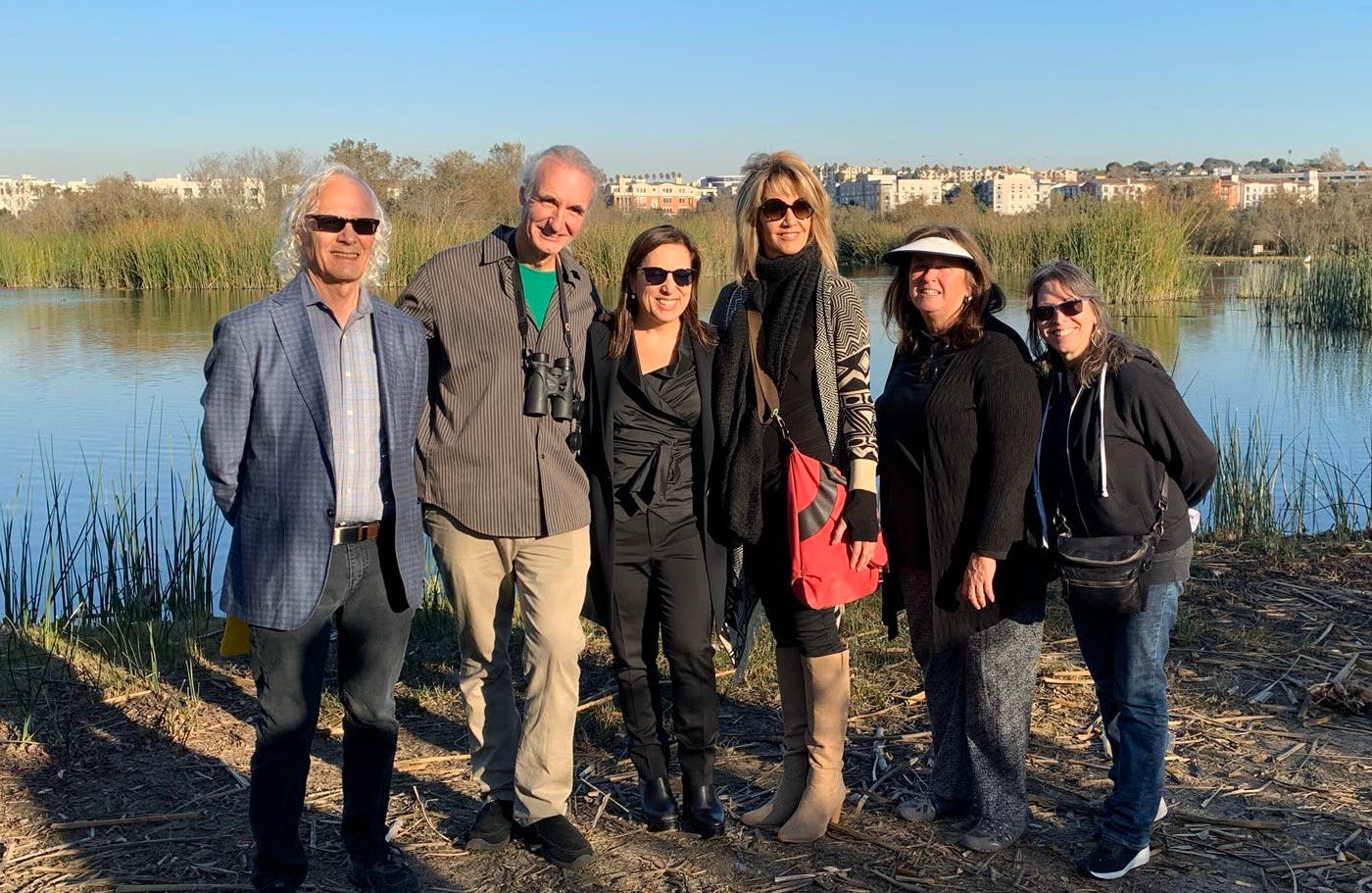
Above: Former Freshwater Marsh opponents and their guests pose at its northwestern basin near Playa Vista in December 2019. Twitter.
A twenty-five acre riparian corridor was added to the east of the Freshwater Marsh in 2008. The corridor runs eastward along the base of the Westchester Bluffs and connects with the Freshwater Marsh through a passage under Lincoln Boulevard, which incorporates a dry walkway for small mammals. Rainfall runoff from Jefferson and Lincoln Boulevards, Playa Vista, Westchester and LMU flows into the corridor, which then feeds the Freshwater Marsh.
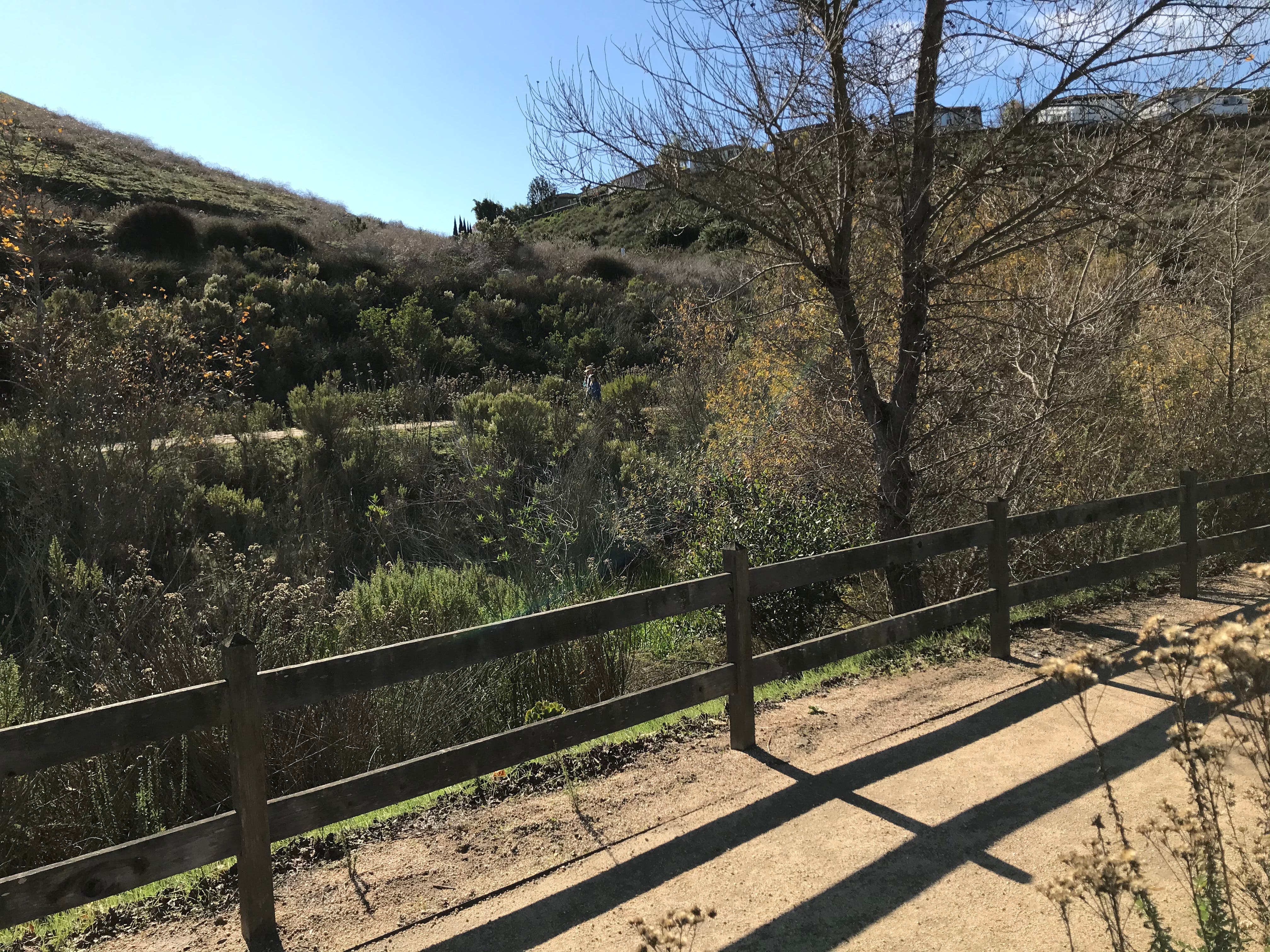
Above: Runoff from Westchester's Kentwood neighborhood flows down this gully near the Playa Vista You Tube building and into the Riparian Corridor in the foreground, which connects to the Freshwater Marsh.
You can walk the riparian corridor trail today from the Playa Vista sports park all the way to Bluff Creek Drive's eastern terminus.
The Freshwater Marsh hosts one of the largest varieties of birds, both waterfowl and songbirds, of any coastal marsh area in southern California. The final, fifth year monitoring study showed the Freshwater Marsh system exceeded the bird diversity goals established by federal, state and local permits, with 31 breeding species using the marsh in 2013. Five of these birds are sensitive species: the Virginia rail, moorhen, cinnamon teal, least bittern and Least Bell's Vireo.
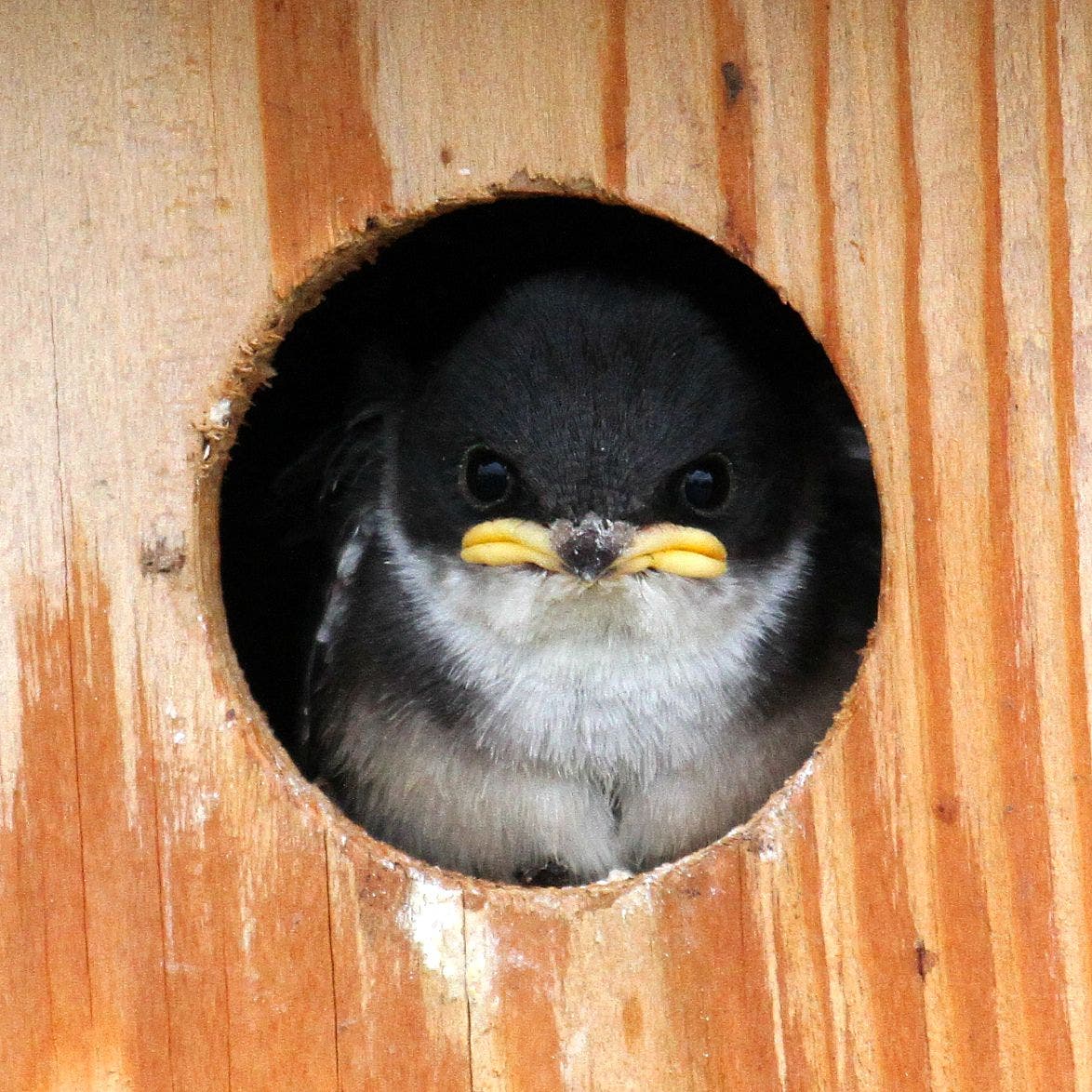
Above: A swallow peers from a nesting box at the Freshwater Marsh. Don Sterba photo.
The endangered Least Bell's Vireo has nested in the marsh complex each year since 2010, and is expected to return next spring. A total of 217 bird species used the marsh for breeding or foraging in 2012 and 2013, the last years of the required monitoring program.
One local birding enthusiast remarked that the Freshwater Marsh is now arguably the top birding spot in Los Angeles.
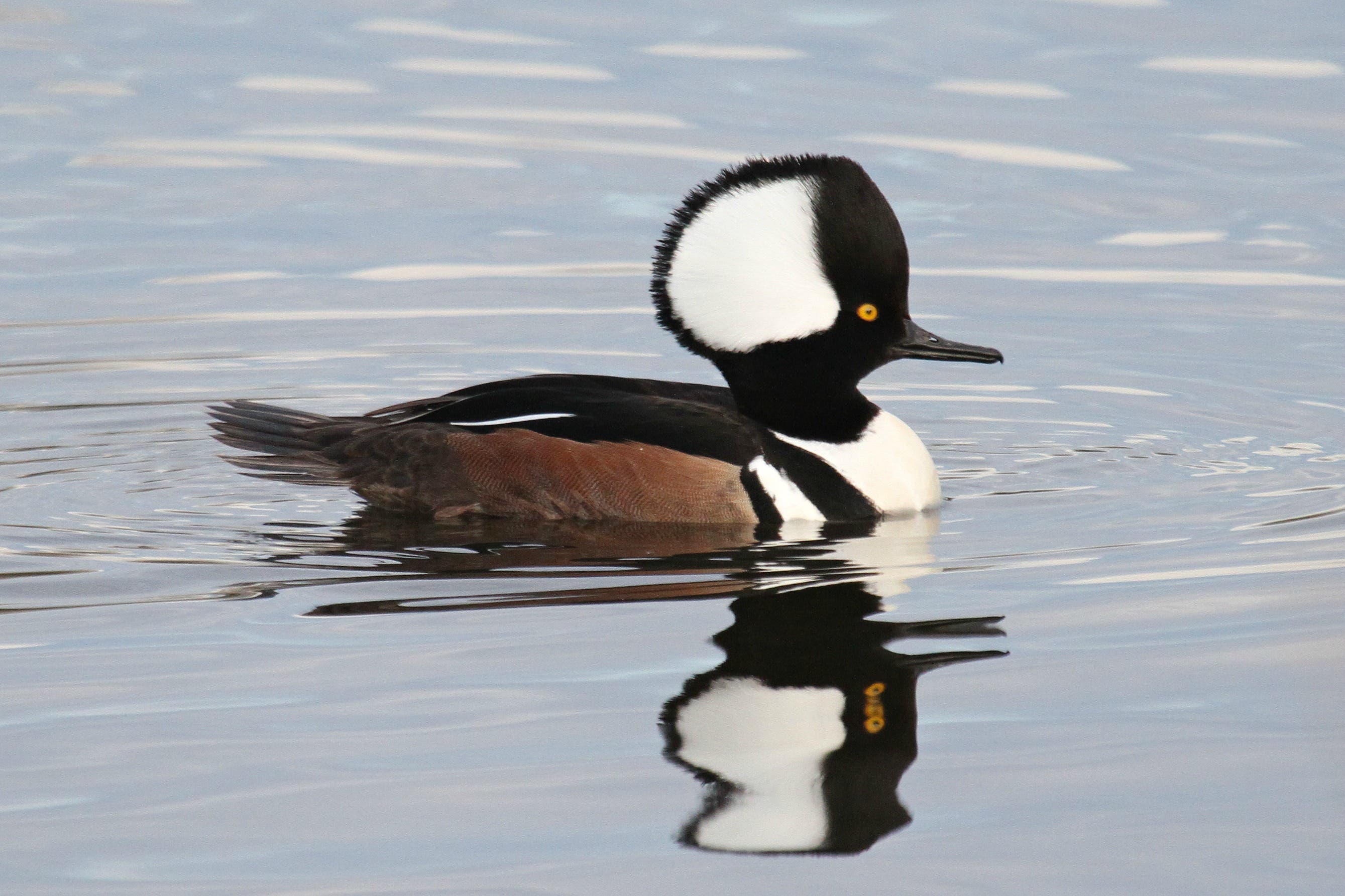
Above: The Hooded Merganser only comes to Ballona in the winter. Males court females by showing off their white, sail-like crests and making unique calls. Don Sterba photo.
Owing partly to strict Playa Vista regulations which minimize polluted runoff (e.g., car washing is prohibited, most landscape irrigation is drip-watered and no herbicides are used for weeds), the Marsh's water-cleansing performance continues to function as planned, showing no accumulation of pollution that would pose a risk to aquatic life.
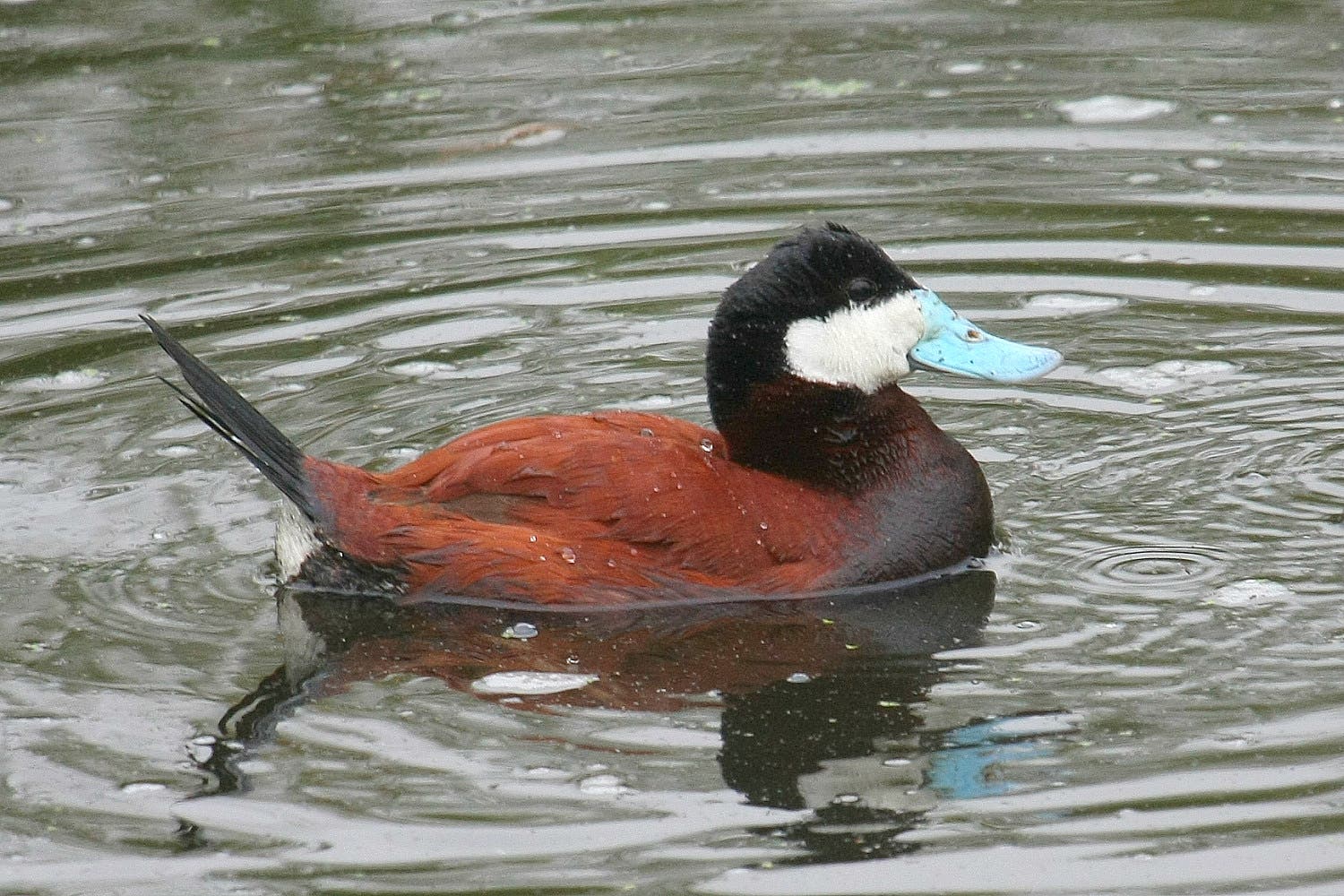
Above: Ruddy Ducks are year-round residents at the Freshwater Marsh, and as they near mating season, the males turn color, showing off their brilliant powder blue bills, which they noisily slap on the water to attract a female. Don Sterba photo.
Subscribe
The Freshwater Marsh is open to the public every day with free parking along the south side of Jefferson Boulevard, west of Lincoln Boulevard. Take Culver Blvd. southwest toward the ocean, then turn left onto Jefferson and park just before reaching Lincoln. The Big Blue Bus No. 3 will also get you there from points north and south for a buck and a quarter, or 50 cents if you are a senior citizen. The Freshwater Marsh has a level walking path surrounding it on the north and east, along Lincoln and Jefferson Boulevards. Bring a leash and waste bags for your dogs, if you have them. Friends of Ballona Wetlands leads a tour from the Lincoln-Jefferson corner every first Sunday and third Saturday beginning at 10 AM.
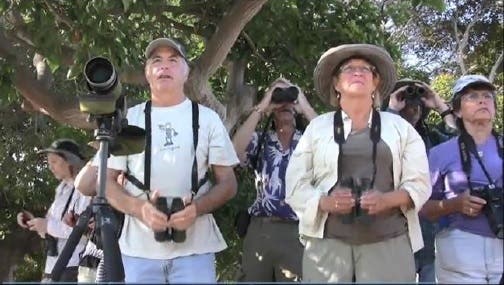
Nearly 45 million Americans count themselves as "bird watchers". According to the Outdoor Industry Association, people spend over $30 billion every year in the U.S. on "wildlife watching", a category predominated by bird watching. Why so many and so much?
The simple answer is that everyone can go bird watching. You don't need to be athletic, nor do you require highly specialized equipment or training. A decent set of binoculars, a local bird identification guide and, voila! You're a bird watcher! Get started bird watching by participating in one of Friends of Ballona Wetlands' regularly scheduled tours.
My thanks to Don Sterba for the great photographs in this article. Enjoy your Ballona Wetlands!
References
1) All About Birds. The Cornell Lab of Ornithology. https://www.allaboutbirds.org
2) E. M. Read and E Strecker 2014. Ballona Freshwater Wetlands. Report of Monitoring, Operation and Maintenance. Prepared for Ballona Wetlands Conservancy. February 28, 2014. Edith Read and Associates and Geosyntec Consultants.
3) California Coastal Commission. May 10, 2001. Denial of Petition to Revoke Coastal Development Permit, Ballona Freshwater Marsh. Denied Petitioner: Marcia Hanscom, Wetlands Action Network. Application 5-91-463A2
4) Foes of Playa Vista Project Become Its Friend. Los Angeles Times. October 21, 1990. https://www.latimes.com/archives/la-xpm-1990-10-21-we-4188-story.html Nancy Hill-Holtzman.
5) Least Bell's Vireos nesting in Playa Vista Area. Los Angeles Times. June 6, 2010. https://www.latimes.com/archiv... Martha Groves.
6) The Outdoor Recreation Economy. Outdoor Industry Association. https://outdoorindustry.org/wp...
7) U.S. Fish and Wildlife Service. Birds, Bird Watching and the U.S. Economy. https://www.fws.gov/birds/bird...
8) Friends of Ballona Wetlands. Schedule of activities. https://www.ballonafriends.org...