Politics & Government
Ballona Mollusks: Links to the Past
Clam Shells Found in Archaeological Digs Show Ballona Wetlands Were Always Seawater, Tidal

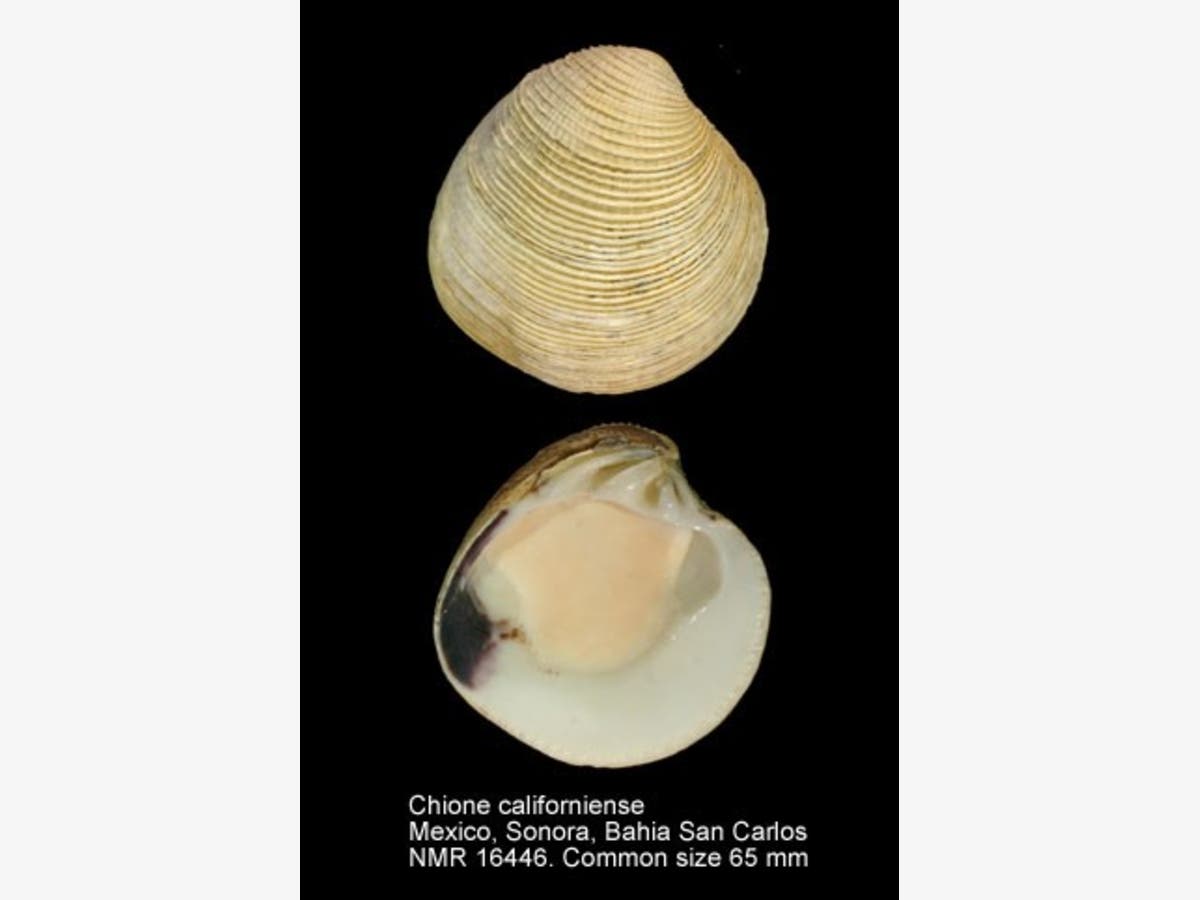


The founder of modern geology, James Hutton (1726-1797) recognized that the history of the Earth could be determined by understanding how geologic processes work in the present day. "The present is the key to the past" was Hutton's famous quote. Combine that thought with recent findings in archaeology and paleontology, and you can peer back in time into the Ballona Wetlands, imagining indigenous people feasting on the clams and other mollusks abundant then, and still thriving today in Ballona's tidal areas.
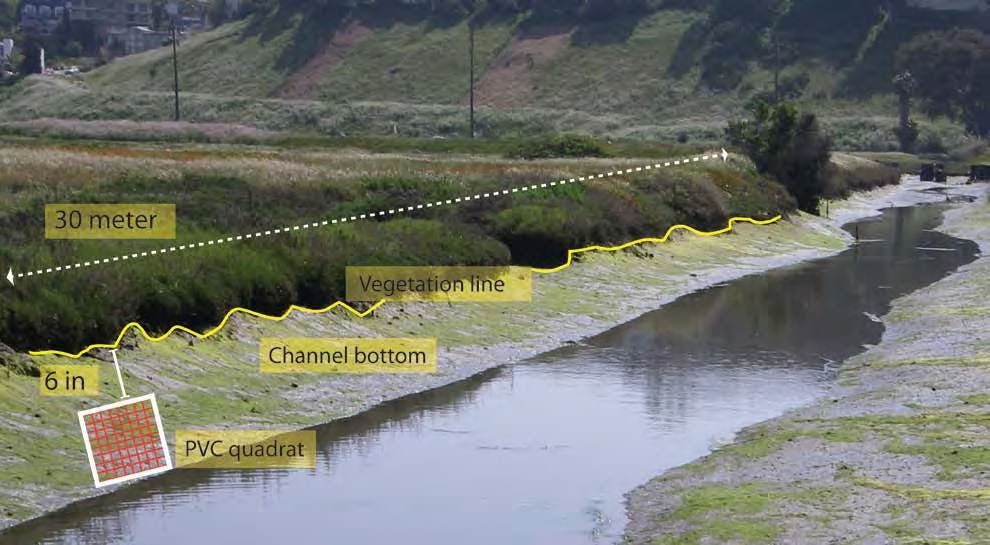
Above: A tidal channel in Area B of the Ballona Wetlands. Venus clams and other mollusks live in the soft muddy sediments below the vegetation line.
The common California Venus (Chione californiensis), a medium-sized edible saltwater clam, is one of seven hardshell species found in estuaries, bays, sloughs, and open coastlines along the Pacific coast. This clam primarily inhabits the intertidal zone (exposed at low tide), but also occurs in subtidal areas (always under water).
Find out what's happening in Marina Del Reyfor free with the latest updates from Patch.
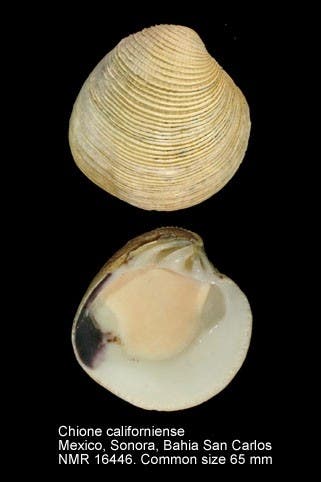
The Venus is edible, though today we more commonly eat the littleneck variety, which is a different species (Protothaca staminea). Venus and littleneck clams are abundant today in the few remaining salt water tidal areas of Ballona, just as they were a thousand years ago (1).
Venus clams can only survive in freshwater for short periods of time. They cannot reproduce in exclusively fresh water or brackish water. They must have tidally-flushed ocean water to persist. This and other scientific evidence supports our knowledge that the Ballona Wetlands were always an ocean water, tidal estuary.
Find out what's happening in Marina Del Reyfor free with the latest updates from Patch.
Native Americans lived around the Ballona estuary since the end of the last ice age, nearly 12,000 years ago. They collected Venus clams and other edible shellfish from the tidal shorelines of Ballona during the early eras. As the estuary became shallower from sediment inputs from Ballona Creek, around 3,000 years ago, the clam-digging areas expanded. However, the native people occupied the same dry land villages or camp locations along the shoreline throughout the millenniums. Those village and camp sites are known only to registered professional archaeologists.
A thousand years ago, indigenous people of Ballona subsisted on plants and animals of the marsh, particularly shellfish, waterfowl, fish, small mammals, and various seeds and berries. Venus clams were the most abundant shellfish found in archaeological excavations next to Ballona, and their abundance does not appear to have changed over time (3). Back then, Ballona had a large subtidal lagoon surrounded by tidal marsh, with transitional and freshwater marsh at its furthest inland border, where Centinela Avenue is today.
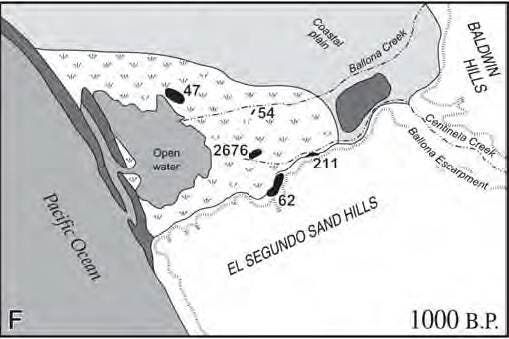
Above: The Ballona Wetlands estuary around 1,000 years ago. Grenda and Altshul, 1994.
When native people would consume clams and other shellfish, they would discard the empty shells in only a few designated piles in the villages, using the same piles year after year. The shells were reused for many applications, including tools, pigments and medicines. Many shellfish were cooked and their limestone shells converted to lime by the heat of the fire, which drove oxygen from the limestone mineral. As shells were added to the piles and eroded sediment gradually built up around them, the piles grew taller and taller over time. Bits of fire pit charcoal also made its way into the shell piles, enabling modern radiometric dating of the successive layers of shells in each pile, with shells at the bottom being oldest and those at the top the youngest.
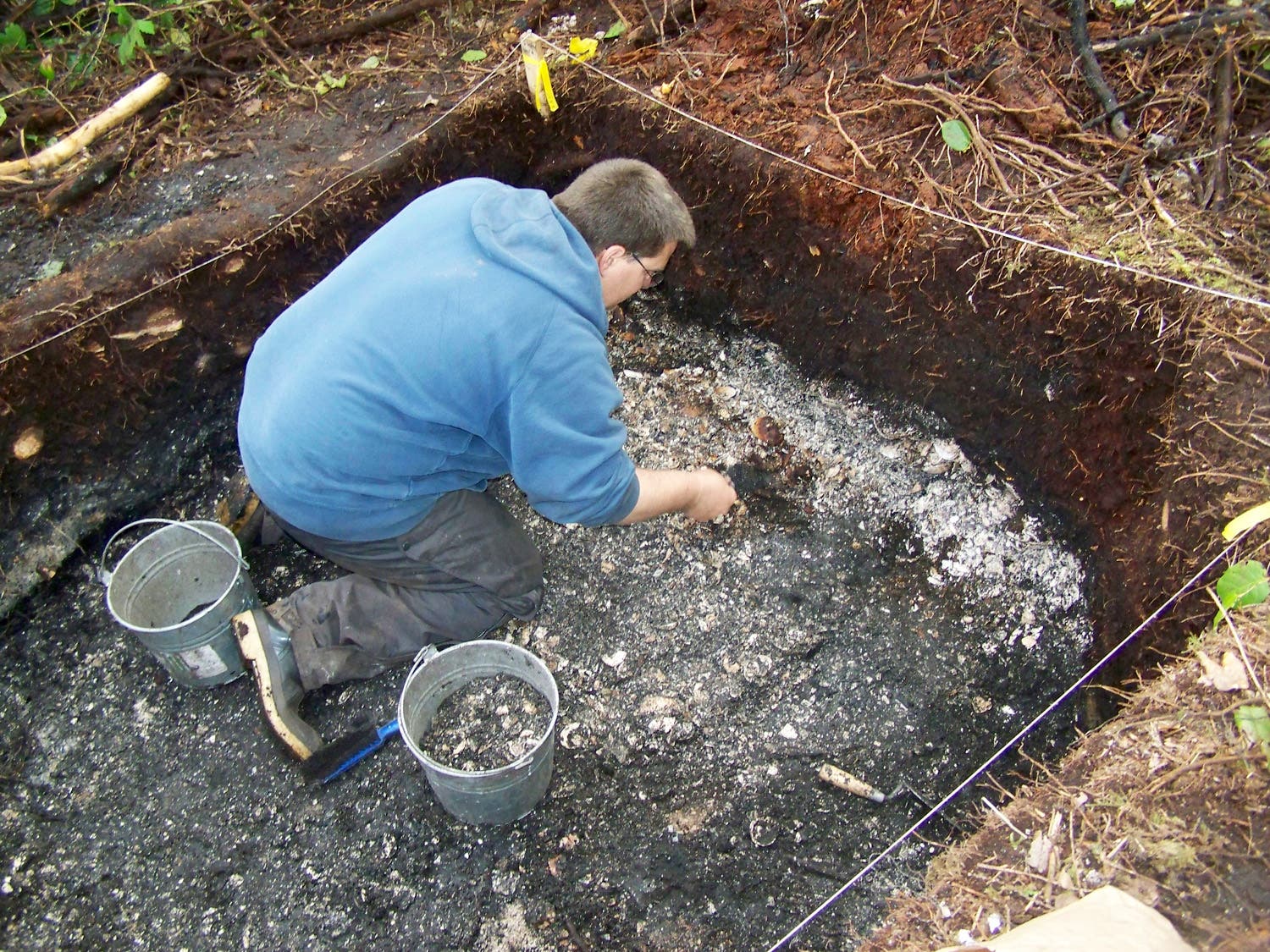
Above: An archaeologist working a native American shell pile.
Like the village sites, numerous shell piles exist today along the known historical Ballona estuary shoreline, their locations kept confidential to prevent pilfering. In recent archaeological studies of these shell piles, Venus clams comprise up to 94% of the clam shells found (2). This high proportion of Venus clams, both among the older shells at the bottom of the piles and throughout the piles to the youngest shells on top (about 300 years old), is evidence that the Ballona estuary throughout its populated history was saltwater and tidally flushed. Venus clams would not have been so dominant a food source of native Ballona people throughout history had the estuary ever been substantially fresh or brackish water.
The state's proposed Ballona Wetlands Restoration Project will restore tidal flow to around 200 acres of weedy, dry land south of Marina Del Rey. Wetlands once existed in this location, but were buried under 3 million cubic yards of mud dredged during Marina Del Rey construction in the 1950s.
You need a valid California fishing license to dig clams (and don't try it in Ballona – it's an off-limits ecological reserve). Minimum legal size is 1.5 inches, and you may take them only by hand; a rake, shovel, garden fork or trowel is allowable, and only during daylight hours. The cobble beach areas near Malibu Lagoon are reportedly good clamming locations at low tide.
Enjoy your Ballona Wetlands!
References
(1) C. L. Powell, L. B. Grant, and S. W. Conkling. 2005. Paleoecologic analysis and age of a late Pleistocene fossil assemblage from Upper Newport Bay, Newport Beach, Orange County, California. The Veliger 47(3):183-192.
(2) Altschul, J.H., et al., Statistical Research, Inc., Submitted to the U.S. Army Corps of Engineers, Los Angeles District, Playa Vista archaeological and historical project, at the base of the bluff, archaeological inventory and evaluation along lower Centinela Creek, Marina del Rey, California, April 2003, Page 192.
(3) D.R. Grenda and J.H. Altschul, Proceedings of the Society for California Archaeology, 1994, Vol. 7, pp. 213-226.