Politics & Government
Ballona Wetlands' Cottontail Rabbits
Spring's arrival means hearty meals for the Cottontail Rabbits at the Ballona Freshwater Marsh


"Here comes Peter Cottontail, hoppin' down the bunny trail…" Beatrix Potter (1866-1943), well-known English author and conservationist, was certainly referring to a European cottontail (Oryctolagus cuniculus) in her familiar Easter children's rhyme, but its North American cousin graces the Ballona Wetlands. You can frequently see Desert cottontails (Sylvilagus audubonii) on the trails surrounding the Ballona Freshwater Marsh southwest of the Lincoln-Jefferson intersection.

The good rains this winter ensure lush upland vegetation necessary to the cottontail's diet. Expect to see larger numbers of the bunnies this year compared to the last few, since the rabbits' reproductive fecundity is in part regulated by the available food supply, which is good this spring.

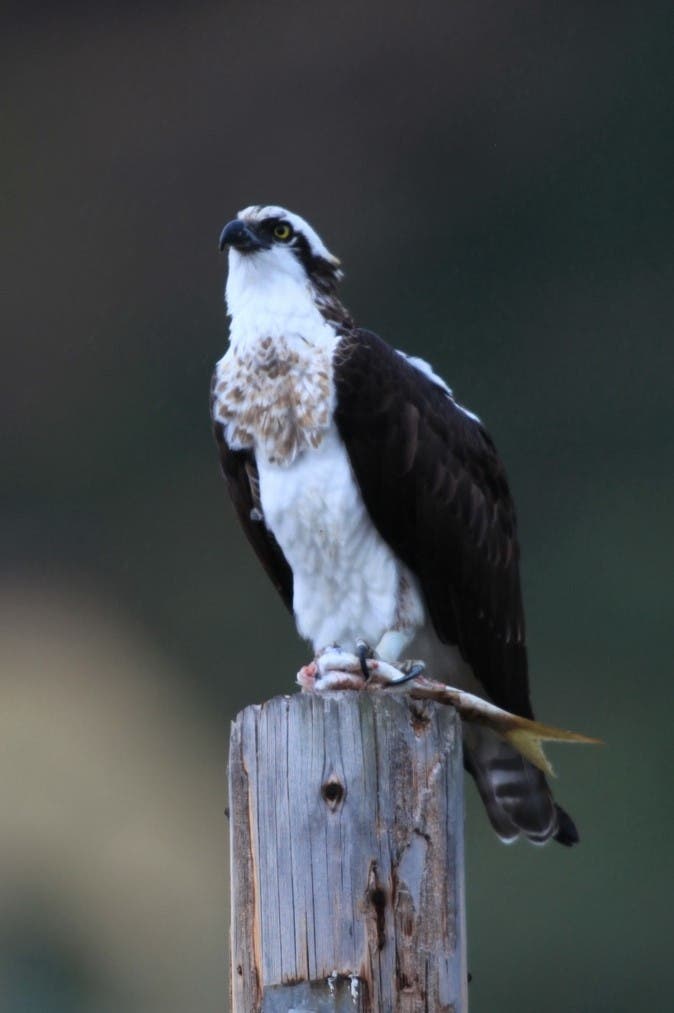
Raptors (birds of prey) naturally prey on cottontails at the Ballona Wetlands, and you can often see Red-tailed Hawks (Buteo jamaicensis) circling over the area, searching for the rabbits and other small mammal prey.
Find out what's happening in Marina Del Reyfor free with the latest updates from Patch.
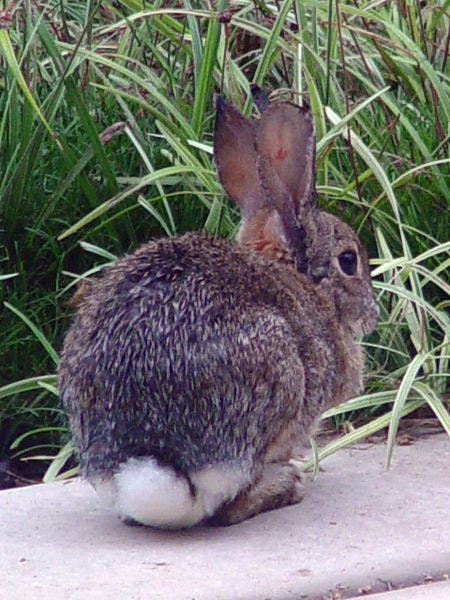
If aware of attack, the cottontail normally escapes by running away in evasive zigzags; at speeds of over 30 km/h (19 mph). Motorists unintentionally kill cottontails. Startled by oncoming noise and lights, a cottontail may mistakenly dart out in front of a vehicle instead of into the brush. Drive slowly when motoring along Jefferson or Culver through the ecological reserve to give the cottontail time to dart out of the way.
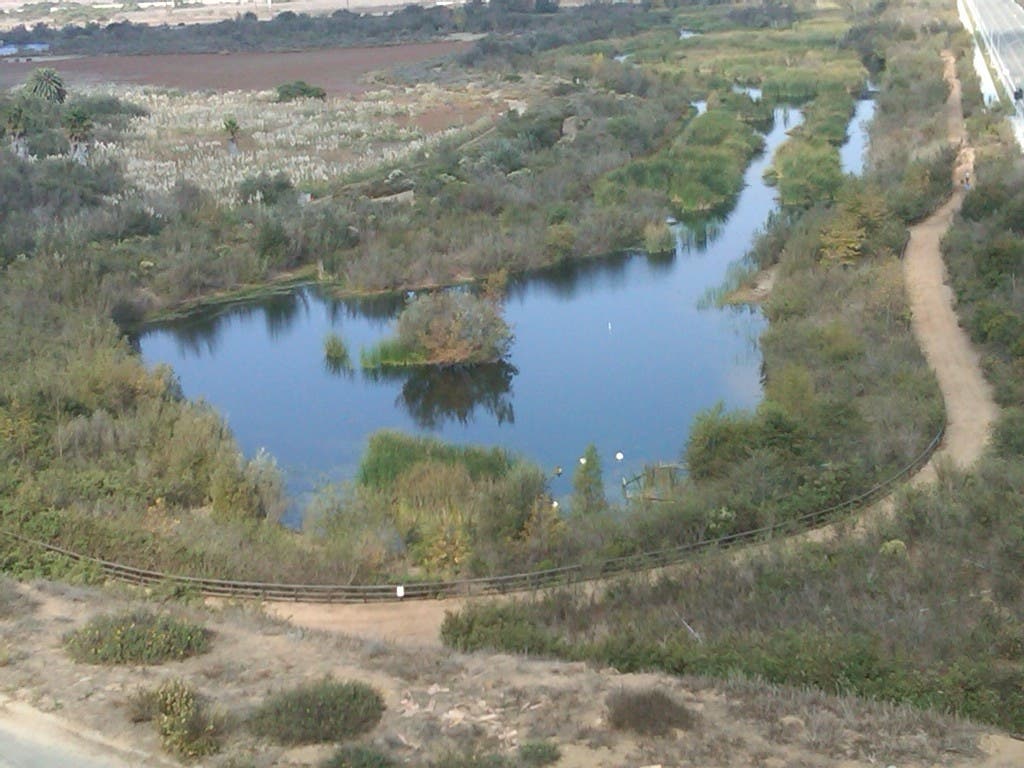
Above: The Ballona Freshwater Marsh, a good place to see cottontail rabbits at dusk.
Find out what's happening in Marina Del Reyfor free with the latest updates from Patch.
The best time to search for our cottontails is at dawn or dusk, when they forage for food, protected from predators by the low light. Peter Cottontail mainly eats grass, but will eat many other plants and herbs. He rarely needs to drink, getting his water mostly from the plants he eats or from dew. Look far ahead on the trail as you walk, then stop when you see him. Stand still and watch him through binoculars – he will usually not run away if you stay still at a distance.
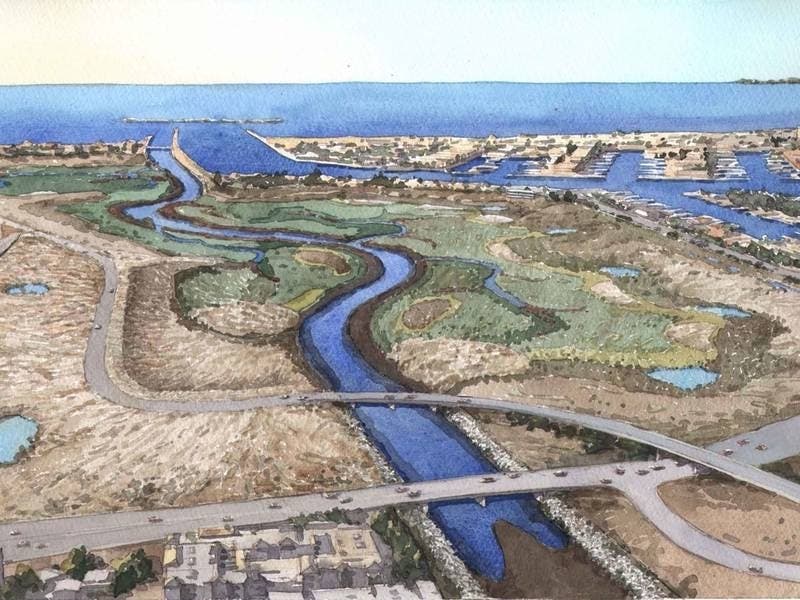
California's Ballona Wetlands Restoration Project will create around 35 acres of upland knolls east of Lincoln Blvd., covered with native plants suitable for the cottontail and other small mammal species. About a mile of new foot trails will wind around these new habitat areas and a tidal creek, which should offer great rabbit and bird watching opportunities.
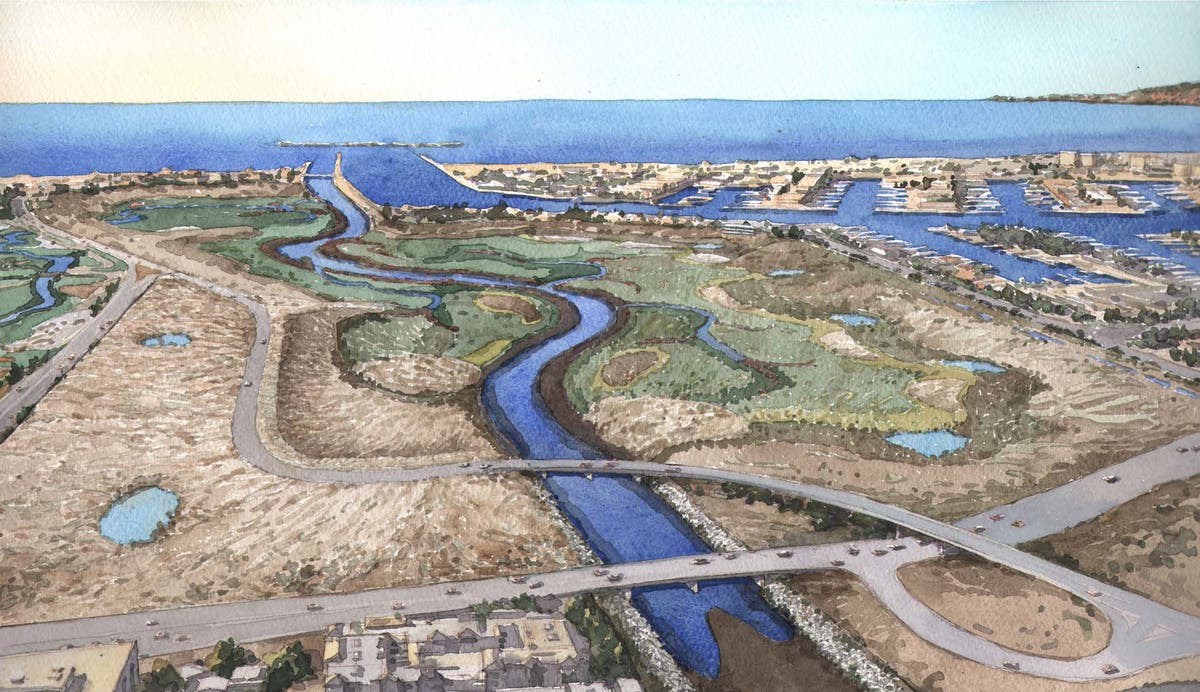
The new trails will be accessible from distant parking areas near Fisherman's Village, and from the south via a new pedestrian bridge across Ballona Creek. Via Marina neighborhood residents will also enjoy a trails entrance at the southern end of their main street. See the Public Access article for details on the trails system in our next "Great Park."
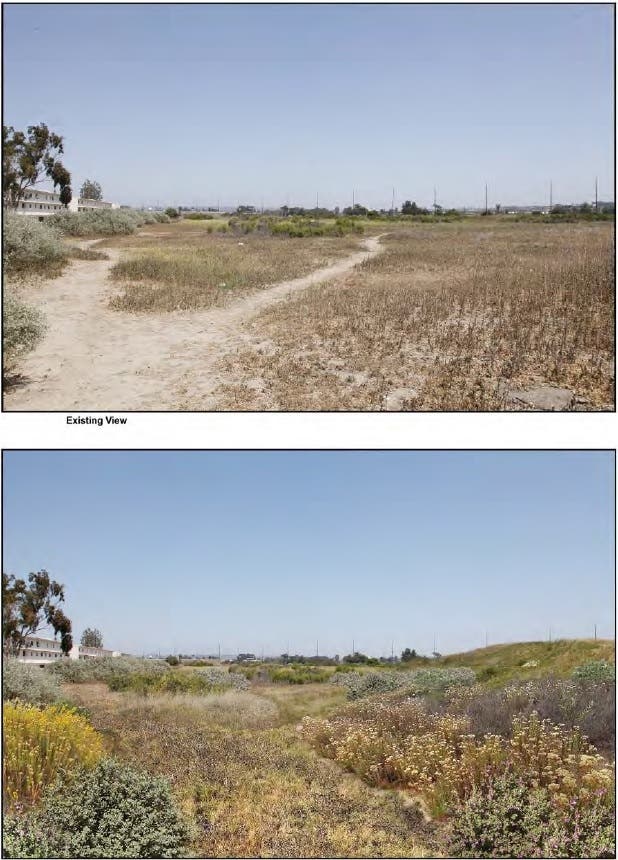
Above: The Ballona Wetlands Restoration Project will transform the weedy, dry fill dirt south of the Via Marina neighborhood into lushly vegetated knolls separated by a tidal creek. New trails in this part of our Great Park will surround the knolls, perfect for a relaxing evening stroll with the family or for avid bird and bunny watching. Via Marina residents will enjoy a dedicated trail entrance at the southern end of Via Marina, and the presence of rangers on patrol.
Enjoy your Ballona Wetlands!