Politics & Government
Ballona Wetlands Preview: Malibu Lagoon's Resounding Success
Six Years After Construction, Vastly Improved Water and Wildlife Conditions Validate the Bulldozers

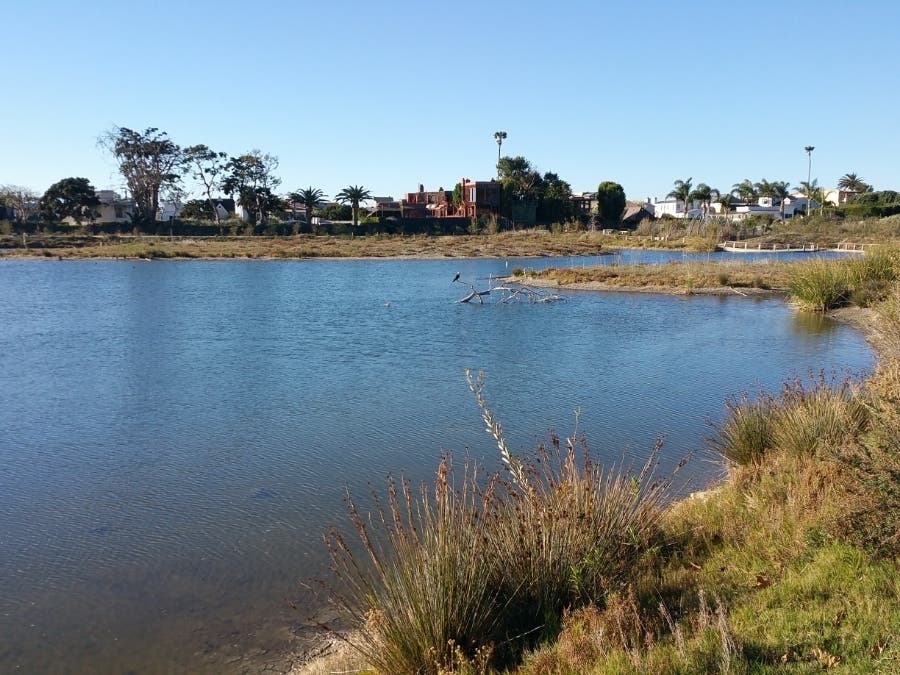


In this >2012 film< highlighting the Malibu Lagoon Restoration and Enhancement Project, California State Parks scientist Suzanne Goode says, “The approach we’re using is to use lots of heavy equipment because we don’t want to drag this out. What we want to do is get in, get rid of the soil that’s been deposited unnaturally, reshape the land so that it functions properly and then get out again. We’re expecting that within 2-3 years you’ll be able to come in and you won’t even know that we did the project.”
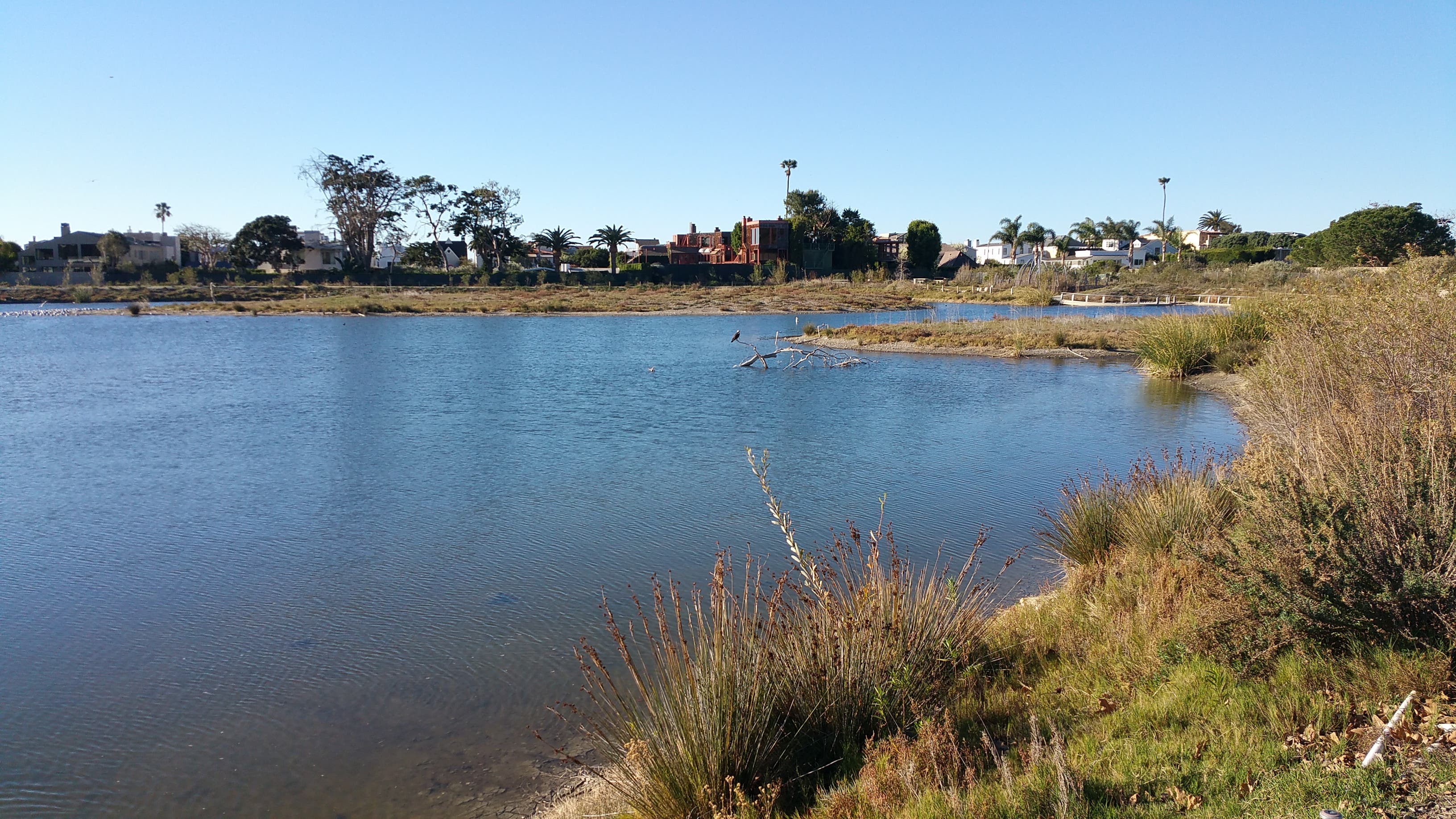
Above: Malibu Lagoon in 2016, three years after restoration project construction
Ms. Goode’s forecast was spot-on. It's been six years since the bulldozers, scrapers and backhoes stopped, and the Malibu Lagoon restoration is a resounding success. The final of six yearly Comprehensive Monitoring Reports performed by The Bay Foundation based on detailed scientific monitoring data prove the Project wholly succeeded in meeting its goals, performance standards and success criteria, and requires no supplemental work. In other words, it was done perfectly right the first time and is finished. Indeed, most of the goals were already met by Year 3. Click here for The Bay Foundation's press release.
Find out what's happening in Marina Del Reyfor free with the latest updates from Patch.
Malibu Lagoon is a 31-acre shallow estuary at the end of the Malibu Creek Watershed, where the creek drains into Santa Monica Bay. Twelve acres of dirt were excavated, re-contoured and replanted at Malibu, beginning in 2010 and completed in 2013. Following construction, Ms. Goode remarked that along with the fill dirt, “truck tires, pipes of all kinds, guns and cow skeletons” were removed.
For comparison, the Ballona Wetlands Ecological Reserve covers about 600 acres, and its proper restoration will require excavation and grading over about 300 acres, 200 of which are weedy, dry fill dirt.
Find out what's happening in Marina Del Reyfor free with the latest updates from Patch.
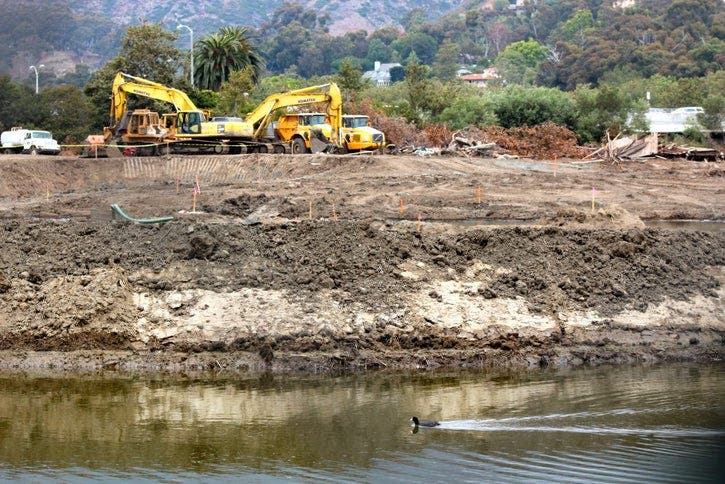
Above: Bulldozers and backhoes work at the beginning of the Malibu Lagoon restoration, in 2012
The Malibu Lagoon project was advocated by Heal the Bay and several other major Southern California environmental groups. This same, tried and true excavation and grading approach will be used at Ballona. There, Marina Del Rey construction in the 1950-60s left behind over 3 million cubic yards of fill dirt, 12-17 feet thick, in the area north of Ballona Creek. That fill dirt will have to be similarly dug out and moved in order to unearth the former wetlands buried there and return the ocean tides. The excavated dirt will be reused for levees, the foundations for 10 miles of new bike and pedestrian paths, as well as for creating rolling knolls covered with native plants near the 90 Freeway. The same coalition that advocated for and supported the Malibu project are also supporting the state’s Ballona plans.
Funded by California’s State Department of Parks and Recreation and prepared by The Bay Foundation, the Malibu report says 119 scientific surveys were performed since construction ended, including special surveys performed after the massive Woolsey fire, which burned much of the watershed that feeds Malibu Creek and the Lagoon. Data from these surveys showed that some fire debris (ash and burnt vegetation) remained in the Lagoon for several weeks, but were ultimately flushed out to the sea by improved tidal action and lagoon circulation, as designed for the project.
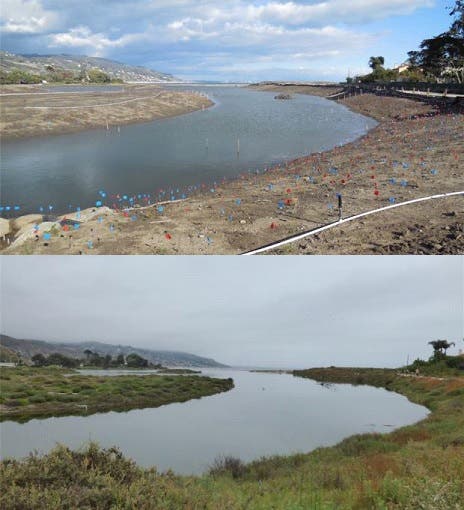
Above: Before/After photos of the same point in Malibu Lagoon, 2013 and 2017. Heavy construction in public open spaces can be difficult for some to swallow, but the results are well worth it.
An evaluation of present conditions through detailed scientific monitoring shows the lagoon’s water circulation and water quality was improved, benefiting swimmers and surfers at Malibu Surfrider Beach, who prior to the Project were exposed to fluctuating and sometimes unhealthy water quality. Also, compared to pre-Project times, a diverse native plant and animal ecosystem is thriving there and seems resilient to natural and man-made impacts. Public access to the Malibu Lagoon and famous beach are also much improved and more strictly regulated.
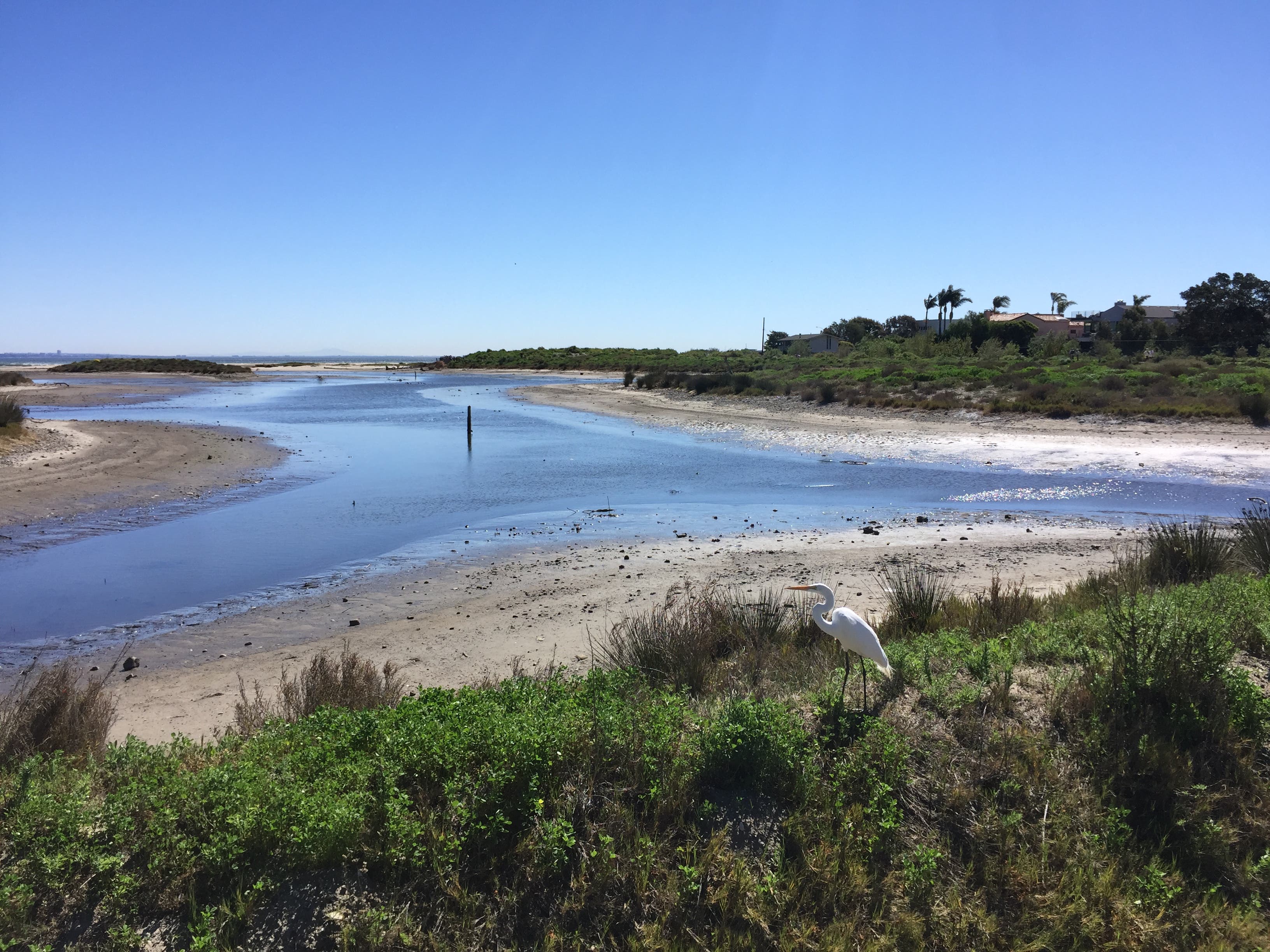
Above: A Great Egret surveys the Malibu Lagoon for fish and small rodents (The Bay Foundation)
The Malibu project's goals and success criteria which monitoring shows have now been met or exceeded include improving water circulation, sedimentation, dissolved oxygen, bacterial content, aquatic bottom critters, fish, birds and plants. Wetland overall health, as measured by a long-established state method, shows a 54% improvement over what existed at Malibu before the bulldozers and backhoes did their good work.
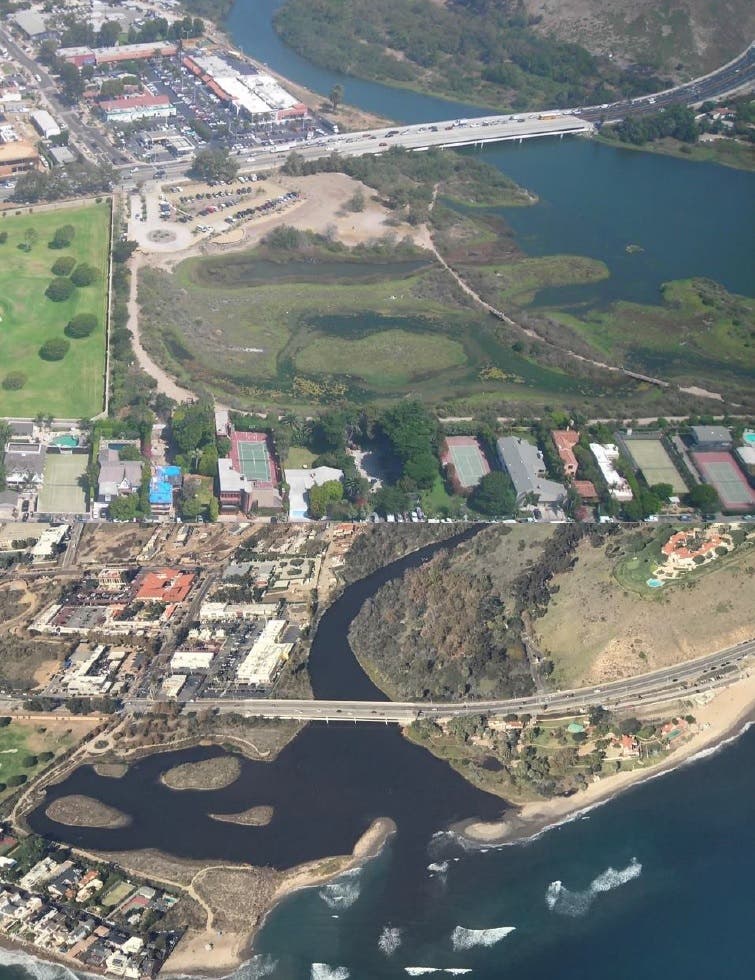
Above: Before / After Restoration Aerial Photos of Malibu Lagoon, in 2008 and 2018 (The Bay Foundation / Lighthawk)
Those who followed the Malibu Lagoon project remember the tactics of opponents - the same people who today oppose the Ballona restoration. Even as construction proceeded at Malibu (the state Court of Appeals denied opponents' request for a stay), these folks picketed the site decrying the use of bulldozers and predicting an ecological disaster.
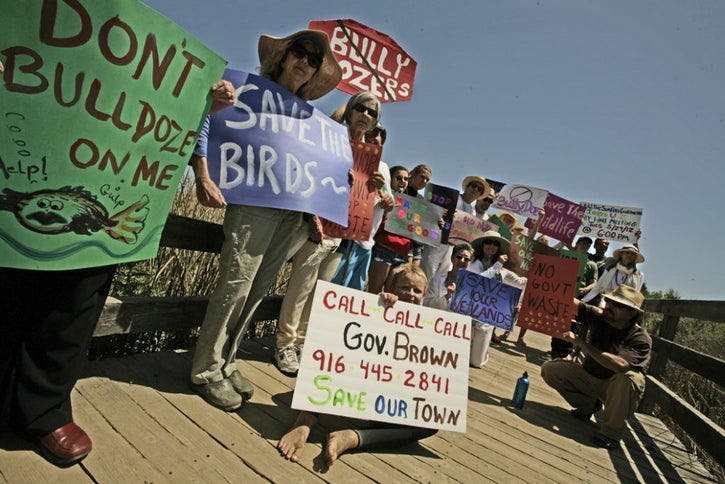
Above: Protesters at the Malibu Lagoon during construction
The opposition leader, Marcia Hanscom, went so far as to petition the Coastal Commission to revoke the Malibu Project coastal permit after construction had already begun. In that case, Commission staff were compelled to prepare a 993-page rebuttal report to Hanscom's petition, at taxpayer expense. Unfortunately, local surfers concerned about project impacts to the surf break were hit with mud slung during this drama.
After hearing the substance of their staff's rebuttal report and the testimony of many others, the Coastal Commission figuratively showed Hanscom and her supporters the door. “There’s not one scintilla, not one iota of evidence to support revocation” Commissioner Richard Bloom said at the hearing, and the Commission then unanimously denied Hanscom’s petition.
Enjoy your Malibu Lagoon and Ballona Wetlands!
References:
1. 2012. Restoring Southern California’s Wetlands. Erik Friedl. https://www.youtube.com/watch?time_continue=36&v=0nGYnpWs-uU
2. 2019. Johnston, K., M. Grubbs, C. Enyart, R. Dagit, D. Cooper. Malibu Lagoon Restoration and Enhancement Project. Final Comprehensive Monitoring Report (Year 6). The Bay Foundation. August 2019. https://www.santamonicabay.org/wp-content/uploads/2019/09/Malibu-Lagoon_YR6-Report_FINAL_8-7-19.pdf
3. The Bay Foundation. https://www.santamonicabay.org... and Press Release: https://www.santamonicabay.org...
4. Marina Del Rey Patch. January 15, 2018. The exceptional public access plan for the Ballona Wetlands. https://patch.com/california/marinadelrey/exceptional-public-access-plan-ballona-wetlands
5. The Wetlands Restoration Principles Coalition (WRP). http://wetlandsrestoration.org/
6. Malibu Patch. August 8, 2012. Coastal Commission Denies Revocation of Malibu Lagoon. Permit https://patch.com/california/malibu/coastal-commission-denies-revocation-of-malibu-lagoon-permit
7. Marina Del Rey Patch, June 18, 2019. Coastal Commission tosses a bone to Ballona opponents. https://patch.com/california/v...
8. California Coastal Commission. August 7, 2012. Agenda Item W4.5a, Application No. R-4-07-098 (Malibu Lagoon), Wednesday, August 8, 2012. https://documents.coastal.ca.g...
9. California Coastal Commission. August 8, 2012, Video archive, Revocation Request No. R-4-07-098 (California Dept. of Parks and Recreation, Malibu). https://cal-span.org/unipage/?site=cal-span&owner=CCC&date=2012-08-08&site=cal-span&owner=CCC&date=2012-08-08 (click on the film reel icon at Item No. 4.5a.)