Politics & Government
Ballona Wetlands’ Motor Racing Past
Our Great Park Project Will Likely Unearth Remnants of the Infamous Los Angeles "Murderdrome"


While our California Department of Fish and Wildlife finalizes the plans for Los Angeles' next Great Park, the Ballona Wetlands Restoration Project, I imagine days past when the area was first exploited by developers. Decades before Abbot Kinney built the Venice Canals and the Strand was smothered by oil well derricks, motor racing came to the Ballona Wetlands.
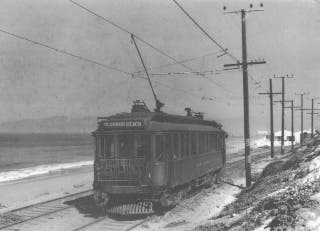
In the late 1800s, the Los Angeles Pacific Railway had constructed a streetcar line from Hill Street in Los Angeles to Playa del Rey, widely known for transporting beach visitors to the shore. The railroad grade was one of the first acts of "fill" in the wetlands, culminating with Marina del Rey construction, which destroyed nearly half of the 2,000 acre Ballona Wetlands. The upcoming Restoration Project will unfill and recreate around 200 filled-in acres and enhance another 400 degraded acres.
In 1910, promoter Jack Prince constructed a circular high-banked pinewood board track and grandstands in what is today Area B of the Ballona Wetlands State Ecological Reserve, just west of the Culver-Jefferson “wye”. A venue for numerous auto and motorcycle races, the Los Angeles Motordrome race track entertained spectators arriving via a dedicated rail spur of Los Angeles Pacific's streetcar line. For 40 cents, you could ride the streetcar round trip from downtown Los Angeles to the motordrome. For another $1.00, you could purchase a grandstand seat at the track.
Find out what's happening in Marina Del Reyfor free with the latest updates from Patch.
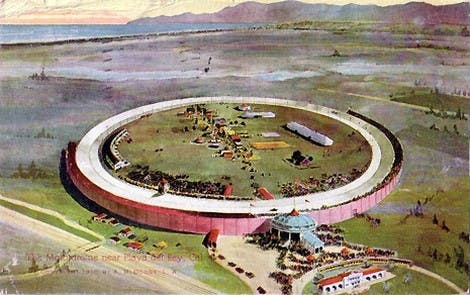
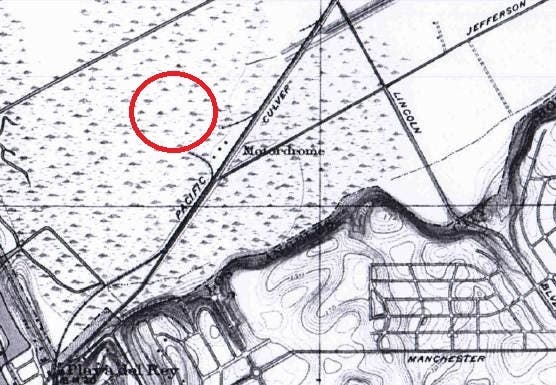
Above: A postcard painting of the Los Angeles Motordrome. The 1930 topographic map below shows the approximate location of the motordrome, denoted by a red circle.
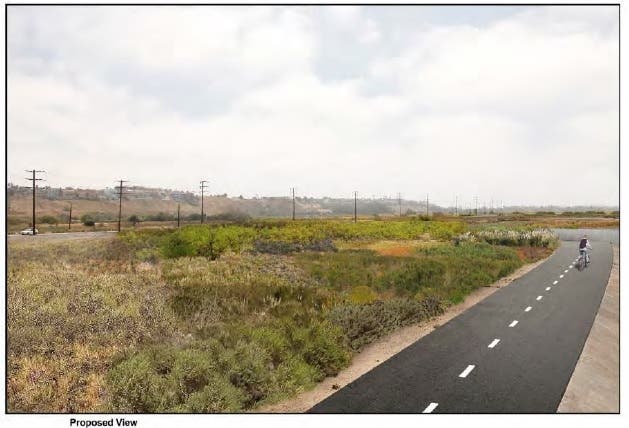
The Ballona Wetlands Restoration Project will include a new system of pedestrian and bicycle trails ringing the restored wetlands areas, with one of those trails along Culver Blvd., approximately where those racers of yesteryear risked their lives for entertainment (not unlike the X-Gamers of today). The visual simulation below, from the project EIR, shows one of the proposed new bike trails approaching the approximate location of the old Los Angeles Motordrome.
Find out what's happening in Marina Del Reyfor free with the latest updates from Patch.
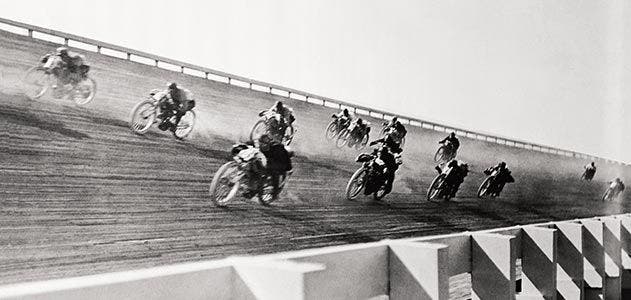
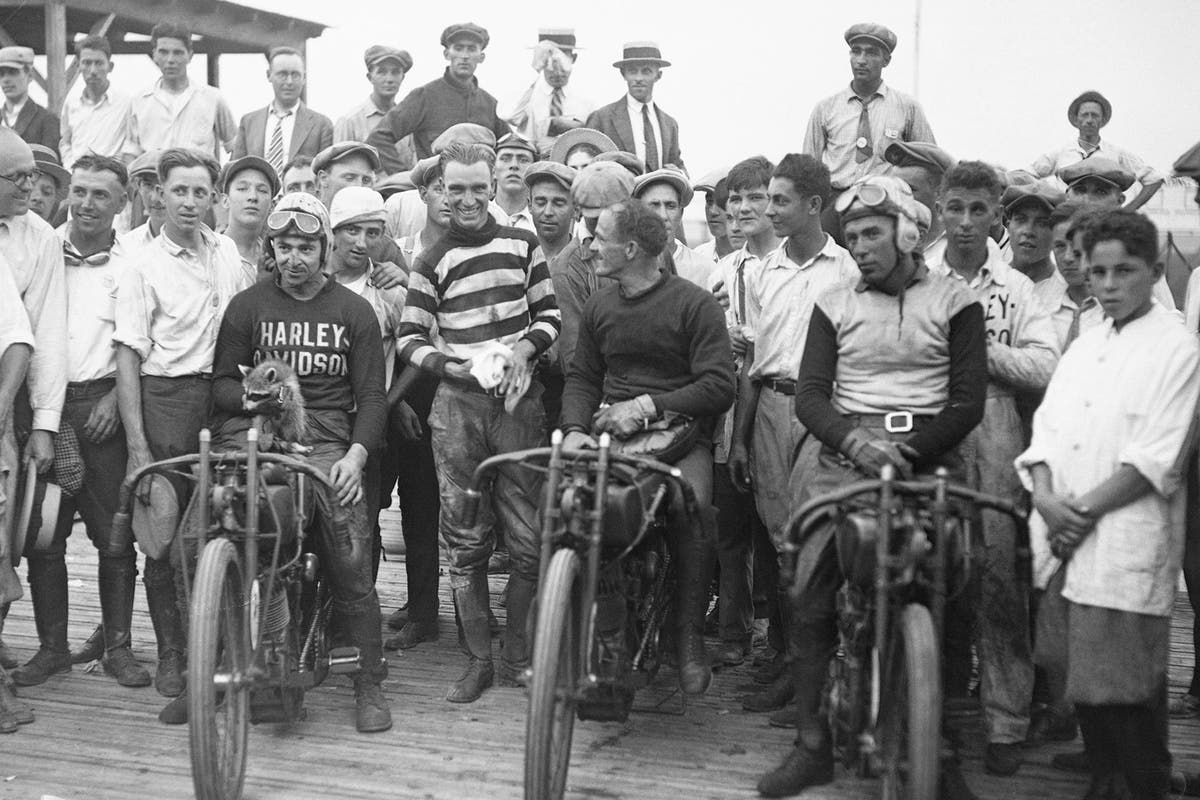
Very new contraptions in those days, motorcycles were little more than beefed up bicycles with single-cylinder gasoline engines. Indians, Merkels, Harley-Davidsons and Excelsiors (the latter owned by Ignatz Schwinn of the bicycle company) screamed around the track at “breakneck” speeds. In May of 1911, "Texas Cyclone" Eddie Hasha set a new 1-mile motorcycle record at the L.A. Motordrome, reaching 95 miles per hour. Hasha and several other racers were famously killed in a New Jersey motordrome race in 1912. Automobiles driven by famous racers of the day also competed at the L.A. Motordrome.
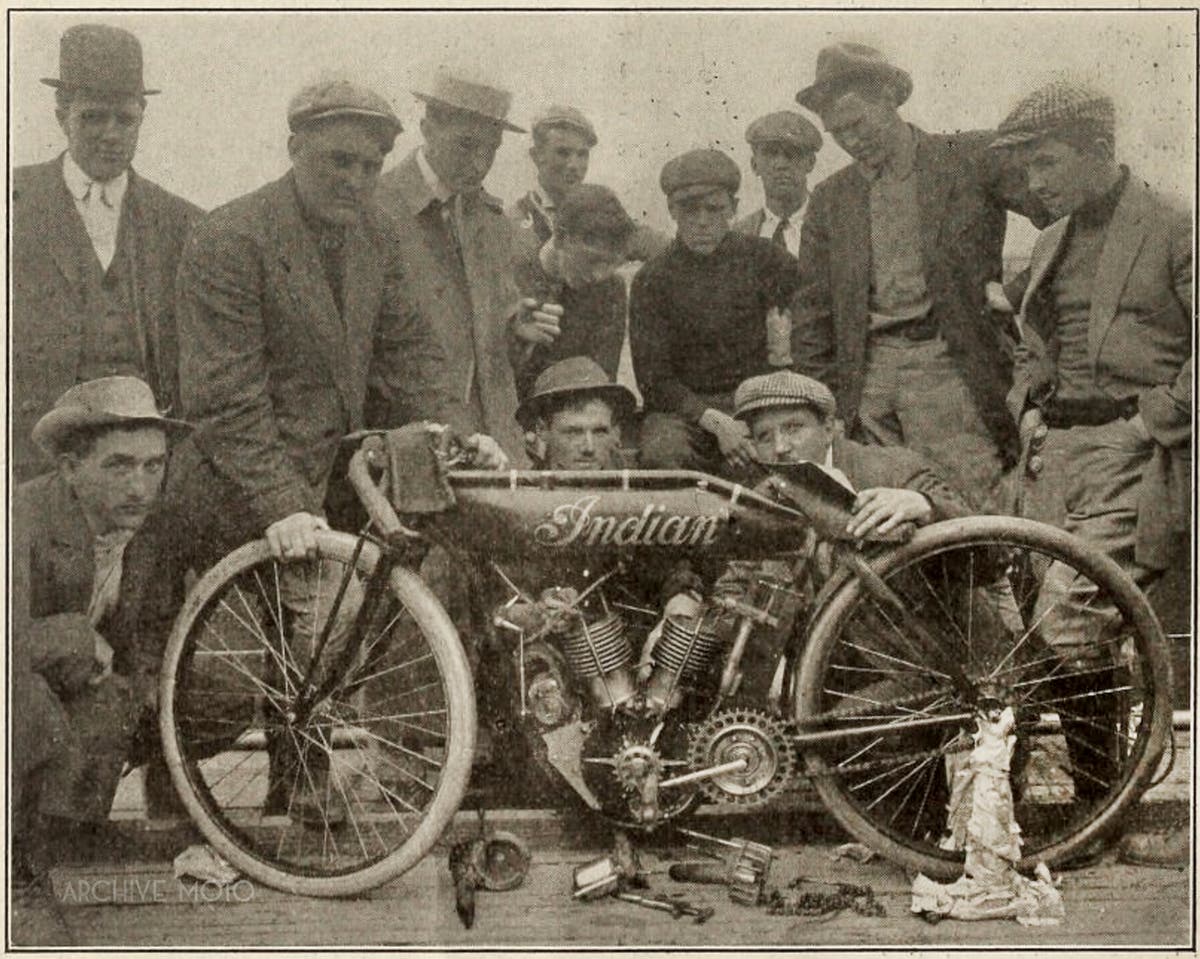
Above photo: Indian motorcycle racer Jake Derosier and his crew at Playa del Rey, 1910
Board track racing became popular across the country, and other motordromes were built in Beverly Hills and Culver City. Unfortunately, these venues were very quickly marred by frequently fatal accidents. The steep, high-banked tracks, combined with high speeds and virtually no effective safety equipment, led to both racer and spectator deaths. The tracks eventually became known as "murderdromes" for this reason.
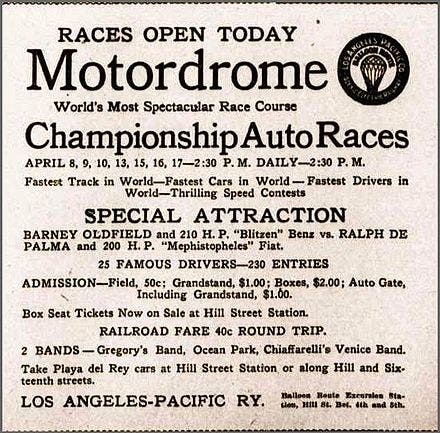
Above: A promotional flyer for an automobile race at the Los Angeles Motordrome in Playa del Rey.
In the Ballona Wetlands, it all came to an end after only 3 years, as reported by the San Francisco Call on August 13, 1913: “The motordrome at Playa del Rey, scene of many thrilling speed contests, was destroyed by fire late today. The pavilion was constructed at a cost of $16,000. It inclosed a saucer-shaped board track. It was announced tonight that the motordrome would not be rebuilt.”
Today, dry and degraded saltmarsh dominated by non-native vegetation and fill dirt cover the area where the motordrome once stood, isolated from the tides for decades by the Ballona Creek channel levee. Just to the west, lush saltmarsh is nourished by tidal channels flushed twice daily from a single mechanical tide gate in the levee. The state’s Restoration Project will re-contour and widen tidal channels in the former motordrome area, improving daily tidal flows and increasing plant and animal habitat in the process.
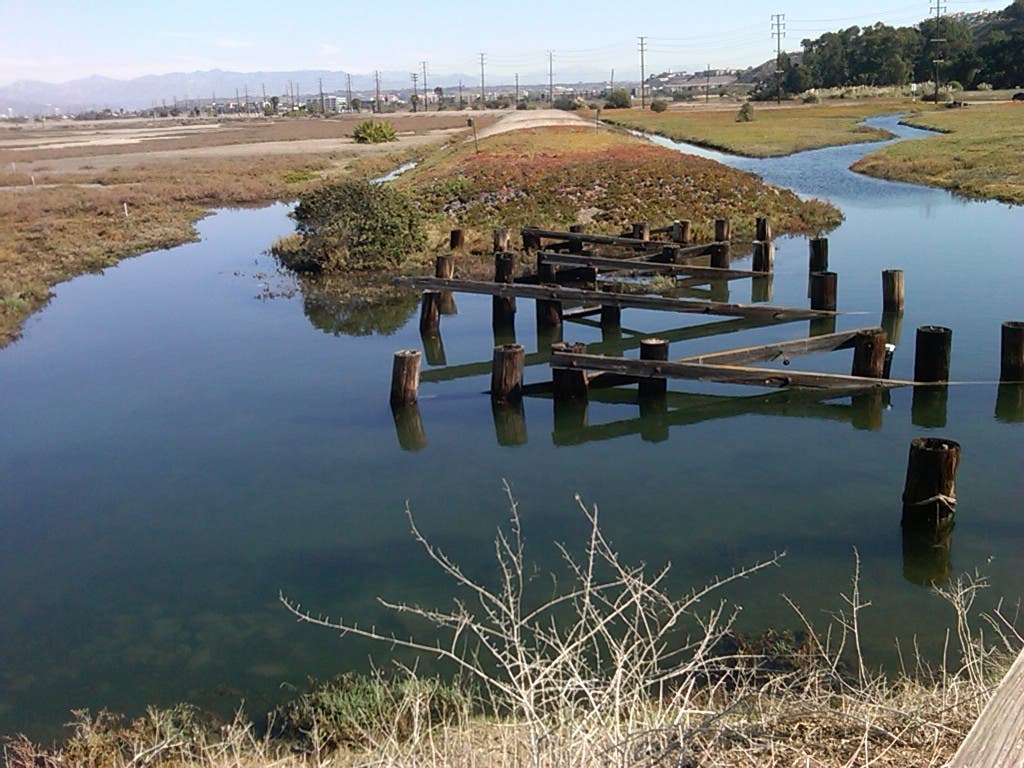
Above photo: The grade of the Los Angeles Pacific railway still stands over the Ballona Wetlands tidal saltmarsh just west of the site of the Los Angeles Motordrome
State and federal laws protect historic structures at project sites, and the Ballona Wetlands get no pass. While motordromes were neither rare nor unique, the project and governing agencies must determine prior to construction whether to record any findings of historical artifacts when the former motordrome location is recontoured.
Due to their value, salvageable lumber and metal were likely removed from the site following the destructive fire of 1913. Nevertheless, it will be interesting if workers find a discarded spark plug, tire cord or other relic from the “murderdrome” when construction begins on our Great Park at Ballona.
Enjoy your Ballona Wetlands!