Politics & Government
Ballona Wetlands Restoration Project Would Reduce Greenhouse Gas
California's Ballona Wetlands Project Would Remove up to 40,000 Metric Tons of Carbon Dioxide from our Atmosphere. Is That Important?

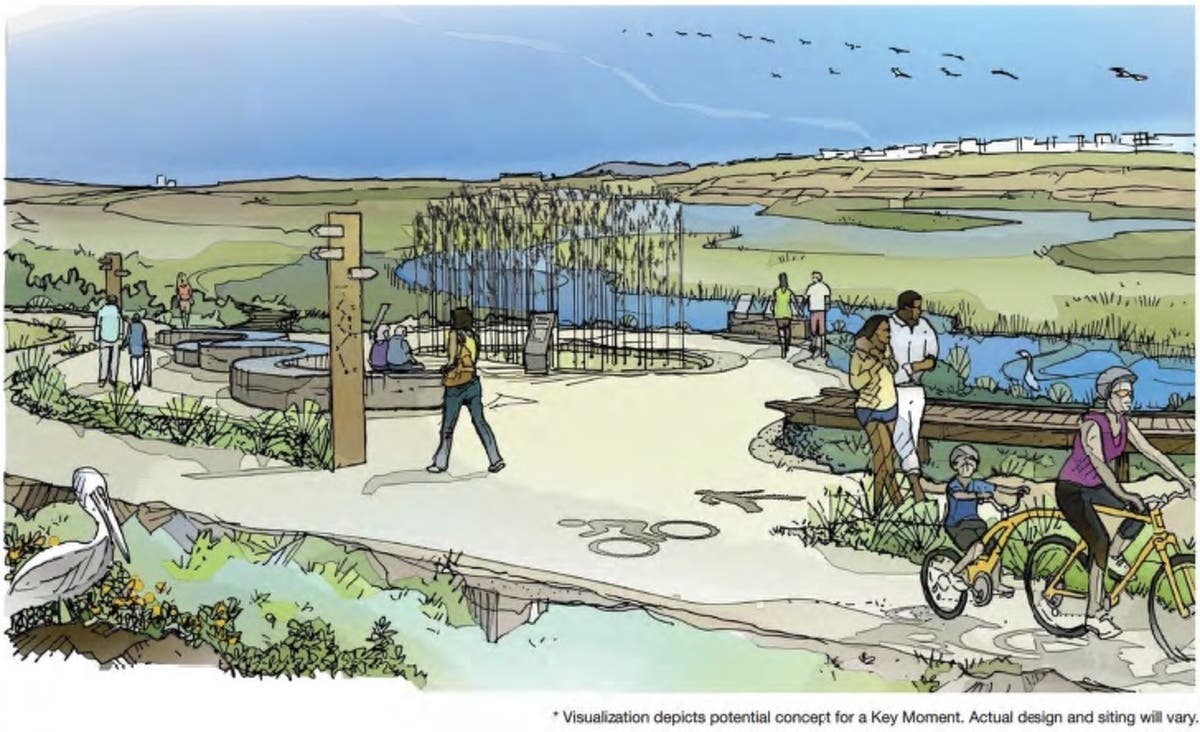
Opponents of California's Ballona Wetlands Restoration Project are alleging global climate effects from the state's plan.
In addition to creating hundreds of acres of new habitat for native plants and animals, the Project will create a 600-acre open space recreational area for the public, replete with parking, picnic areas, and about ten miles of new walking trails and bike paths.
Find out what's happening in Marina Del Reyfor free with the latest updates from Patch.
The Ballona opponents are now telling tall tales about the greenhouse gas emissions from California's Ballona Wetlands Restoration Project, trying to convince the public that the Project will exacerbate global climate change. Their modus operandi has frequently been to fabricate scary stories with imaginary villains, including dedicated scientists, in order to make the general public afraid of a very beneficial government initiative.
Here's what professional, peer-reviewed scientists say about the Ballona Wetlands Restoration Project's greenhouse gas impacts:
Find out what's happening in Marina Del Reyfor free with the latest updates from Patch.
Four million cubic yards of fill dirt was dumped on top of the Ballona Wetlands in the 1950s to construct Marina Del Rey. The project will convert over 200 acres of this weedy, dry fill dirt to productive tidal, intertidal and freshwater wetlands, plus some uplands with lush native coastal vegetation. The newly created, biologically rich habitat absorbs much more carbon dioxide, the most prevalent greenhouse gas, than the dry, weedy fill dirt it will replace (1,4,5,6).
Climate scientists estimate that the new habitat will remove up to 40,300 metric tons of carbon dioxide over the next 80 years, compared to less than five percent of that if left as weedy, dry fill dirt (1,4,5). So, how much is 40,300 metric tons of carbon dioxide? Well, the average family car produces around 5 metric tons of carbon dioxide in a year, or about 400 metric tons over the same 80 year period (3). So, the new habitat will sequester the equivalent carbon dioxide of about 100 cars every year. If that doesn't sound like very much, you are correct. In Los Angeles, there are 6.4 million registered cars.
Did I mention California's Ballona Wetlands Restoration Project will produce Los Angeles' second largest natural habitat public open space recreation area, full of trails and bike paths? Only Griffith Park will be larger.
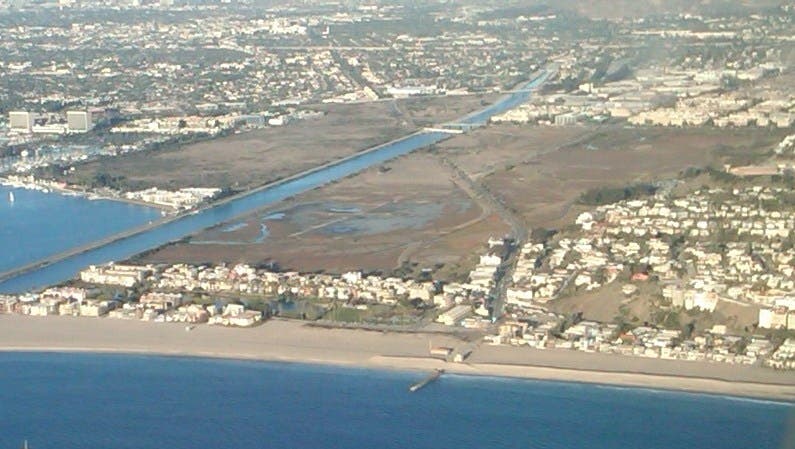
Above photo: The Site of Los Angeles' next Great Park, if you want it. The area to left of the creek channel was once wetlands, but was buried under 12-17 feet of construction waste during Marina construction in the 1950s.
Even less significant are the greenhouse gases that will be emitted by construction equipment during the creation of this fantastic new open space park area. The opponents often attack construction equipment, like bulldozers, to create a villain in their narrative. It took a lot of bulldozers to bury the Ballona Wetlands during Marina construction, and we'll need them to undo that damage. See the before/after photos below for some valuable perspective: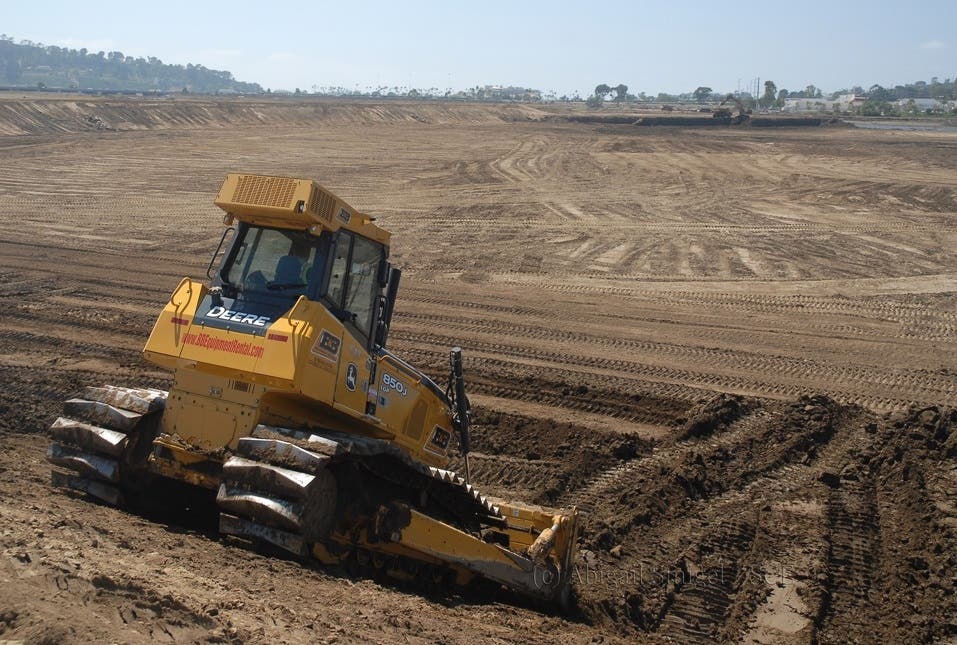
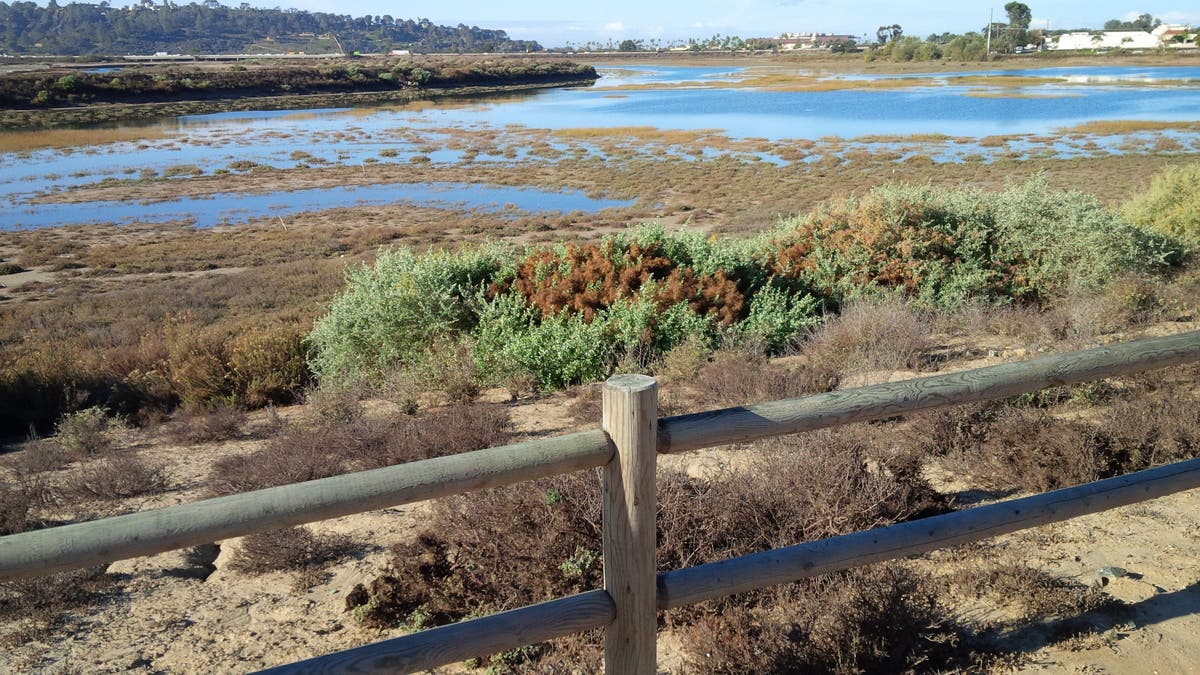
Above Photos: The San Dieguito Wetlands, Near Del Mar, Identical Views During and Post-Construction, 2008 and 2014.
Scientists estimate all of the Ballona project construction equipment (bulldozers, dump trucks, etc.) will produce around 11,500 metric tons of carbon dioxide during the few years of construction, or the equivalent of about 25 more cars on the road, only during those years. Again, if this does not sound like much to you, you are correct.
In one typical year, we all produce around 450 million metric tons of greenhouse gases in the state of California (2). Each and every year, most of that is produced from our vehicles. So, both the construction emissions to build our 600-acre Ballona "Great Park" on Los Angeles' west coast, as well as the habitat that will offset those emissions twenty-fold, are really not significant at all.
Accordingly, here's what the state's Environmental Impact Report correctly says about greenhouse gas impacts of the Ballona Wetlands Restoration Project (Page 3.7-11, Reference 1):
- Alternative 1 would not generate GHG emissions, either directly or indirectly, that would have a significant impact on the environment. (Less than Significant Impact)
- Alternative 1 would not conflict with an applicable plan, policy or regulation adopted for the purpose of reducing GHG emissions. (No Impact)
In other words, there is no problem, and no villain, related to greenhouse gases and global warming. Be very skeptical of those who claim otherwise.
Enjoy your Ballona Wetlands!
References
1. 2017. Ballona Wetlands Restoration Project. Environmental Impact Statement / Environmental Impact Report. State Clearinghouse No. 2012071090. Link
2. 2014. California Air Resources Board (CARB). 2014. California Greenhouse Gas Inventory for 2000- 2012 — by Category as Defined in the 2008 Scoping Plan.
3. 2018. U.S. Environmental Protection Agency. Greenhouse Gas Emissions from a Typical Passenger Vehicle https://www.epa.gov/greenvehicles/greenhouse-gas-emissions-typical-passenger-vehicle
4. Drake, B.G. 1995. Carbon Sequestration in Wetland Ecosystems: A Case Study. Smithsonian Environmental Research Center. Link: https://link.springer.com/chapter/10.1007/978-3-642-79943-3_3
5. A. M. Nahlik & M. S. Fennessy. 2016 Carbon storage in US wetlands. Nature Communications volume 7, Article number: 13835 (2016) Link: https://www.nature.com/articles/ncomms13835
6. Bear, T.M. 2017. Soil Carbon Sequestration and Carbon Market Potential of a Southern California Tidal Salt Marsh Proposed for Restoration. A dissertation submitted in partial satisfaction of the requirements for the degree Doctor of Environmental Science and Engineering. University of California, Los Angeles.