Health & Fitness
Kayaking to Catalina - Arrival and Reflections
UCLA Marina Aquatic Center kayakers complete their voyage from Cabrillo Beach to Avalon.
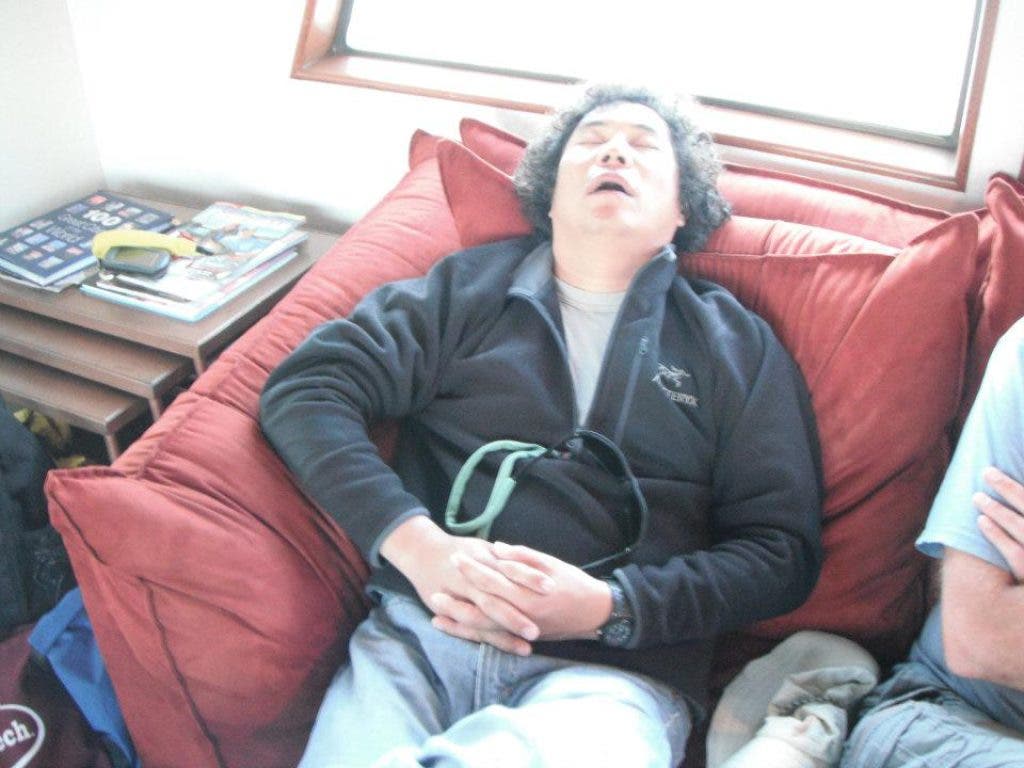


"What I wasn't anticipating was the sheer beauty of the crossing itself."
That's how UCLA MAC kayaking instructor Steve Goldman described the Cabrillo Beach to Avalon crossing completed last October 9 by several UCLA kayakers. The group of students and instructors had practiced for months, refining their skills and building their endurance.
Find out what's happening in Marina Del Reyfor free with the latest updates from Patch.
As everyone knows, it's about 26 miles from San Pedro to Catalina, so the day began long before dawn. In the darkness, the kayakers rendezvoused at the UCLA Marina Aquatic Center facility in Marina del Rey to load and transport their boats and gear to Cabrillo Beach.
The five students participating - Mary Drenick, David Salper, Evelyn Nguyen, Wanderley Reis, John DeRago - have all taken kayaking classes at the MAC. Each approached the training and the expedition for different reasons, but with what turned out to be a common goal - the opportunity to test themselves over the course of an entire summer while improving their skills and confidence on the water and making some great new friends.
Find out what's happening in Marina Del Reyfor free with the latest updates from Patch.
Despite the individual nature of the sport, kayaking can also be a team activity. In training sessions that included distance paddling as well as "contingencies" training, the kayakers pushed each other to their personal limits.
Lead instructor Brendan Nelson had done this trip before. "In my years teaching kayak classes at the MAC," he says, "I've seen how kayaking encourages students to grow and be better people."
The first half of the journey was done as the sun rose and included a whale sighting.
"After about 50 minutes it was time for our first break," recalls Brendan. "The mountains were backlit by the rising sun. The ocean was calm. Just as we rafted together, we heard the distinctive sound of air being pushed out of a blowhole and saw a dorsal fin coming toward our kayaks. It stopped right by us."
A whale, possibly an orca from the pod recently seen in local waters.
"The dorsal was as high up as my head," recalls Brendan. It was a sight he and the other kayakers will not forget.
Mary Drenick says that the weather for the crossing was perfect.
"The sun was out, but not too hot or glaring. The sky was blue with delicate, wispy clouds, like feathers had been strewn across it." The glassy water surface added to the effect.
As the day progressed, their destination became more visible.
"It's the idea of endurance and achievement that gets us on the water," says David Salper. "The moments of stillness, camaraderie, communing with nature, and peacefulness are the icing on the cake."
As with any distance activity, the crossing effort gradually broke itself down to the basics — paddling, adjusting course, staying hydrated, taking breaks to hurriedly eat sandwiches or snacks, sharing observations, and paddling, paddling, paddling. "Since doing my first Catalina crossing," says Brendan, "it took about four years for student interest, commitment, and skill levels to be ready to handle the four months of training paddles required."
To compensate for the likelihood of afternoon winds, the kayakers offset their course a bit to the west, hoping to make the afternoon stretch easier. But the wind wouldn't cooperate, so, as Brendan put it, they had to start "dialing down" the offset.
They began to use the landmarks on the distant island to track their course and thought about the nice big motor-yacht awaiting them in Avalon Harbor. They discussed and adjusted their course based on each sighting. Fortunately, while the wind did come up, it was not much of a factor. Lead paddler David Salper recalls, "I found much of my work was in adjusting our course to the subtle but persistent rightward-push of the west swells."
When they began to close on Avalon and could see details on the casino, Brendan told the group where the motor-yacht for the return trip should be. As he expected, this ignited many in the group to go all-out to paddle to the boat. "When we arrived in the harbor at Avalon and saw the historic Avalon Casino Ballroom," says Mary Drenick, "I felt a great sense of satisfaction that we'd achieved our goal."
Once the group sprint to the "finish line" ended, one by one, the kayakers paddled over and boarded, tying their kayaks to the boat's stern in a fan pattern. Just to make things "official," Brendan and Steve Goldman paddled to shore and landed briefly.
"The trip had perfect conditions and took nine hours," says Brendan.
Anyone who has accomplished a physical challenge like this knows the feeling and the sore pleasure of the weariness it brings. They were allowed one-minute showers because the yacht only had a limited amount of water. No one complained. "It was fine," says Mary. "It felt great to wash off all that sunscreen and salt spray and put on dry clothes."
To prepare for the voyage back to Marina del Rey, the motor-yacht's crew and some of the kayakers lifted the kayaks out of the water and secured them on the upper deck. After an hour or so of that, it was on to a good meal.
"A welcome break from energy bars," recalls Mary with a laugh.
On the trip back to the mainland, some people napped below, but an impromptu karaoke session also occurred.
"On my first crossing," says Brendan, "we went out that night and sang karaoke, so I felt like starting a tradition." Mary had never done this before but says, "It was a riot. We laughed our heads off!"
It was dark when they arrived in Marina del Rey and pulled up to the UCLA MAC dock. "It was bizarre to see a big power boat docked where usually we only have kayaks and sailboats," remembers Mary.
After unloading the kayaks and other gear, everything needed to be rinsed, dried, and stowed. Some of the kayakers took on this duty, while others carpooled back to San Pedro to pick up cars and the truck used to transport the kayaks. For Brendan Nelson and the other instructors - Bob Gurfield, Anthea Raymond, and teaching assistant Sung Byun - when they saw the students unloading the kayaks, working together, they realized they were looking at the leaders of the next crossing to Catalina.
If the students have any say, the voyage might become an annual event. Some are already talking about a "there and back in a single weekend" expedition. Like so many who have discovered the pleasures of water sports on Santa Monica Bay, most of them got their first taste at UCLA's Marina Aquatic Center, which is open to the public as well as staff, students, and alumni.
Steve Goldman, an experienced kayaker who is a relative newcomer at the MAC and is now an instructor, sums up everyone's feelings when he says, "Thanks should go to Brendan for putting together one of the finest trips I've ever been on. And you couldn't ask for a better group of people to share it all with - my congratulations, thanks and admiration also go out to each and every one who did the trip and to those who joined us for the training."
Part 1:
Part 2:
Part 3:
Part 4:
Part 5:
Part 6:
Part 7 - Countdown:
Part 8 - Postponement:
Part 9 - Underway at Last:
Part 10 -