Politics & Government
Endangered Species at Ballona? Just the Facts, Ma'am.
California's Proposed Ballona Wetlands Restoration Project Will Dramatically Improve Habitat for The Few Endangered Species Found There

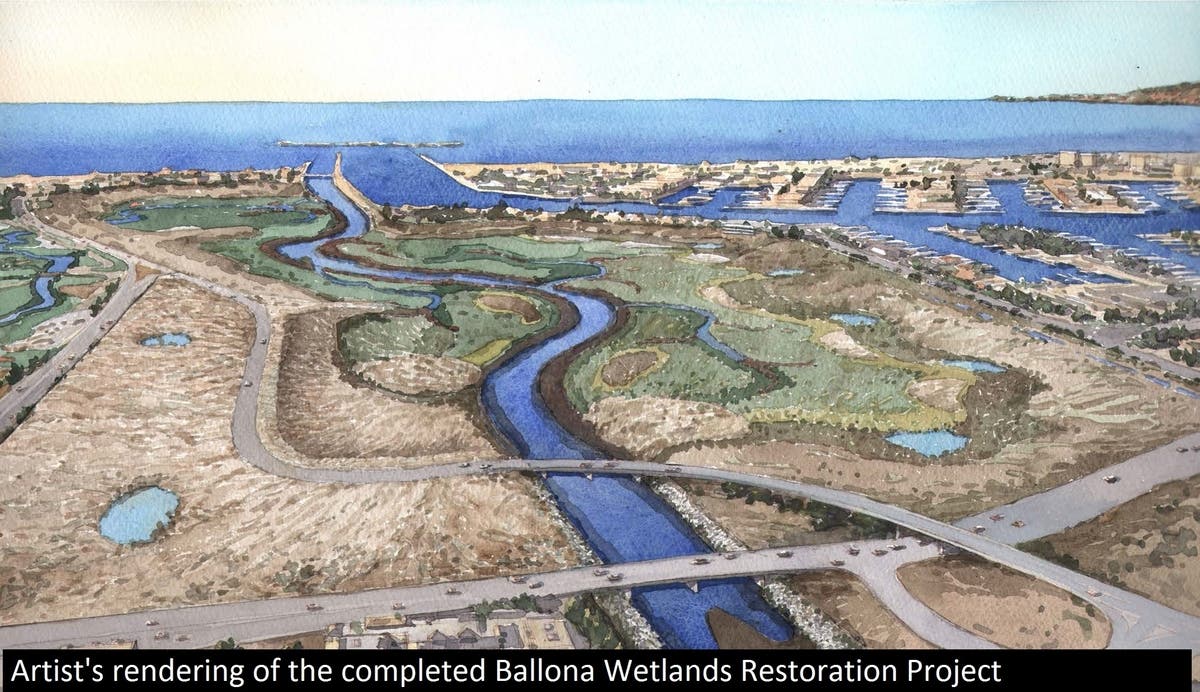
Opponents of California’s Ballona Wetlands Restoration Project often say that the large amount of earth moving initially required to undo historical damage from Marina Del Rey’s construction will prove harmful to endangered species presently living on the Ecological Reserve lands. This statement is patently false, for several reasons. First, earth moving work will not occur where or when any sensitive species are present. Second, repeated expert surveys have found only one of the many species commonly cited by opponents in the affected project area. Finally, plant or animal species most often cited by the restoration project’s opponents are neither threatened, endangered or rare.
Animals and plants protected by the State or Federal Endangered Species Acts are officially “listed” by the governing resource agencies as either “threatened”, “endangered” or “rare.” The threatened listing denotes a declining population and habitat area which, if impacted further, would drive down the species population to the point of becoming endangered. An endangered species has already crossed that threshold and is now at risk of extinction should its numbers or habitat range suffer any further reduction. Rare means just that - biologically rare, very restricted in distribution, or declining throughout their range, but not necessarily threatened or endangered. The Environmental Impact Report for California’s Ballona Wetlands Restoration Project, which is supported by numerous scientifically valid studies and surveys, properly concludes the project will have no adverse effect upon any threatened, endangered or rare species (Reference 4, Table 3.4-8).
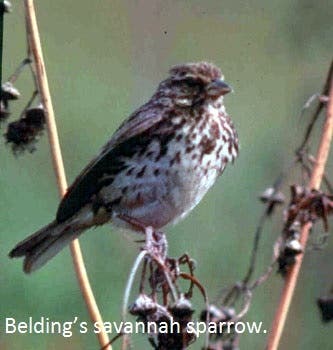
The Ballona Wetlands Ecological Reserve presently supports only two endangered animals. One is the Belding’s Savannah Sparrow, a small, gray bird which feeds, nests and fledges only within pickleweed salt marsh. At Ballona, the bird is dependent on pickleweed marsh for its entire life cycle and does not migrate. Pickleweed is a salt-tolerant plant species which thrives in tidal wetlands, and the Belding’s Savannah Sparrow has evolved with pickleweed marsh habitat, which provides the bird food, cover from predators and structure for nest-building.
Find out what's happening in Marina Del Reyfor free with the latest updates from Patch.
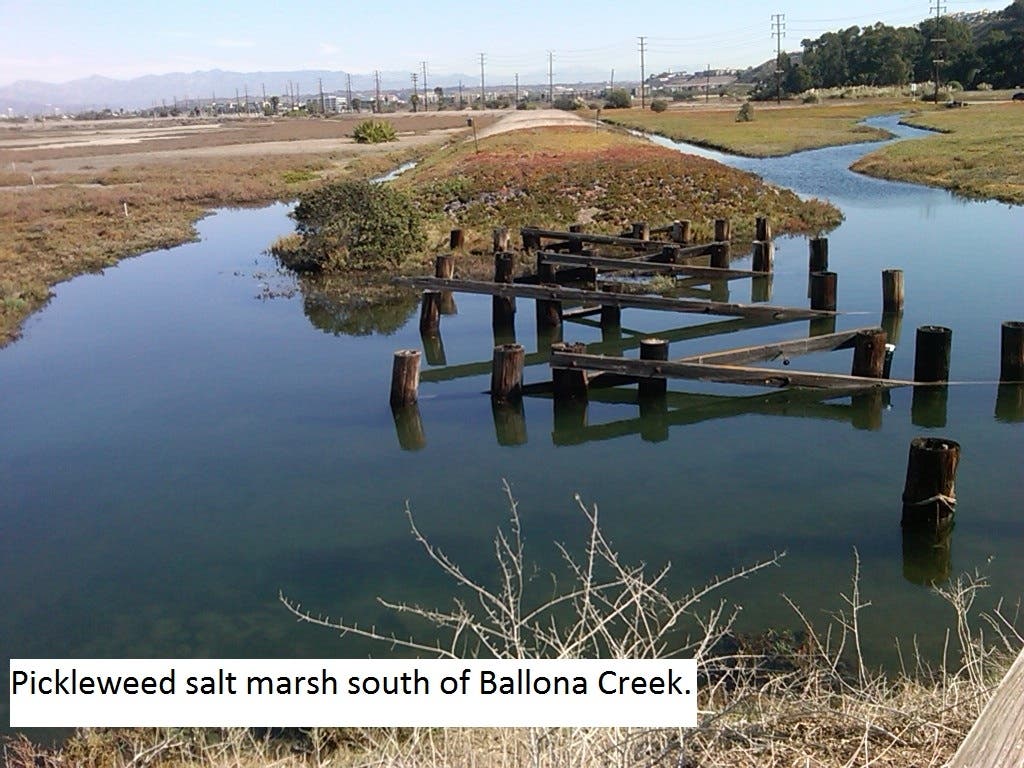
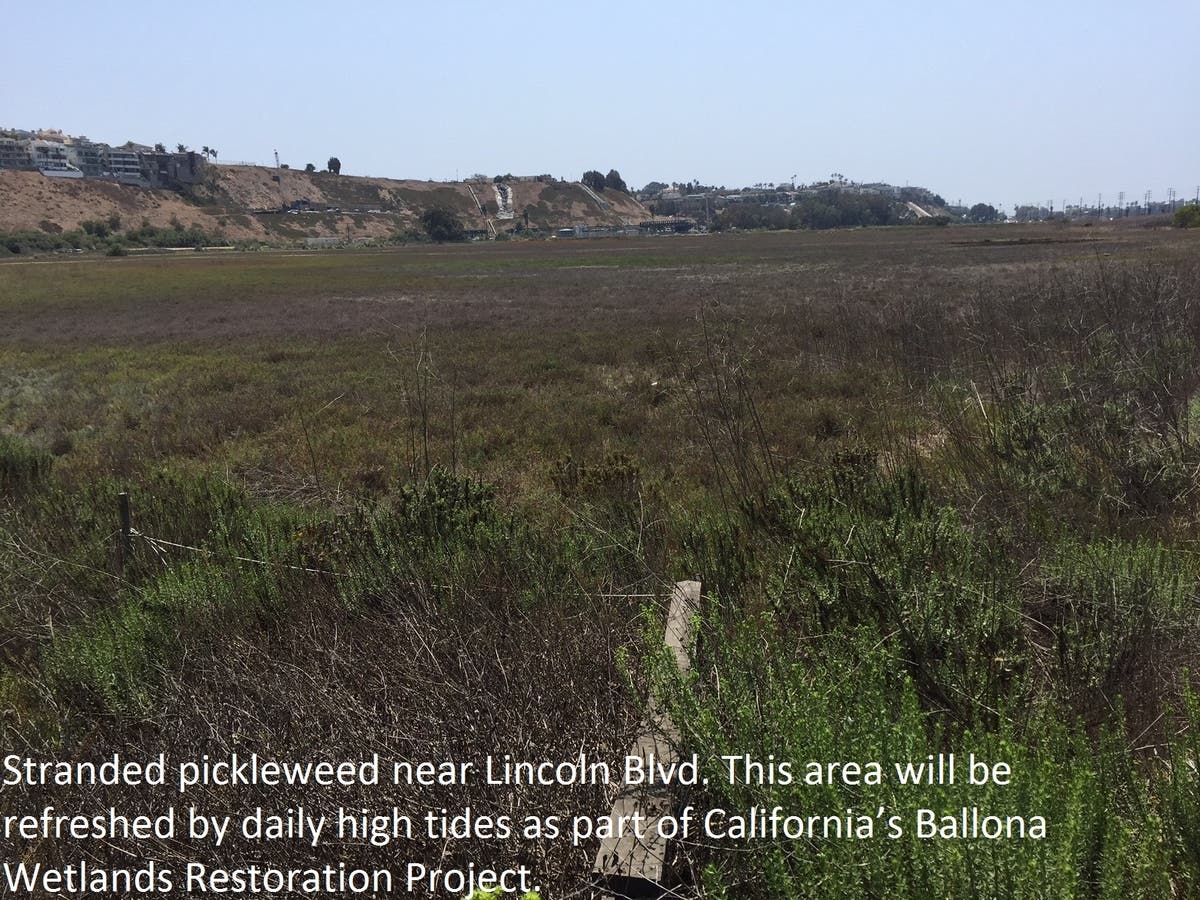
Pickleweed marsh is presently only found within the southern half of the Ecological Reserve, generally south of Ballona Creek. The southern lands were not substantially filled in by development like the northern half, which were buried under Marina construction waste, so the southern lands remain at their historical elevations between 0 and 5 feet above sea level. Connected to the ocean through mechanical tide gates in the concrete Ballona Creek channel bank, some of these lands receive partial refreshing by the daily high tides, which rise up every 12 hours throughout the year, sometimes exceeding six feet elevation. The gates are designed to let some but not all of the incoming tide water through, in order to prevent tidal flooding of local streets in Playa Del Rey.
California’s Ballona Wetlands Restoration Project will create about 70 acres of new pickleweed salt marsh suitable for Belding’s Savannah Sparrow, and thus will greatly benefit the endangered species’ local population. The project will also increase other shorebird and marsh bird habitat by 14 and 39 acres, respectively.
Find out what's happening in Marina Del Reyfor free with the latest updates from Patch.
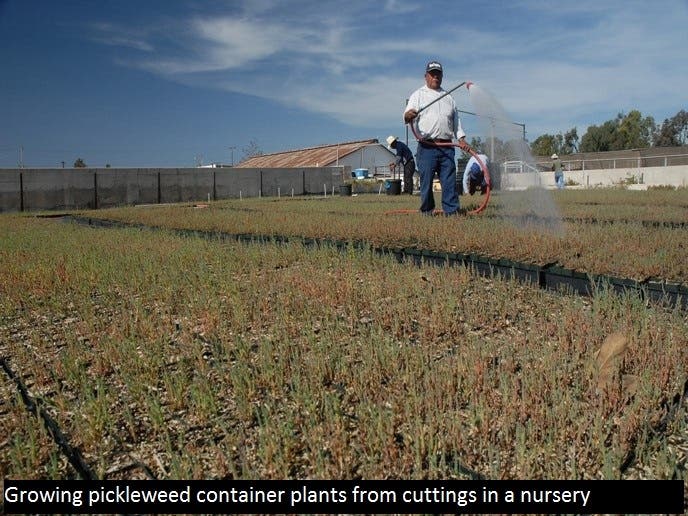
Some pickleweed along the shoulder of Culver Boulevard will be removed and replaced elsewhere in order to construct long, earthen berms that will protect lower Playa Del Rey from tidal flooding, and allow the old, restrictive tide gates to be removed. Once those gates are gone, unrestricted high tides will reach all the way east to near Lincoln Blvd., where “stranded” pickleweed marsh has been denied the ocean water for decades. Bike and walking paths atop the berms will connect to existing coastal bike paths and roughly 6 miles of new walking paths.
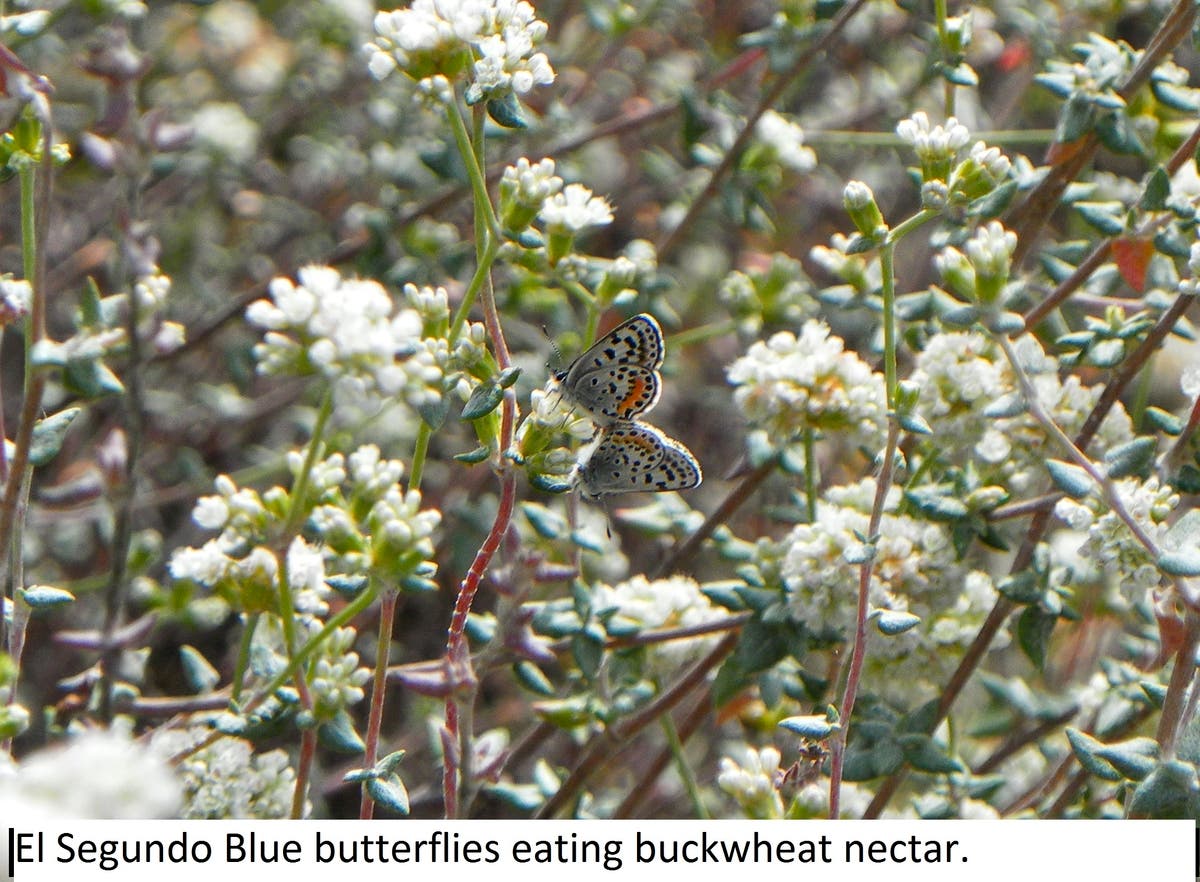
The only other threatened or endangered animal on the Ecological Reserve lands is the El Segundo Blue butterfly. This rare butterfly only inhabits sand dunes on the extreme western end of the Reserve – an area which will not be disturbed by California’s Ballona Wetlands Restoration Project. Adult Blues eat coastal buckwheat pollen and nectar, then mate and lay eggs on the buckwheat flowers. Eggs hatch within 3 to 5 days, and the caterpillars hide within flower heads, feeding mostly on the buckwheat seeds. As the caterpillars change to pupas, individuals fall to the ground and remain buried either underground or in the leaf litter at the base of the buckwheat plant until they emerge as adult butterflies. The El Segundo Blue butterfly only recently re-established homes on the Ballona dunes after a 35-year effort by Friends of Ballona Wetlands volunteers, who removed invasive plants and restored buckwheat there.
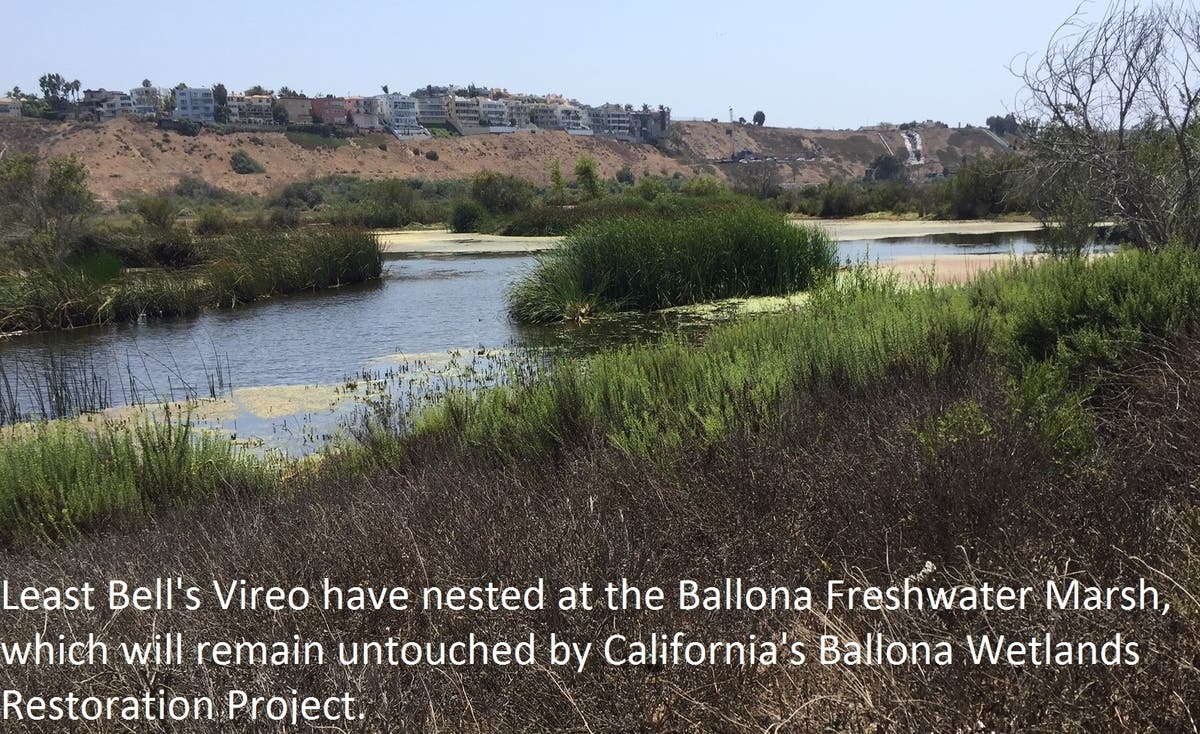
A second endangered bird, the Least Bell’s Vireo, was recently found nesting in the artificial creek and Freshwater Marsh constructed as part of the Playa Vista development. This bird nests only in willow bushes near fresh water, and so is also absent from the areas that California’s Ballona Wetlands Restoration Project will temporarily disturb.
Finally, one rare and endangered plant, the Orcutt’s Yellow Pincushion, is also found in the southwestern dunes area. Again, this area is off limits to California’s Ballona Wetlands Restoration Project, and so the plant will be unaffected.
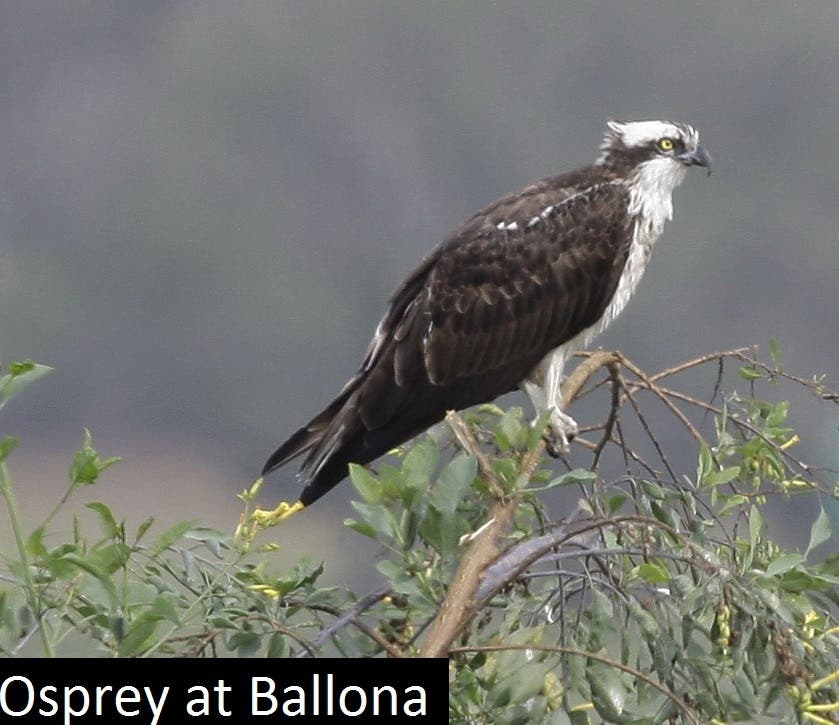
So, what about those people who tell you there are lots and lots of endangered species in Ballona that will be harmed by California’s Ballona Wetlands Restoration Project? Well, they are either uninformed, or deliberately misleading you. There are many bird species frequently seen in and around Ballona, and they are protected, but they are not threatened, endangered nor rare. Take the osprey, for example, a bird of prey commonly seen fishing for corvina in Ballona Creek. Like all birds of prey in the U.S., osprey are protected by the Migratory Bird Treaty Act, an international law adopted decades ago. With rare exceptions, all birds excluding pigeons, house sparrows and European starlings are prohibited from harm by this law, as well as a parallel California law. So, birds are protected by these laws, but they are not threatened, endangered or rare.
Birds are the easiest animals to protect from temporary project construction impacts. You need only wait until late summer or early fall when nesting season ends, to start construction. By then, all young birds have left their nests. When construction starts, young and adult birds simply fly over to adjacent areas to continue their business. When habitat is restored in their former nesting areas, they return. This has been documented at every coastal wetlands restoration project in California. Ironically, Ballona will be among the last restored.
There are also many plants and other animals that are classified as special status species. Wildlife managers keep an eye on these species, but again, they are not threatened, endangered or rare. Some of these species at Ballona include the Monarch butterfly, the Silvery Legless lizard and the South Coast Marsh vole, a mouse relative. California’s Ballona Wetlands Restoration Project will create 73 acres of new habitat suitable for the Marsh vole.
“But wait,” you say, “So-and-so showed me a photograph of an endangered this-or-that at Ballona. Doesn’t that mean something?” Frankly, no. Endangered species surveys may only be performed by a qualified biologist lawfully permitted by the U.S. Fish and Wildlife Service, and the surveys must follow a strict, scientifically defensible protocol that is very specific to each species. While amateur observations, photographs or other anecdotal claims about endangered species and their habitat may prompt experts to perform protocol surveys, they are not recognized as scientifically valid and may not be used for regulatory purposes in the United States of America.
Enjoy your Ballona Wetlands!
References
(1) Abby N. Powell and Christine L. Collier, 1998, Reproductive Success of Belding's Savannah Sparrows in a Highly Fragmented Landscape, U.S. Geological Survey, California Science Center and Department of Biology, San Diego State University, San Diego, California 92182, USA. The Auk 115(2):508-513, 1998.
(2) Richard Zembal and Susan M. Hoffman , 2010, A survey of the Belding’s Savannah Sparrow (Passerculus sandwichensis beldingi) in California, 2010, Clapper Rail Recovery Fund, Huntington Beach Wetlands Conservancy, P.O. Box 5903, Huntington Beach, CA 92615, September 2010.
(3) Irena Mendez, Ph.D. Results of 2013 Presence/Absence Surveys for El Segundo Blue Butterfly at the Ballona Wetlands Ecological Reserve, Playa Del Rey, Los Angeles County, CA. November 21, 2013. USFWS Recovery Permit TE218630
(4) BALLONA WETLANDS RESTORATION PROJECT. Environmental Impact Statement/ Environmental Impact Report. State Clearinghouse No. 2012071090 (Link)