Politics & Government
It's Summer, and the Grunion are Running!
While Covid-19 has kept many of us away from the beaches, the grunion are still visiting.

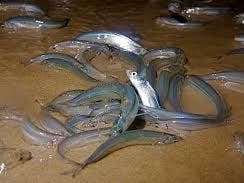

Since March, the slippery little grunion have been spawning on our Southern California sandy beaches. While we've all been preoccupied with Covid-19, nature ignores us and moves on with its business.
When beaches were closed statewide to prevent the virus from spreading, The California Department of Fish and Wildlife removed its grunion run schedule from its website to prevent large crowds from gathering during the pandemic. Now that we have again begun to flatten the infection curve (after an epic initial fail), CDFW has re-posted the grunion run schedule. You can find it on their website here, along with much more information about the grunion.
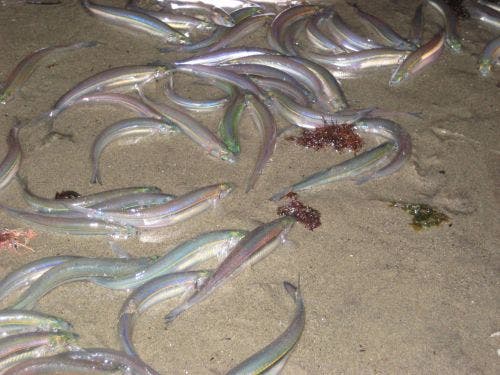
Those little silvery fish that reclaim their beaches every so often to spawn will be on Venice and Dockweiler beaches August 18-21 and September 1-4. The early evening runs begin on Monday, 8/18 at 9:25 PM and and Tuesday, 9/1 at 9:35PM. Each subsequent night, the run begins about a half hour later. If you do visit the beach, be sure to comply with L.A. County and City rules on crowd size limits, social distancing and facial coverings.
Find out what's happening in Marina Del Reyfor free with the latest updates from Patch.
You can catch and keep grunion using only your hands if you have a valid California sport fishing license. I've sauteed them in butter or oil, and with a little chili-lime spice they are quite tasty. You don't need a license to watch them spawn on the beach, which is a remarkable display.
One year I was on Venice beach a few clicks north of the Marina jetty. We had been waiting nearly an hour with no sign of grunion, when all of a sudden a wave brought in tens of thousands all at once. As the wave retreated, there was hardly a sandy spot on the shoreline - the entire beach was carpeted with silvery grunion for hundreds of feet. After the next wave, they had mostly disappeared, only to return again a few hundred yards south on a subsequent wave.
Find out what's happening in Marina Del Reyfor free with the latest updates from Patch.
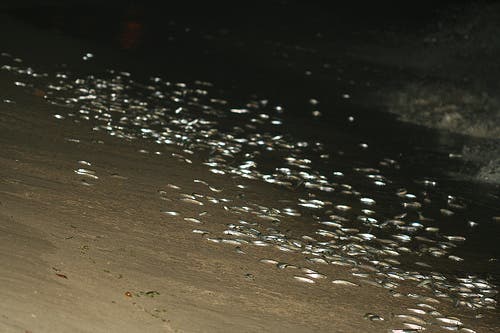
The female digs into the wet sand tail first in order to deposit her eggs at a safe depth, while as many as eight males wrap themselves around the female and release their milt. In that instant before the next wave comes up onto the beach, the eggs are fertilized. The eggs stay in the sand for about 10 days and hatch during the next high tide series, when the little fry wriggle out of the sand and swim into the ocean.
The phases of the moon have a powerful hold on the lives of these small, silvery fish from beginning to end. Scientists think their “internal clock” may detect the tidal changes caused by the full and new moons which trigger them to begin their runs. The exact trigger is not known, though one guess is they may be able to detect changes in water pressure caused by the rising tides.