


Nature Notes:
an occasional column describing the beauty and wonder of nature on the Los Angeles coast, especially focused on the greater Ballona Wetlands Ecosystem
by Marcia Hanscom
"You'll remember me when the west wind moves
Upon the fields of barley
You'll forget the sun in his jealous sky
As we walk in fields of gold" ~ Sting
The musician Sting is the author of the song "Fields Of Gold," and sources say he was inspired to write the song after he purchased a house near a barley field. It is said that sunsets and the colors of the field offered an inspiration for Sting to write the lyrics of the song.
Some music is just so beautiful that it invokes an emotional response that can not be explained. This song has been one of those for me, often bringing tears to my eyes for reasons unknown. I often wondered if there was something more this song was invoking within me.
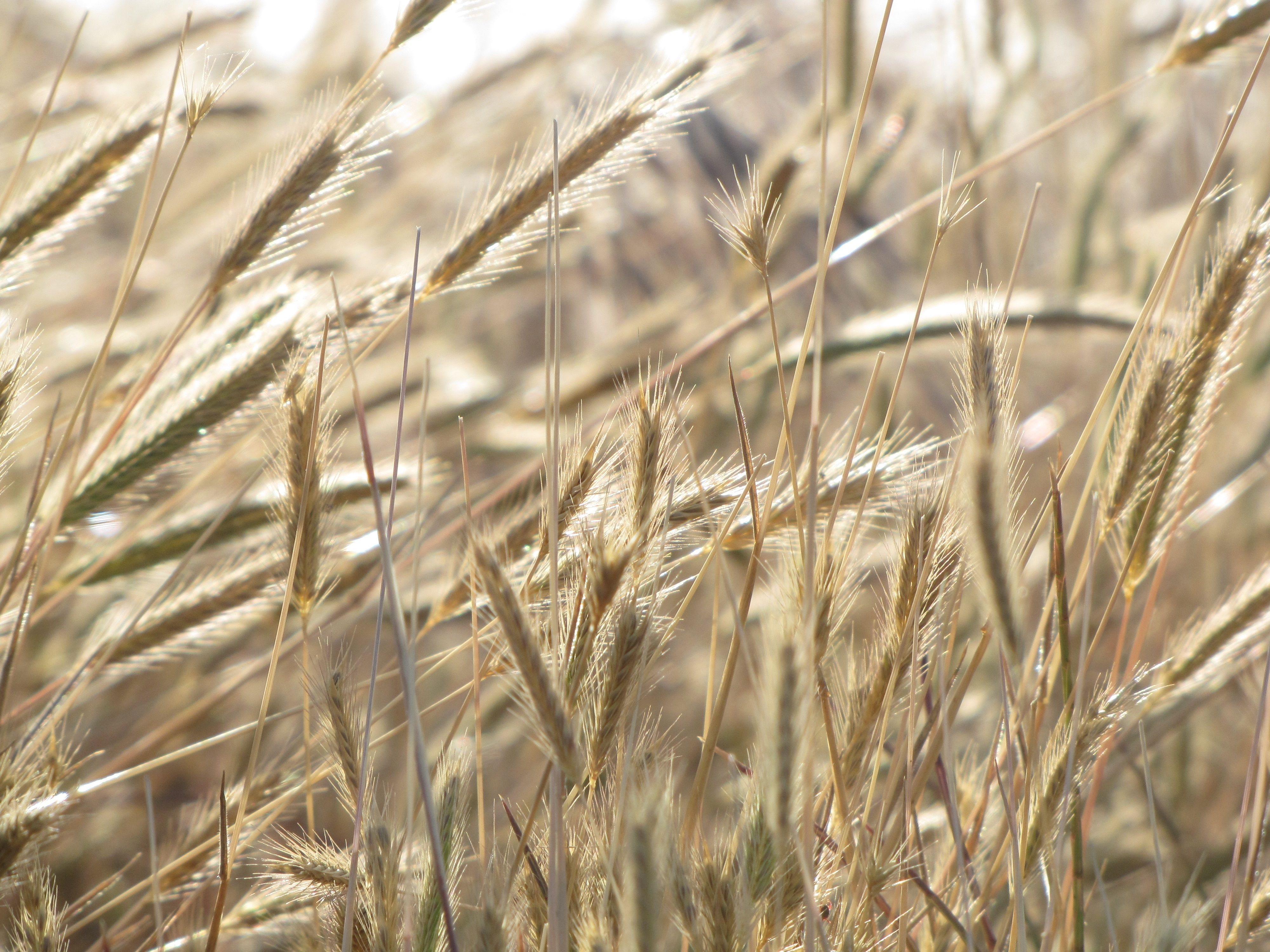
And then I saw the photos. The stunning, sun-kissed images by Ballona naturalist & artist Jonathan Coffin capture the same essence of the Sting song. That essence is something primal, a connection that runs deep when one is truly present with nature in the wild. When I saw the photos, I immediately thought of "Fields of Gold," and was prompted to find the lyrics and connect them with these beautiful images.
The main theme of the song is commitment, which is appropriate in an area ~ the Ballona Wetlands Ecological Reserve ~ that has been the subject of controversy for decades and has taken strong, sustained commitment by land protection advocates. Ballona is a special place on the Los Angeles coast that is a mosaic of ecosystems, including numerous types of wetlands and uplands, such as rare grasslands which are important to many species of birds, insects and small mammals.
The photos that reminded me so of the haunting beauty of "Fields of Gold," interestingly are of the native barley - Hordeum depressum - a grass species that has evolved to thrive in this area, yet one that many people when coming across this extant population would simply dismiss as "just a bunch of weeds." The discovery of this rare plant population native to our southern California coast caught the attention of renowned botanist and wetland restoration expert Wayne Ferren one day when he, biologist Roy van de Hoek, naturalist Jonathan Coffin and I were walking in the area.
While native, wild species of grass like the Alkali Barley reside at Ballona, grass is something most people in suburbia and city-dwelling equate with a lawn. While many people still cherish their Kentucky blue-grass lawns, there is also increasing talk about "killing your lawn" in certain quarters of the city of Los Angeles these days.
There is the incredible and quite popular Mar Vista Green Gardens tour each year, which has encouraged more and more homeowners in that particular area of LA to replace their lawns with either drought tolerant or native plants in order to conserve the scarce water necessary for our human survival in this mostly arid landscape. Mar Vista neighbors now also compete on the beautification and design levels for their new yards!
There is also the Ocean-Friendly Gardens program that Surfrider Foundation teaches about, encouraging people to replace their lawns with less water-hogging plants, thereby allowing more water to percolate into the soils, thereby giving the water a natural cleansing before ending up in the blue Pacific.
There is even the relatively unknown, but increasingly popular, lawn-replacement rebate program that the Los Angeles Water & Power Dept. has implemented, now paying $2/sq. ft. for removal of a nonnative grass lawn and replacing it with southern California-friendly plantings. A homeowner can receive up to $4,000, depending on the size of the lawn they would be replacing.
https://www.ladwp.com/ladwp/faces/wcnav_externalId/a-w-lndscap?_adf.ctrl-state=1cprrnts5k_193&_afrLoop=154208149512480&_afrWindowMode=0&_afrWindowId=3jkirxclh_1#%40%3F_afrWindowId%3D3jkirxclh_1%26_afrLoop%3D154208149512480%26_afrWindowMode%3D0%26_adf.ctrl-state%3D3jkirxclh_29
Many of us grew up with grass lawns, some even helping push the lawnmower or learning how to edge the grass away from the concrete sidewalks and curbs, all before professional gardeners replaced children working with their dads in the yard. So -- what is wrong with a grass lawn?
The main thing is that most of the grasses that Los Angelenos use in their lawns are not acclimated to this region. In other words, there is a significant amount of water that we do not have naturally in this region that is required to keep these lawns green. There are, however, grasses that are acclimated to this region.
If you are looking to change out your lawn and you want to include some native grasses, there are some that you can use, but you need to know things about the place where you will plant them. Rancho Santa Ana Botanic Garden or Theodore Payne Foundation can help you identify what plants are right for the soils, shade, natural hydrology and other conditions of your yard.
However, in the wild ~ the untamed nature of the Los Angeles coast area, like the Ballona Wetlands Ecological Reserve ~ native grasses like Alkali Barley Hordeum depressum, Alkali Rye Leymus triticoides and Saltgrass Distichlis spicata are all growing, and need to be encouraged to further spread, as they have been doing since the last big disturbance of humans on the landscape.
According to the Cailfornia Native Grasslands Association, "the deep roots of native grasses stabilize soil, increase water infiltration, and recycle nutrients." This group also states that, "90% of California's rare and endangered species inhabit the state's grassland ecosystems."
At Ballona we know that the rare White-tailed Kite is highly dependent on the small mammals that are found living in the soils of the grasslands, and we also know that the structure of these grasslands is important for hunting for the Kite, as well as for the Great Blue Heron, Great Egret, the Barn Owl and the Short-eared Owl.
Researchers at Sonoma State University have been studying coastal prairies in depth in recent years, coastal prairies being another term for grasslands whose plant communities are influenced by coastal fog. These researchers have found that soil organic matter of coastal prairies is approximately 50% carbon.
This coastal fog, which is sometimes referred to as Tule Fog, is one of Ballona's intriguing features. If you have driven through the Ballona Valley early in the morning, you might have been treated to the mystery and beauty of this ground fog which hovers for hours before the sunlight warmth chases it away.
While the fog sits atop the grasslands, the meadows, and the shallow waters of seasonal ponds, it is interesting to note that the Tule Fog does not sit atop the deeper saltwater estuary channel of Ballona Creek. If changes to the elevation of the soil are made, as contemplated by future plans, the Tule Fog and whatever gifts it brings to the landscape may be a thing of the past.
According to Defenders of Wildlife, there is only 1% of native grasslands remaining in California. That is why the grasslands remaining at Ballona are so important to protect.
We must retain these relict plant populations and find ways to encourage their flourishing. Protecting these extant populations means we will have the seeds with local DNA available so that native grasslands can be properly restored in areas that currently are paved but may be opening up as we become more enlightened as a culture about the need for water to soak into the soils and to enjoy native butterflies and songbirds in our communities.
This vision of protecting what remains of our native wild heritage and then restoring areas that currently are paved over is what genuine restoration is. We do not need to rip up these native grasses from the soil where the conditions are just right to allow these beautiful golden grasses to continue to grow in spite of the insults of the past surrounding them.
Something is working for these grasses to still be growing here, and we do not know if we can replicate the circumstances for similar success. It would be unwise to experiment with these grasses since they are so rare.
Instead, Ballona Institute advocates for protecting these grasses in place and studying what the conditions are that allow their flourishing here. We do not even know what insects (of the hundreds documented in the 1980s from this particular parcel of Ballona (Area A)) rely on this grass.
Preservation of this precious wild patch of nature is surely worth retaining for future generations to be able to become acquainted with. The children of tomorrow deserve no less than the children of yesterday, many of whom I meet regularly, and who tell me, wistfully, of the times they played in the fields around Ballona Creek, exploring and discovering lizards and frogs in the grasslands and seasonal ponds.
"Many years have passed since those summer days
Among the fields of barley
See the children run as the sun goes down
Among the fields of gold" ~ Sting
© 2013, Marcia Hanscom & Ballona Institute