


Earlier this week, as I was driving west on Jefferson Blvd., a city road with state lands on either side of me, I couldn't help but notice the roadside plants filled with fluffy white flowers and seeds covering the leaves so solidly that one might not know that a few months earlier these shrubs were emerald green.
The Coyote Bush ~ Baccharis pilularis ~ is a fascinating native plant. The leaves have a waxy coating that makes the plant flame retardant. The plant also secretes a sticky substance that attracts insects. In 1951 James William "Bill" Tilden completed a significant study of this species, finding that there are as many as 221 species of insects associated with Coyote Bush, as well as 62 species of parasites and eight species of mites. The biodiversity this plant alone brings to the ecological reserve is remarkable.
And the "fluffy white" substance consists of flowers, as well as seeds remaining from the flowering, which soon are moving with the autumn Santa Ana winds, dispersing the beginnings of life for this species far and wide. No wonder some scientists call this plant "highly invasive" - as the seeds fly about and land where they might, with so many parts of this "Los Angeles Snow" landing here and there - that some no doubt will easily sprout, given the odds. And they do - as anyone who has observed the constant sprouting of new plants throughout the Ballona Valley after a planting along the median on Jefferson and one on the bluff faces that were part of mitigation by nearby developers.
As I've been enjoying the earlier sunsets, as darkness falls sooner and sooner with each passing day through the autumn season, I've begun to notice how many plants are flowering at this time of year. Some botanists describe our southern California plant communities as having "two springs" - one in the April/May time period, and one in late August/September/October.
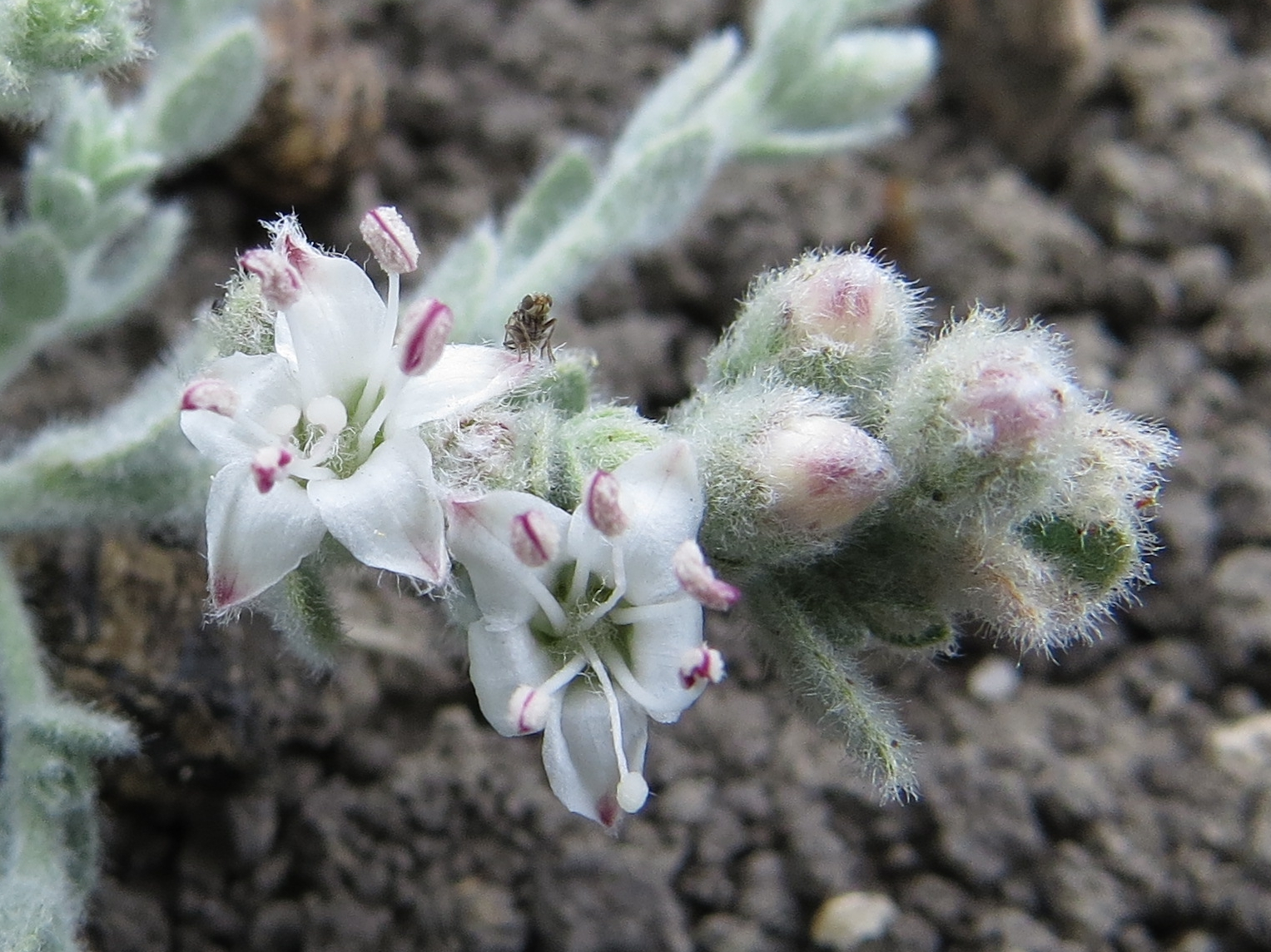
Alkali Weed - Cressa truxillensis ~ is a member of the Morning Glory family. This plant seems to have a penchant for flowering when the days are shorter, so it waits for autumn when the darkness begins to fall earlier and earlier as each day passes.
Dune Lupine is also in bloom now, as is the bright yellow Coast Goldenbush - Isocoma Menziesii.
There are several bright yellow-flowered plants that bloom at this time of year, so if a gardener wishing to grow native plants as part of a water & energy conservation effort desires to have color in the yard year-round, it is possible with carefully selected plants. When one plant is in bloom, another species may not be. Theodore Payne Foundation and Rancho Santa Ana Botanic Gardens - including their site at the West LA Veterans campus - can assist you if year-round flower blooms are desired.
© 2013, Marcia Hanscom & Ballona Institute